
Wednesday, November 11, 2026Nov 11

Opinion: With Supreme Court reform ideas, Biden is playing the long game

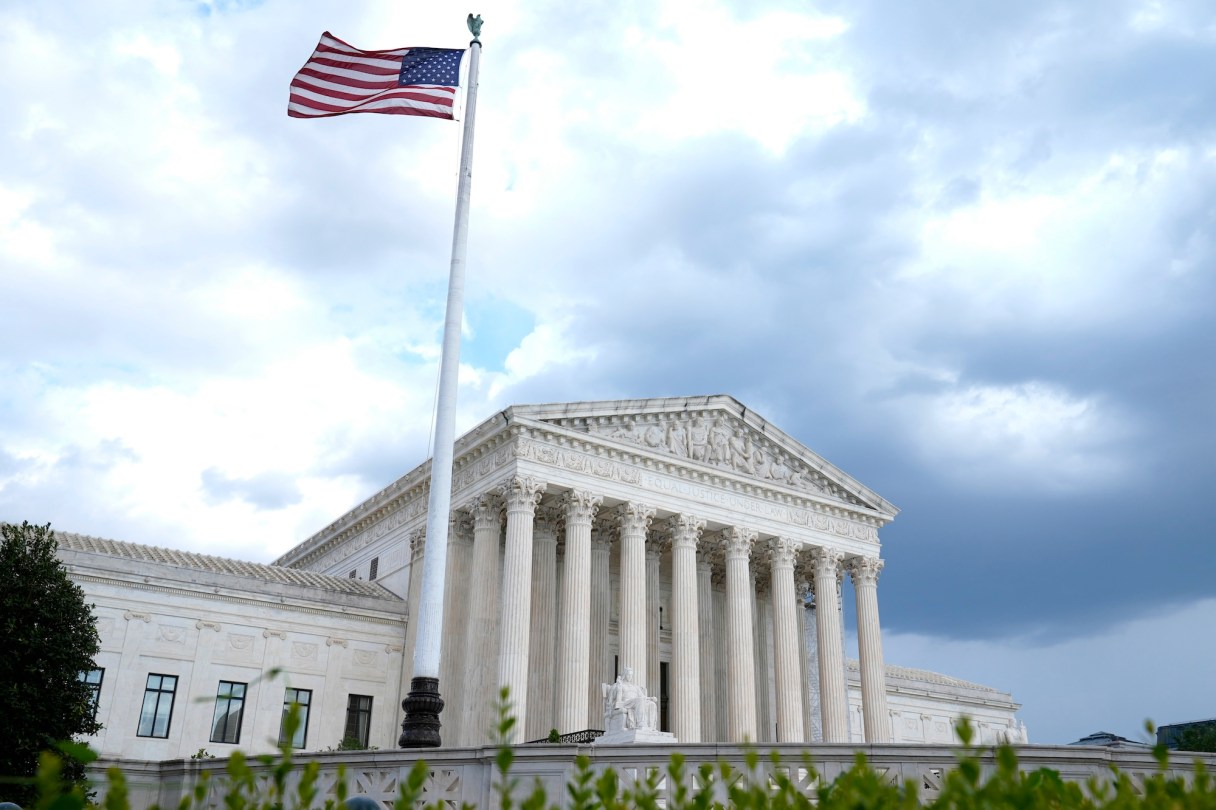
File photo/Susan Walsh/The Associated Press / The Supreme Court is pictured on June 30, 2024, in Washington. President Joe Biden went public Monday, July 29, with major changes he's proposing for the Supreme Court: an enforceable code of ethics, term limits for justices and a constitutional amendment that would limit the justices' recent decision on presidential immunity. There's almost no chance of the proposal passing a closely divided Congress, but the ideas could still spark conversation with public confidence in the court hitting an all-time low in recent years amid ethical revelations about some justices.
File photo/Susan Walsh/The Associated Press / The Supreme Court is pictured on June 30, 2024, in Washington. President Joe Biden went public Monday, July 29, with major changes he's proposing for the Supreme Court: an enforceable code of ethics, term limits for justices and a constitutional amendment that would limit the justices' recent decision on presidential immunity. There's almost no chance of the proposal passing a closely divided Congress, but the ideas could still spark conversation with public confidence in the court hitting an all-time low in recent years amid ethical revelations about some justices. File photo/Susan Walsh/The Associated Press / The Supreme Court is pictured on June 30, 2024, in Washington. President Joe Biden went public Monday, July 29, with major changes he's proposing for the Supreme Court: an enforceable code of ethics, term limits for justices and a constitutional amendment that would limit the justices' recent decision on presidential immunity. There's almost no chance of the proposal passing a closely divided Congress, but the ideas could still spark conversation with public confidence in the court hitting an all-time low in recent years amid ethical revelations about some justices.

The first and easiest question to answer with respect to the package of Supreme Court reform measures that President Joe Biden announced last Monday is whether there is any hope of their passage or enactment by the current Congress.

There is not.

With Congress hopelessly polarized and the Supreme Court hopelessly politicized, there is no chance of action on Biden’s proposals in the coming months, and the administration well understands that point.

Why then choose now to introduce them? After all, Biden has steadfastly resisted pleas from progressives to try to reform the court — and he has been under pressure since he took office, because President Donald Trump had just tilted the court to the right by appointing three justices.

The straightforward explanation for the timing is to make the Supreme Court, now quite possibly the most unpopular of all federal governmental institutions, a focus of the election, which would presumably nudge voters toward Vice President Kamala Harris.