
Wednesday, November 11, 2026Nov 11

Slovenia awaits birth of new generation of ‘baby dragons’

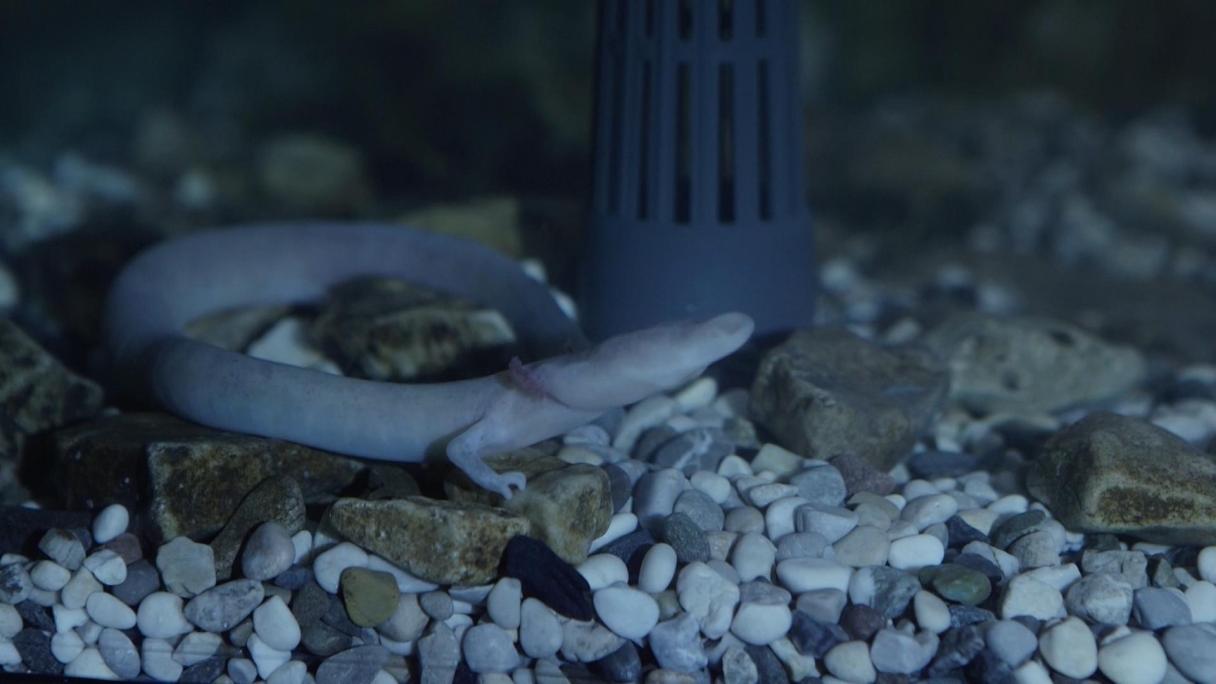
In this image taken from video taken on March 3, 2016 and provided by Postojnska Jama,  an olm walks  in an aquarium in Postojna Cave, Slovenia. Scientists in Slovenia have proudly announced that a female olm, a lizard-sized animal living in the country's biggest cave, has laid eggs in what is described as the first example of observed out-of-the-lab breeding of this endemic species. (Iztok Medja/Postojnska Jama d.d. via AP)
In this image taken from video taken on March 3, 2016 and provided by Postojnska Jama, an olm walks in an aquarium in Postojna Cave, Slovenia. Scientists in Slovenia have proudly announced that a female olm, a lizard-sized animal living in the country's biggest cave, has laid eggs in what is described as the first example of observed out-of-the-lab breeding of this endemic species. (Iztok Medja/Postojnska Jama d.d. via AP) In this image taken from video taken on March 3, 2016 and provided by Postojnska Jama, an olm walks in an aquarium in Postojna Cave, Slovenia. Scientists in Slovenia have proudly announced that a female olm, a lizard-sized animal living in the country's biggest cave, has laid eggs in what is described as the first example of observed out-of-the-lab breeding of this endemic species. (Iztok Medja/Postojnska Jama d.d. via AP)

POSTOJNA, Slovenia (AP) – Slovenia is counting down the days until the birth of a new generation of “baby dragons.”

Scientists in the Central European country have proudly announced that a female olm – a Gollum-like, lizard-sized amphibian living in an aquarium in the country’s biggest cave – has laid eggs. They have described it as the first example of observed out-of-lab breeding of the species.

The eyeless pink animal, known as the “baby dragon” and “human fish” for its skin-like color, can live a century and breeds only once a decade – usually in laboratories throughout Europe or deep in caves away from people.

Slovenian scientists have been ecstatic about the prospects of having baby olms born in Postojna Cave. The eggs are expected to hatch in about 100 days, or sometime in June.

“This is something truly extraordinary,” said biologist Saso Weldt, who works at the cave in northwestern Slovenia. “Nobody has ever witnessed (their) reproduction in nature. We even haven’t seen an animal younger than two years.”