

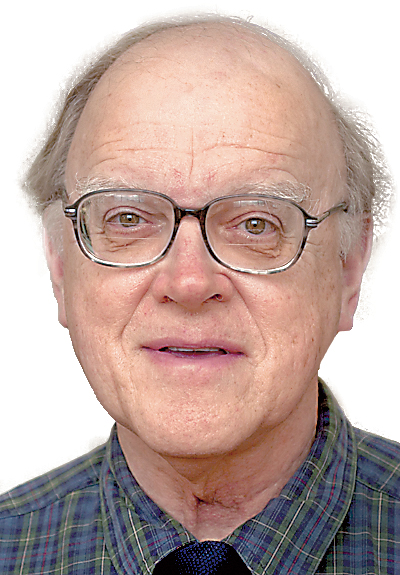
 Dr. Clif Cleaveland
A patient arrived on the medical service at Vanderbilt Hospital in fall 1965 with the diagnosis of a rare fungal pneumonia. His family physician, Dr. Claude Collins, who practiced in the small town of Monterey, Tennessee, referred his patient along with office notes. Physicians at the hospital were amazed at the accuracy of the diagnosis, made by a physician from this small town with limited access to diagnostic tools.
Three days into the hospitalization, Collins visited his patient’s bedside. Attired in a dark suit with vest, he had the bearing of a pastor. Concluding his visit, he thanked the ward team for looking after his patient. Unfortunately, his patient succumbed to his complex illness.
The economic depression, which affected the South years before the rest of the country, limited job opportunities for physicians when Collins completed his medical training in Memphis in the mid-1920s. He signed a contract to open a practice in the coal-mining town of Davidson, Tennessee. Losing everything in a house fire, he and his wife and their infant son relocated to nearby Wilder, population 2,000, in 1929. A second son arrived in 1932. Throughout his career, patients and townspeople simply called Claude Collins “Doctor.”
The mining company owned the town. Unpainted frame houses had a single light fixture dangling from the ceiling of a front room, no indoor plumbing or refrigeration except for the mine owner, and the nearest potable water came from a well five miles away.
Doctor treated patients six days each week in his three-room office, which was a short distance from his company-owned house. He had a stethoscope and blood pressure cuff. He dispensed the few available medications from his office. Sulfonamides, the first antibiotic, became available in the late 1930s. He cared for miners hurt in frequent mine accidents. An explosion at the mine severely burned several miners whom Doctor treated until an ambulance could arrive to transport them to a hospital. Calls for help came from the front porch on many evenings. The company gave Doctor a cow each year and a monthly stipend of $125 for salary and supplies. Patients often paid by barter: a chicken or dozen eggs or dressed game.