
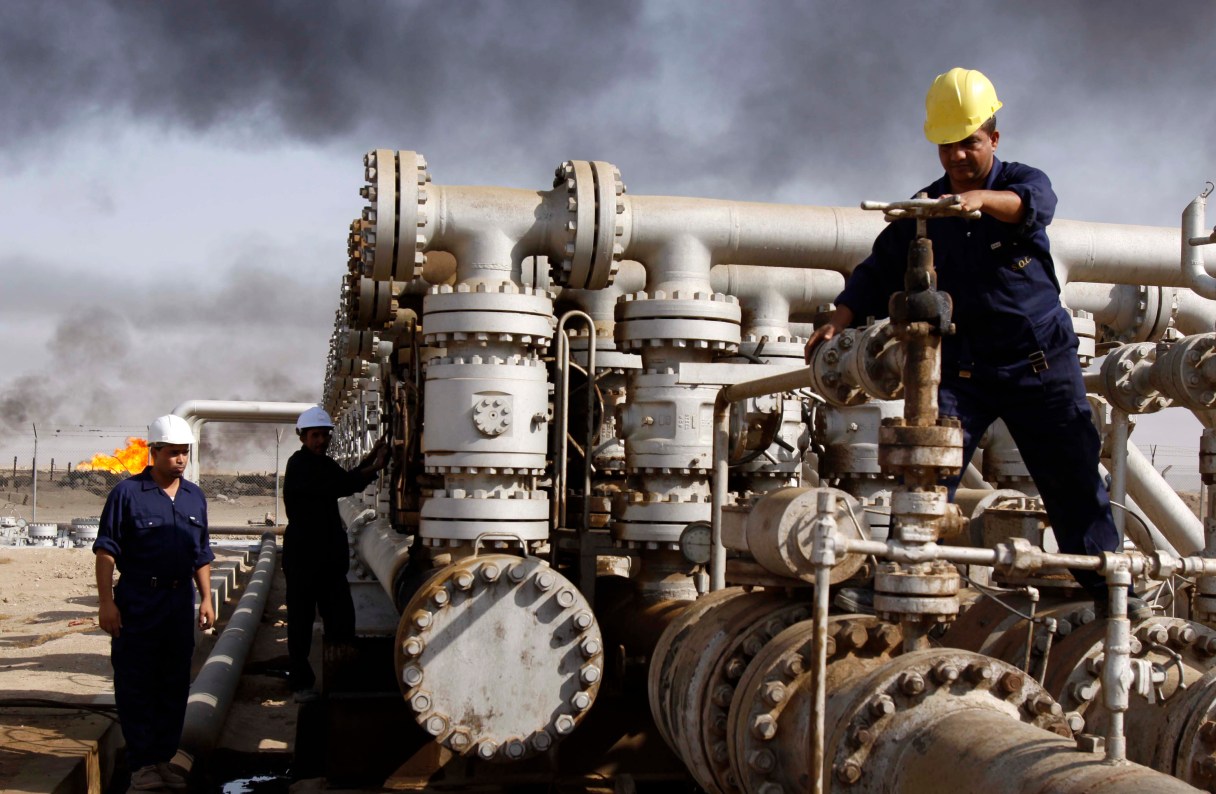
DUBAI, United Arab Emirates (AP) – Across a Mideast fueled by oil production, low global prices have some countries running on empty and scrambling to cover shortfalls, even as more regional crude is on tap to enter the market.
While some Gulf nations rest on ample reserve funds, embattled Iraq is desperate to scrounge up more money for its fight against the extremist Islamic State group as protesters demand repairs to its failing power grid. Contrast that to neighboring Iran, whose nuclear deal with world powers positions it to re-enter the global oil market and make long-needed repairs to its fields to increase its daily production.
The possibility of more supply entering the market has analysts already lowering their forecast price for oil into the next year. And even if the price rises, industry experts say U.S. production quickly could ramp up and keep prices low for years to come, challenging the power of OPEC.
“There’s almost no way that OPEC can get the band back together,” said Greg Priddy, the director for global energy and natural resources at the Eurasia Group. “You can’t get prices rapidly back up … because you’d get runaway growth in the U.S.”
Fluctuating oil prices are nothing new to the Mideast, such as the drop in prices in the 1980s following the 1970s oil crisis in the U.S. This time around, as global prices have fallen by more than 50 percent since the middle of last year, countries like the United Arab Emirates, Qatar and Kuwait have large cash reserves to cushion the blow. Many in the Gulf also have diversified their economies.