
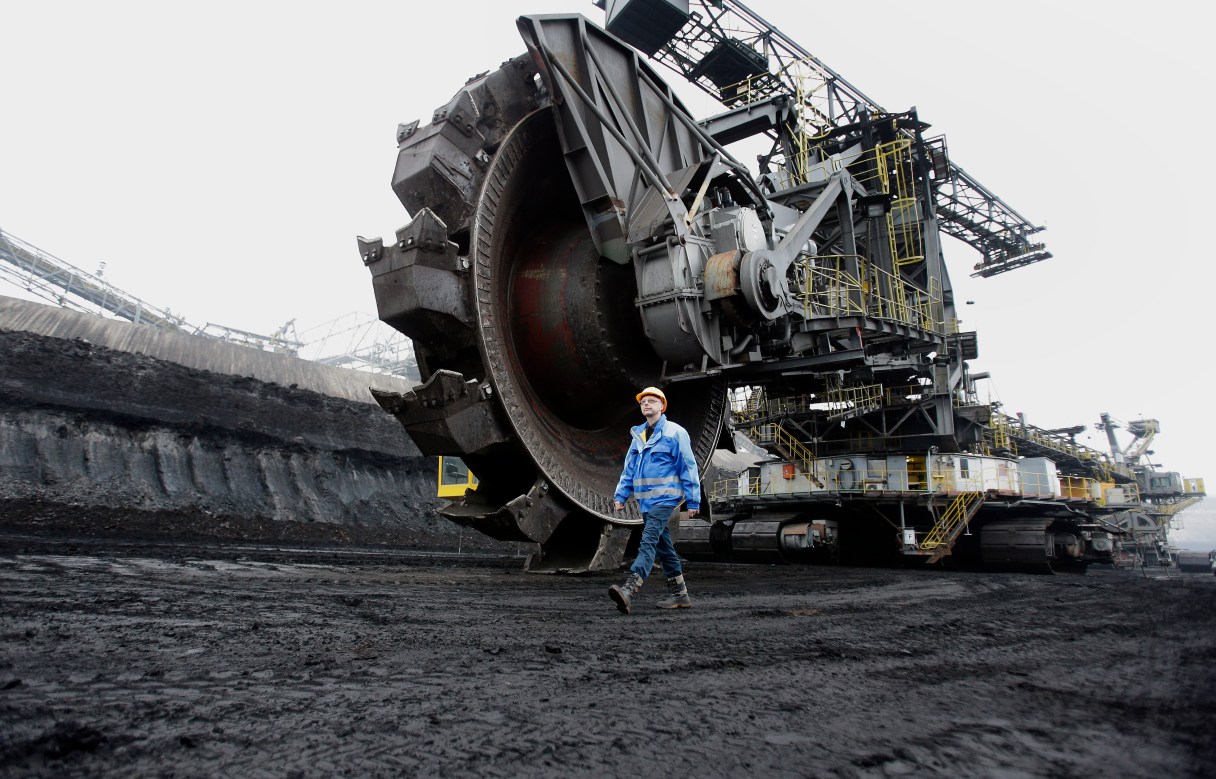
ATTERWASCH, Germany (AP) – Five days a week, a giant machine eats its way through soil at the Jaenschwalde open-cast mine in eastern Germany, exposing the brown coal buried beneath.
Lignite, as this form of compressed peat is known, is becoming an increasingly important part of Germany’s effort to phase out nuclear energy. It’s also the reason why Atterwasch, a village that survived the Thirty Years’ War, a Soviet onslaught at the end of World War II and four hard decades of communist rule is slated to be razed.
The village, with its volunteer fire station and old brownstone church, is to make way for a strip mine in the next decade. Dozens of other villages have fallen victim to the same fate, as coal once again becomes king.
The plan has many of Atterwasch’s 250 inhabitants up in arms.
“This is an ancient village,” said long-time resident Monika Schulz-Hoepfner. Historical records first mention Atterwasch in 1294, and the house that she and her husband raised their three children in was built in 1740.