
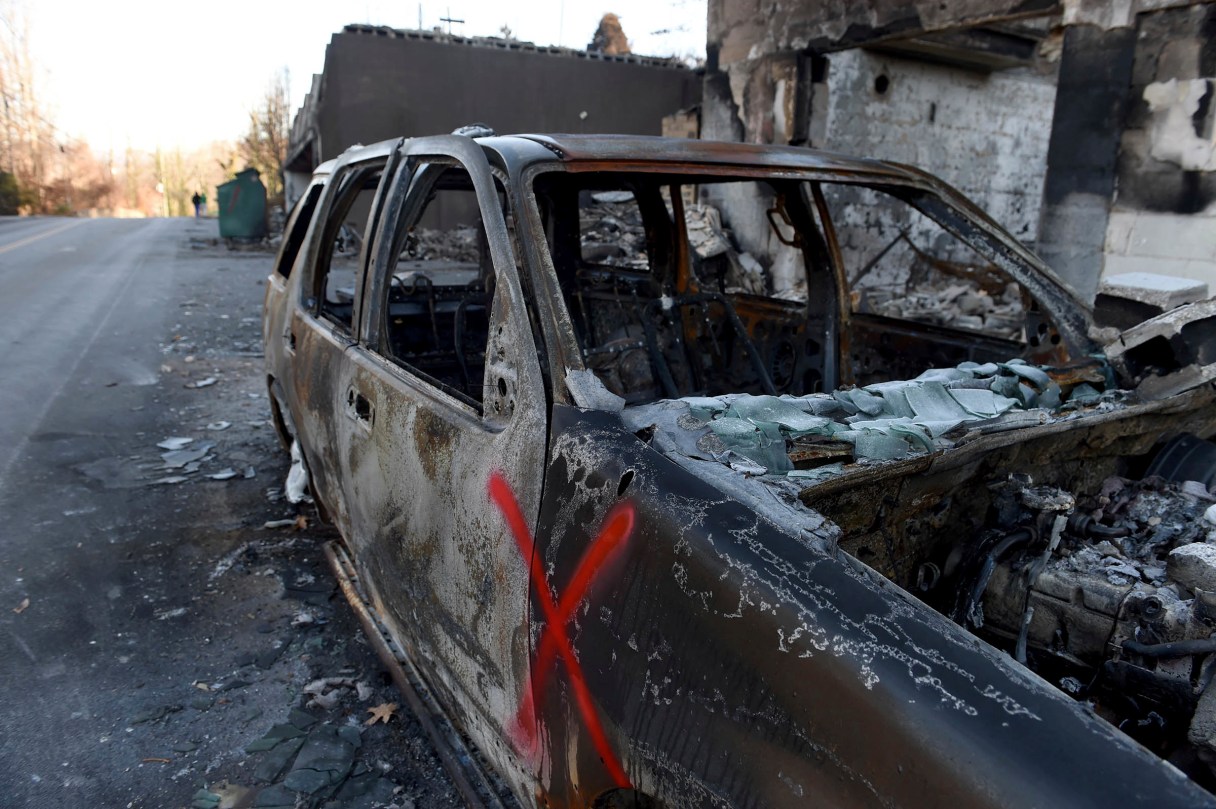
ATLANTA (AP) – When U.S. Forest Ranger Jody Bandy confronted the man in the Pisgah National Forest, he said he’d been at the nearby wildfire and “couldn’t take it anymore.”
Then he ran from the officer, tumbling head-over-head down the mountainside, into the river below and slamming into boulders in the water, Bandy said in a court affidavit.
After an ambulance took the bleeding man to a hospital, Bandy peered through the front windshield of his pickup and saw what appeared to be a suicide note on the dash, the affidavit says.
The Nov. 19 encounter in western North Carolina underscores the toll these wildfires can take on people who live through them.
Many survivors need help to cope, and signs of problems such as nightmares, depression and anxiety might not show up for months, said Valerie Cole of the American Red Cross. In some ways, escaping a fire-filled forest as thousands did recently in and around Gatlinburg, Tennessee, can be more traumatic than hurricanes, floods or earthquakes, experts say. One reason: Flames spread so rapidly that people had no time to prepare.