Science
The latest Science coverage from the Chattanooga Times Free Press, part of our News section.
More in Science, page 37
-
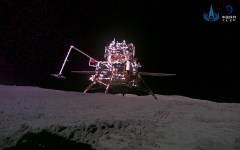
A Chinese lunar probe returns to Earth with the world’s first samples from the far side of the moon
China's Chang'e 6 probe returned on Earth on Tuesday with rock and soil samples from the little-explored far side of the moon in a global first.
-
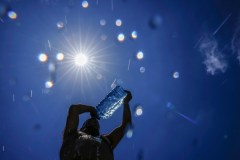
How does heat kill? It confuses your brain. It shuts down your organs. It overworks your heart.
As temperatures and humidity soar outside, what's happening inside the human body can become a life-or-death battle decided by just a few degrees.
-
Scientists have traced the origin of the modern horse to a lineage that emerged 4,200 years ago
The horse transformed human history – and now scientists have a clearer idea of when humans began to transform the horse.

-
Mourners can now speak to an AI version of the dead. But will that help with grief?
When Michael Bommer found out that he was terminally ill with colon cancer, he spent a lot of time with his wife, Anett, talking about what would happen after his death.

-
Solar storm hits Earth, producing colorful light shows across Northern Hemisphere
An unusually strong solar storm hitting Earth produced stunning displays of color in the skies across the Northern Hemisphere early Saturday, with no immediate reports of disruptions to power and communications.

-
Total solar eclipse forecast: Will your city have clear skies Monday?
Some who hope to witness Monday's total solar eclipse may see the sun obscured by clouds instead of by the moon.
-
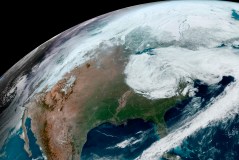
‘Alarming’ ocean temperatures suggest this hurricane season will be a daunting one
A key area of the Atlantic Ocean where hurricanes form is already abnormally warm, much warmer than an ideal swimming pool temperature of about 80 degrees and on the cusp of feeling more like warm bathtub water.

-
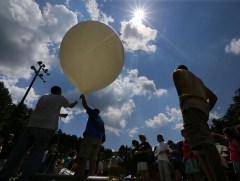
Eclipse gives unique opportunity for Georgia Tech professor’s experiments
The ionosphere, a boiling soup of charged particles, is a mysterious place. Balloons won’t float there, because there’s not enough air, but satellites can’t fly there either, because there’s too much air.
-
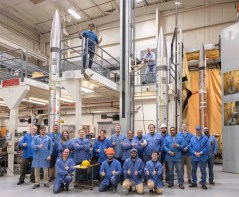
April’s total solar eclipse promises to be the best yet for experiments
April's total solar eclipse promises to be a scientific bonanza, thanks to new spacecraft and telescopes — and cosmic chance.
-
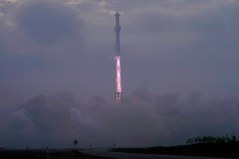
SpaceX comes close to completing test flight of mega rocket but loses spacecraft near end
SpaceX came close to completing an hourlong test flight of its mega rocket on its third try Thursday, but the spacecraft was lost as it descended back to Earth.