
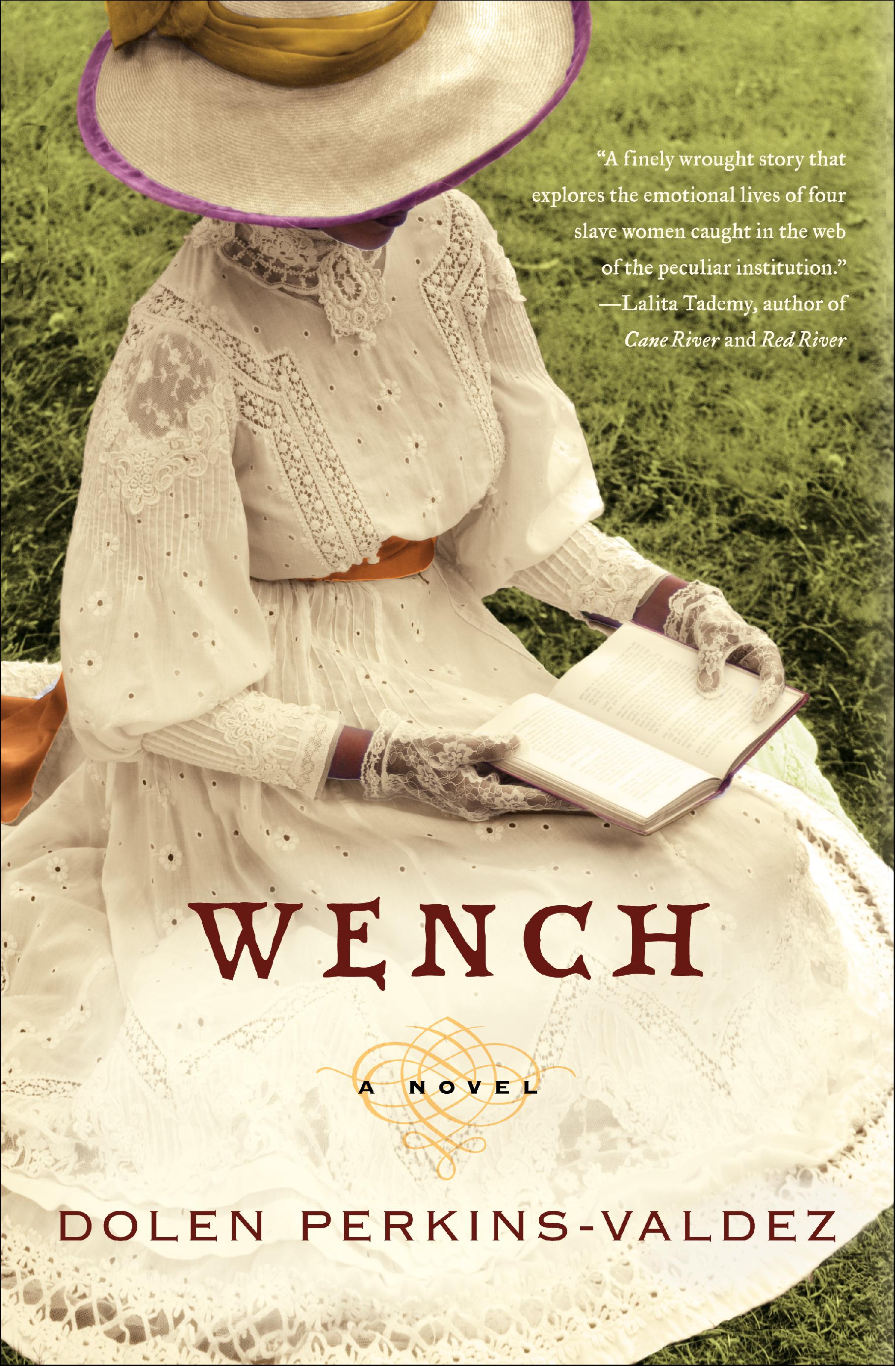
 “Wench” by Dolen Perkins-Valdez. Harper Collins. 306 pages. $15.
The meaning of words may change over time but in some cases, the weight of dominance, the sharp edge of cruelty and the demeaning cut of subservience and sexual command is unmistakable regardless of the era.
To use such a term as a book title is a bold move that calls out for a powerful story to back it up. Dolen Perkins-Valdez rises to this challenge with her first novel, “Wench.”
Most Americans now know that many slave holders also held slave mistresses, and the word wench serves as remnant of both the language of the day and of the role they played in the masters’ realm.
What is less known is that in the summers of 1852 though 1855, the Tawawa Resort near Xenia, Ohio, served as a host for master-mistress pairs looking for a summer retreat.
The resort ultimately closed when Northern visitors refused to visit due to these Southern guests. A decade later, it was purchased by the African Methodist Episcopal Church, which used the land to found the distinguished HBCU Wilberforce University.
While many of the records of this resort are lost to time, Perkins-Valdez brings the experience alive with her extraordinary fictional account of several slave mistresses staying there during those secret summers.
She tells Lizzie’s story. Eliza by birth, called Lizzie by the master’s wife who claims she can’t say Eliza’s given name, she spends much of her life as the bed partner of her Tennessee master, a man she calls Drayle.
The open secret of their couplehood could be seen in her privileged room placed in the big house near Drayle’s marital bed and, more strikingly, by her light-skinned children who unmistakably resemble their father.
These children serve as an anchor for Lizzie, as playthings for her master and as unexpected tokens for his barren wife who alternately ignores them and then showers them with motherly affection. Lizzie’s feelings for Drayle often border on love – a result of a mixed-up stew of fealty, property and hope.
At her home plantation, Lizzie struggles in tenuous relations with resentful field slaves. But at Tawawa, she feels freer with slave women from other plantations who spend their days in similarly precarious positions. She becomes close to Reenie, the eldest, respected for her wisdom and calm faith even in the face of her master trading her for favors to the Tawawa innkeeper.
She also becomes friends with and feels protective of Sweet, the vulnerable woman whose dependence on her enslaved children left back at the plantation leads to her literal undoing. Finally, she has a guarded friendship and ultimately sisterhood with Mawu, the boldest of them all whose fiery red hair perfectly reflects her defiant personality driven by her self-proclaimed African name, her faith and her determination to win out over a cruel master whose sexual thrills are borne in pure violence. Mixing with these women in distant but protective solidarity is Glory, a representative of the many local Quaker abolitionists who seek to help free their summer residents.
While Glory’s motivations are so pure that they render her a rather weak and hackneyed figure in the book, she does serve as one symbol of the ambiguities of Northern race relations in the book. Subtly, but very clearly, Perkins-Valdez presents evidence of the many ways race affects Northern and Southern women, from the Northerners whose veiled racism bites deeply to the Southern women, such as Drayle’s wife, who suffer their own form of impotent propertyhood – albeit one not nearly as insipid as that experienced by Lizzie and the other slave women.
These gray areas stand beside many others shown in the book, which forces the reader to confront the very meaning of womanhood and particularly motherhood for women whose children are owned by another. These many elements leave us unresolved in a move that seems designed to lead to inevitable frustration and rage – the only appropriate responses to the “peculiar institution.”
We are guided through these strong emotions by an incredibly engaging plot line that leaves us guessing as the lives of each slave progresses through the summer visits, struggling with indescribable hardship, small sips of freedom and the mere distant vision of hope. The missteps of this book, such as the aforementioned flatness of Glory’s portrayal and occasionally clunky dialect and dialogue, are so rare as to be nearly imperceptible compared to the magnificence of the overall book. They disappear into what is an incredibly crafted tale that captivates, challenges, and demands acknowledgement of the searingly tangled national legacy of slavery.
Adera Causey is curator of education at the Hunter Museum of American Art.