
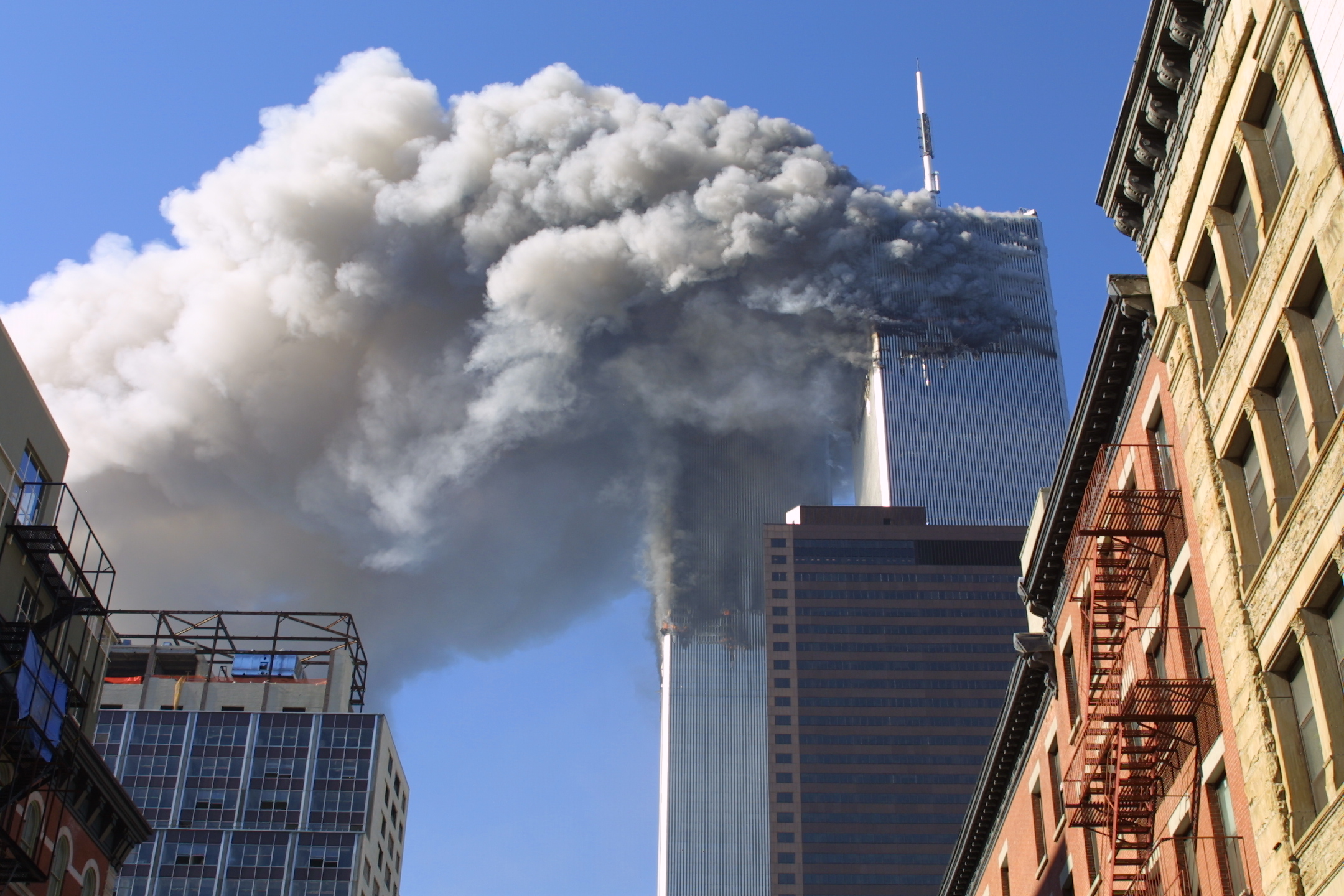
 The twin towers of the World Trade Center burn after hijacked planes crashed into them in New York on September 11, 2001.
 Construction continues on the new One World Trade Center, which has reached the 76th floor on its way to 104 floors. In the foreground, work also takes place at the Vehicle Security Center, which will screen buses, trucks, and cars entering the WTC site.
 September 16, 2011, Special Section
 September 11, 2011, Extra, Front Page
 September 11, 2001, Extra, page a6
 September 12, 2001, Front Page
 September 16, 2011, Front Page
People said 9/11 would change everything, and didn’t it?
At the airport, we submit to full-body scans, take our shoes off and keep containers of liquids small enough to fit into Ziploc bags. We know words like Quran and Taliban. More of us have neighbors or sons and daughters who have come home from combat in Afghanistan or Iraq, and many know soldiers who never returned.
And there are the things we didn’t see: warrantless wiretapping, our nation’s marred image in the eyes of the rest of the world, a crushing debt caused, in part, by running two wars that cost billions of dollars each week.
Then there are things we think we’ve seen too much of: 6,000 U.S. soldiers killed overseas and more than 4,000 injured.
After the Twin Towers fell in New York City on Sept. 11, 2001, scholars and talking heads on cable news and radio said the day would define a generation, as the assassination of President John F. Kennedy or attack on Pearl Harbor did. It would be a day seared into the consciousness of the generation. Bumper stickers and signs read “Never forget.”