
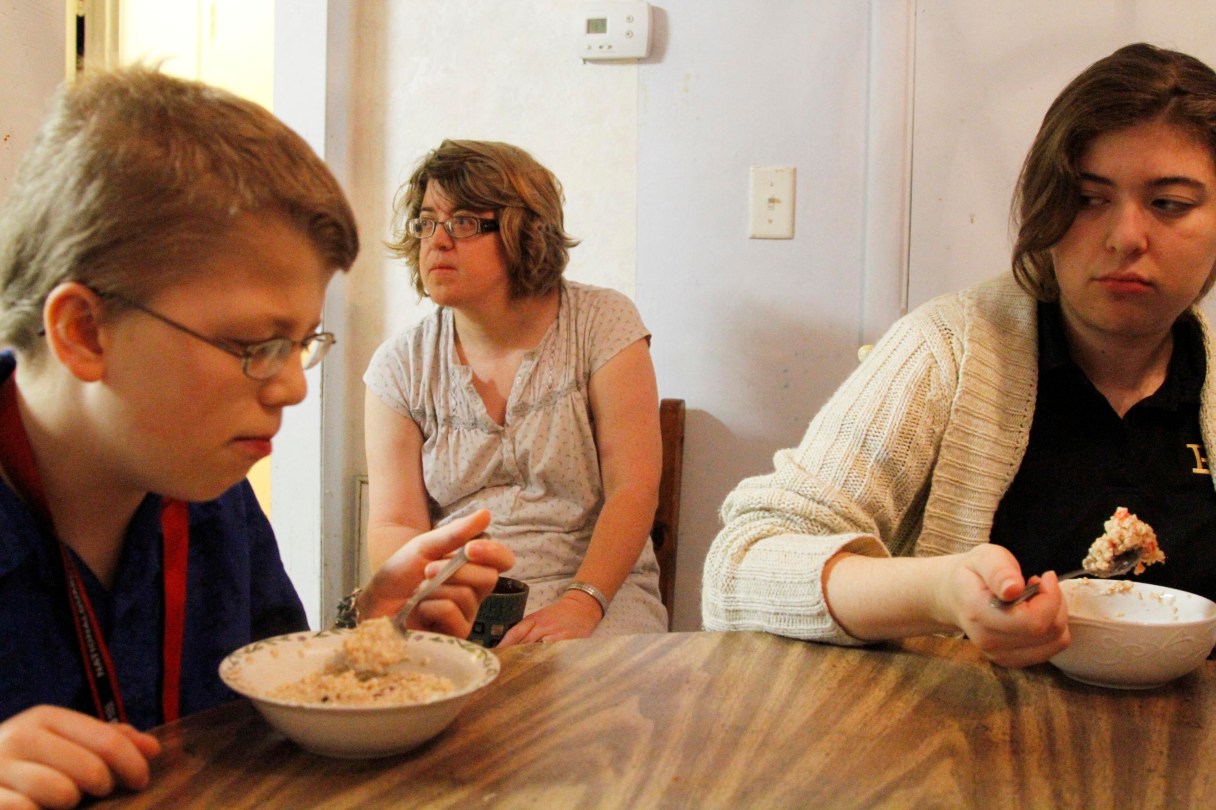
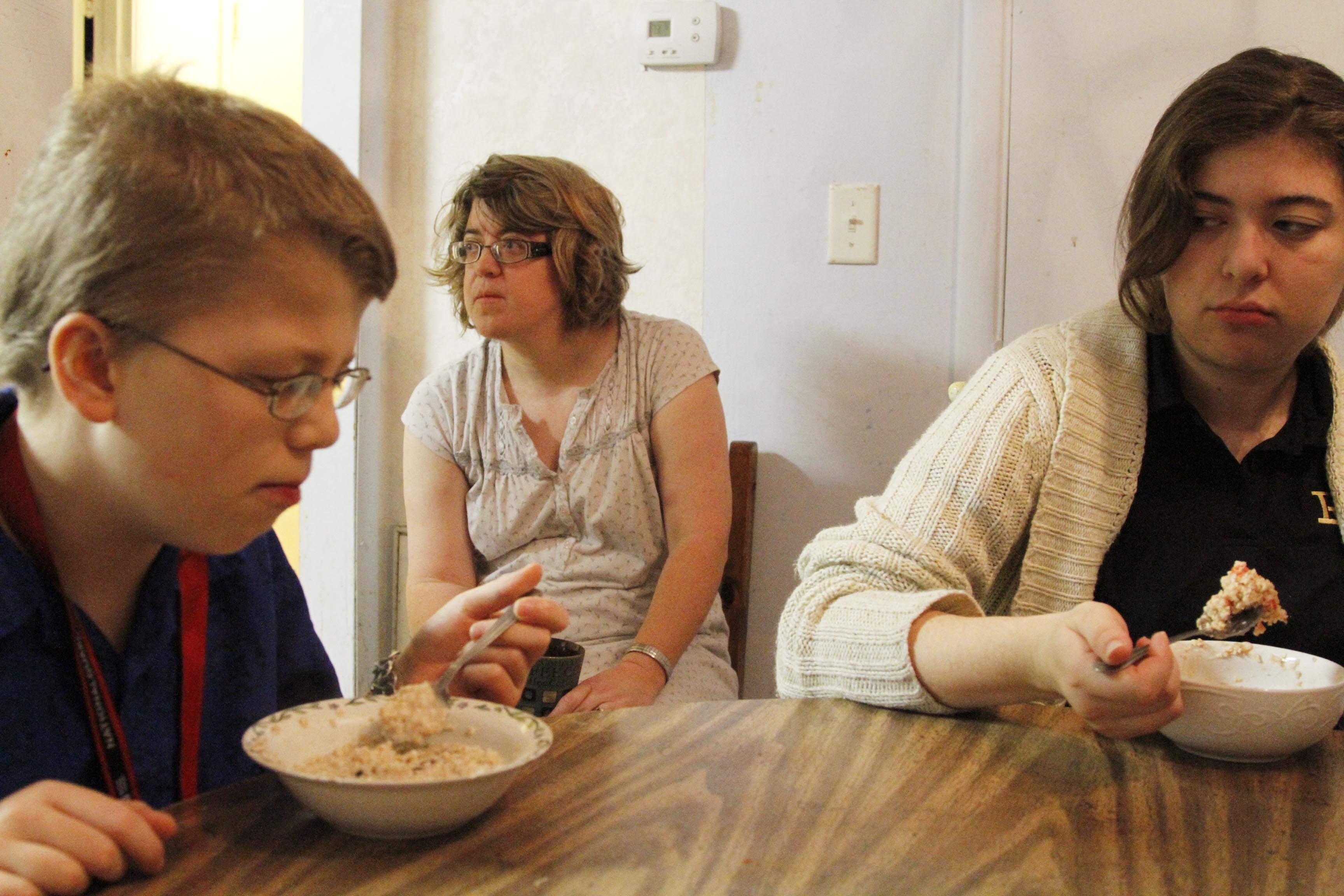
 Kim Brunner sits and waits for her children to finish their oatmeal and go to school before getting ready for her work day in the early morning hours on Friday, Dec. 16, 2011. Her oldest four children have to be at school by 7:15 a.m.
ABOUT THIS STORYOver about six months, photographer Alex Washburn spent countless hours with the Brunner family, recording special moments as well as everyday life. Her photographs were the impetus for this report by staff writers Joan Garrett and Andrew Pantazi, who completed the picture through numerous interviews with the family, mental health experts and others.AVOIDING PARENTAL DEPRESSIONGet going. Get your child started in treatment and therapies.Ask for help. Use the support available to you. Is there someone who can take your other kids somewhere for an afternoon? Or cook dinner for your family one night so that you can spend the time learning? Can they pick a few things up for you at the store or do a load of laundry? Can they let other people know you are going through a difficult time and could use a hand?Talk to someone. Take advantage of support groups or friends and family. Have an emergency person to call when times get tough.Try to take a break and get good sleep. If it’s possible, getting out to a movie, going shopping or visiting a friend can make a world of difference. If you feel guilty about taking a break, try to remind yourself that it will help you to be renewed for the things you need to do when you get back.Consider keeping a journal. Studies have shown that writing about our traumatic events and our deepest thoughts and feelings improves immune function as well as emotional and physical health. Journaling can also help keep track of your child’s progress.Be mindful of the time you spend on the Internet. The Internet can be a saving grace, but it can also spread misinformation about autism and consume precious time. Ask yourself:• Is what I’m reading right now likely to be relevant to my child?• Is it new information?• Is it helpful?• Is it from a reliable source?Source: Autism SpeaksAUTISM BY THE NUMBERS• 1 in 110 children are affected by autism; 1 in 70 in boys. Some studies have shown that 19 percent of the younger siblings of autistic children are also diagnosed with autism. In families with two or more autistic kids, a new sibling’s chances of being autistic rise to more than 32 percent.• 48 percent of mothers in the Interactive Autism Network said they had been diagnosed or treated for major depression.• 22 percent of fathers in the Interactive Autism Network said they have been diagnosed or treated for major depression.• ASD (autism spectrum disorders) affect an estimated 3 million individuals in the U.S.• In Tennessee, 1 in 205 children are affected by autism.• In Georgia, 1 in 145 children are affected by autism.• In Alabama, 1 in 227 children are affected by autism.Source: Autism Speaks, national Centers for Disease Control and PreventionRESOURCES• Chattanooga Autism and Behavioral Services1000 E. Third St., Suite 100423-664-0903www.autismbehaviorservices.org• Chattanooga Autism Center3097 Broad St.423-260-1115www.chattanoogaautismcenter.org• Orange Grove Center615 Derby St.423-629-1451423-493-2954423-493-2924www.orangegrovecenter.com• Siskin Children’s Institute1101 Carter St.423-648-1757www.siskin.org• Families for Early Autism TreatmentP.O. Box 23731Chattanooga, TN423-296-0092• ASSET (Autism Society of Southeast Tennessee)P.O. Box 28091Chattanooga, TN423-899-5123CampCreative Discovery Museum holds a camp for autistic children in the summer for ages 7 to 10. For more information about Friends Discovery Camp, call 423-648-6045 or 423-648-6040.Autism: Fill Your ToolboxThe Chattanooga Autism Center, in partnership with the Autism Society of America East Tennessee Chapter, will host its third annual conference for parents and professionals on May 4 from 8 a.m. to 5 p.m. at the Chattanooga Convention Center.Greater Chattanooga AspiesThis Asperger Syndrome support group meets the third Tuesday of each month from 6 to 8 p.m.For more information, contact Scott Kramer, founder/executive director, at GCAspies@gmail.com
Midday sun comes through the windows of the Brunners’ family home on a back street in Clifton Hills, and the harsh glare hides a lot. It covers the signs of poverty. The cracks in the linoleum floor, trash on shelves, the streaks of dirt on the walls, the signs of want that alone are obstacle enough, but here aren’t even the worst thing.
And the laughter heard on the street even through closed windows, is surprising, considering all that has happened inside these walls.
Six sisters and brothers sit cross-legged, kneeling or squatting around an old computer monitor watching YouTube music videos because they don’t have television. One stands up to dance. So does another. They look to make sure their parents are watching the impromptu performance.
Their mother, Kim Brunner, a short, worn woman with thick glasses, sits and settles into the corner of the couch and watches them, forgetting, for a moment, that so many of her dancing children have been born sick and different, that the days themselves are a dance between doctor’s offices, counseling sessions and school meetings.