
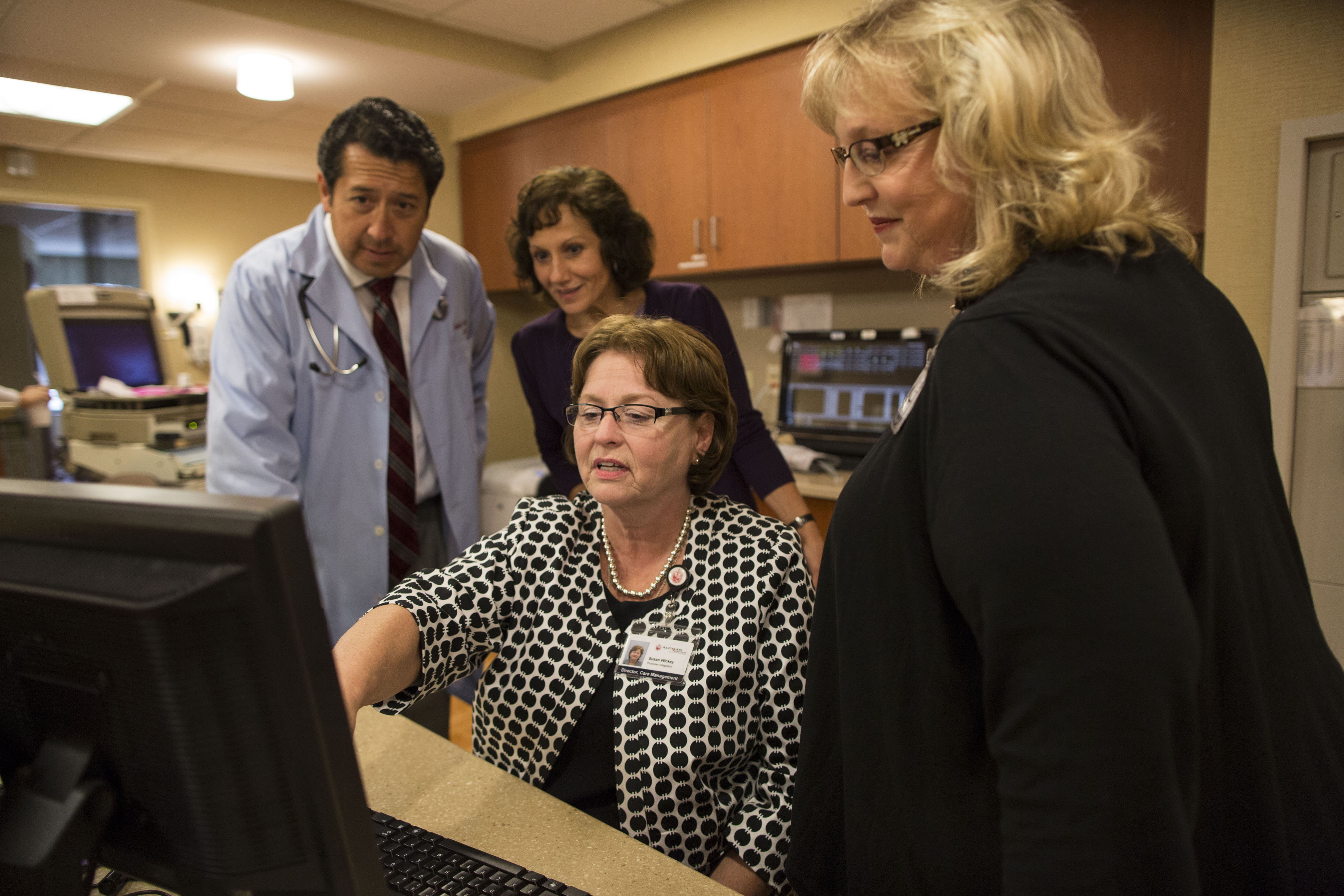
 Dr. Reinhold Illerna, from left, administrative director of Case Management at Alexian Brothers Healthcare Center, Mary Schumann, director of care management at Alexian Brothers Healthcare Center, Sue Wickey and Manager of Social Work at Alexian Brothers Healthcare Center, Jolene Grabowski work on a computer at the nurses station at the Alexian Brothers Healthcare Center in Elk Grove Village, Ill.
SALEM, Ore. – Oregon health officials are concentrating on coordinating services and preventing hospital stays. New Jersey medical centers are rewarding doctors who can save money without jeopardizing patient care. And Massachusetts is expanding the role of physician assistants and nurse practitioners.
As states work on implementing the complex federal health care reforms, some have begun tackling an issue that has vexed employers, individuals and governments at all levels for years — the rapidly rising costs of health care. The success of models that are beginning to emerge across the country ultimately will determine whether President Barack Obama’s Affordable Care Act can make good on its name.
It’s too early to tell what will work and what won’t, but states, insurers and medical groups are experimenting with a variety of programs to contain costs without undermining care. These test runs come as millions of new patients will gain eligibility for health insurance under the federal law, putting additional pressure on the system.
“Look at any of the long-term projections for the federal budget or for state budgets,” said Alan Weil, executive director of the National Academy for State Health Policy. “If we don’t bring down health care costs, we’re either going to be paying a whole lot more in taxes or we’re going to stop spending money on other things we care about.”
The Affordable Care Act is expected to extend coverage to many of the roughly 50 million Americans who lack insurance by expanding Medicaid, the state-federal health care program for low-income people, and requiring most others to purchase insurance or pay a fine.