
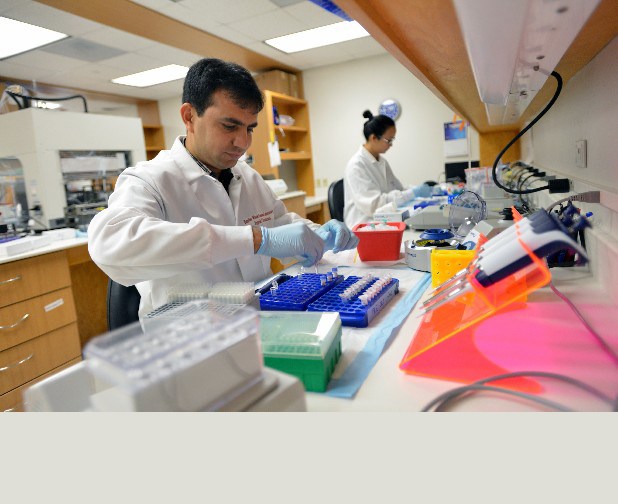
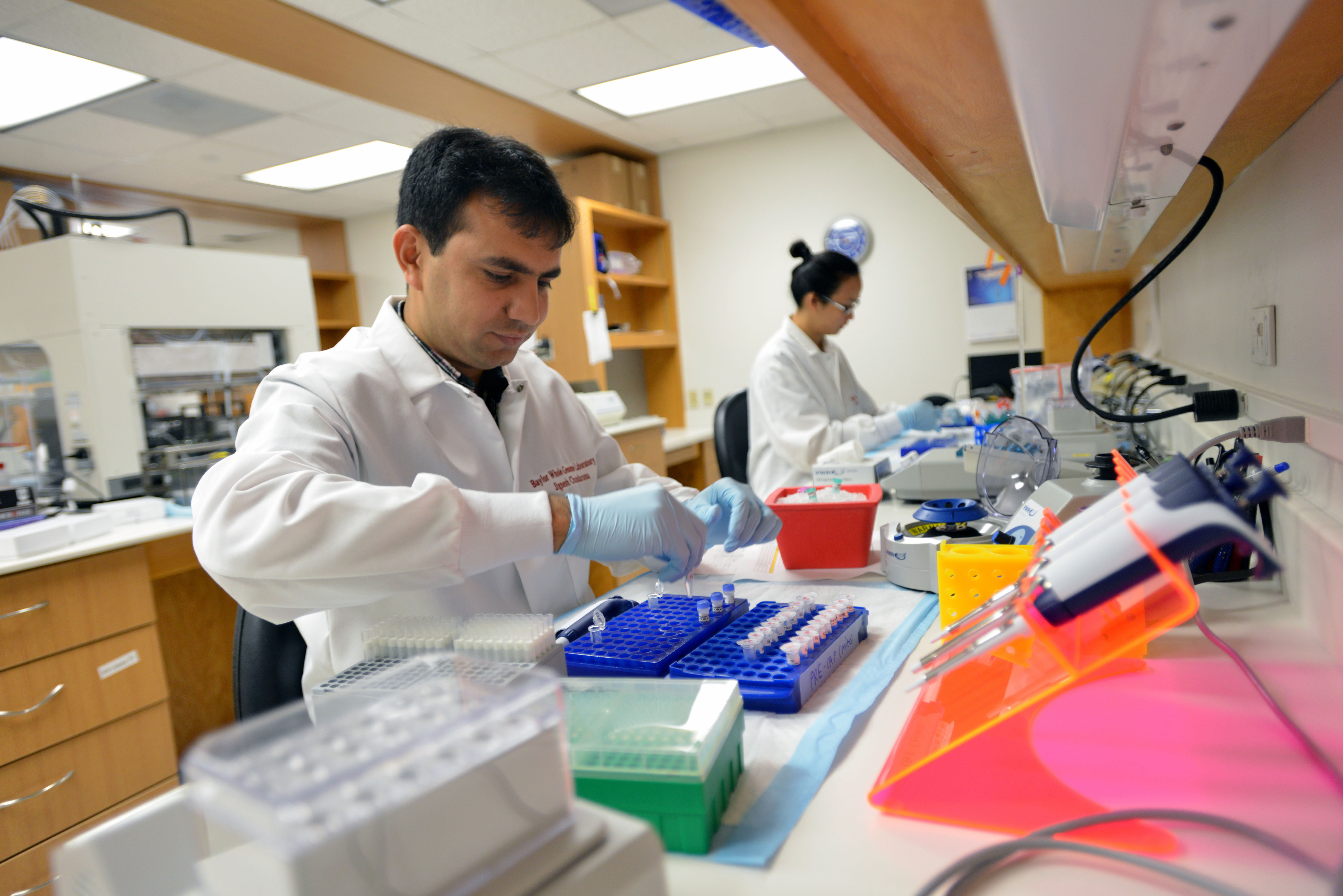
 Researchers prepare for the DNA sequencing of patient samples in Houston. In a study published Wednesday in the New England Journal of Medicine, scientists say they were able to crack a quarter of mystery diseases that had stumped doctors for years by decoding the patients’ genes. The study is the first large-scale effort to move gene sequencing out of the lab and into ordinary medical care, and it shows that high hopes for this technology are finally paying off. “This is a direct benefit of the Human Genome Project,” the big effort to decode our DNA, said Dr. Christine M. Eng of Baylor College of Medicine in Houston. “We’re now able to directly benefit patients through more accurate diagnosis.”
They were mystery diseases that had stumped doctors for years – adults with strange symptoms and children with neurological problems, mental slowness or muscles too weak to let them stand. Now scientists say they were able to crack a quarter of these cases by decoding the patients’ genes.
Their study is the first large-scale effort to move gene sequencing out of the lab and into ordinary medical care, and it shows that high hopes for this technology are finally paying off.
“This is a direct benefit of the Human Genome Project,” the big effort to decode our DNA, said Dr. Christine M. Eng of Baylor College of Medicine in Houston. “We’re now able to directly benefit patients through more accurate diagnosis.”
She led the study, which was published online Wednesday by the New England Journal of Medicine. It gives results on the first 250 patients referred to Baylor for a newer type of sequencing — just the DNA segments that hold the recipes for all the proteins the body needs. That’s only about 1 percent of the whole genome.
Baylor has sequenced more patients beyond those in the study — 1,700 so far — and found gene flaws in 1 out of 4, Eng said.