
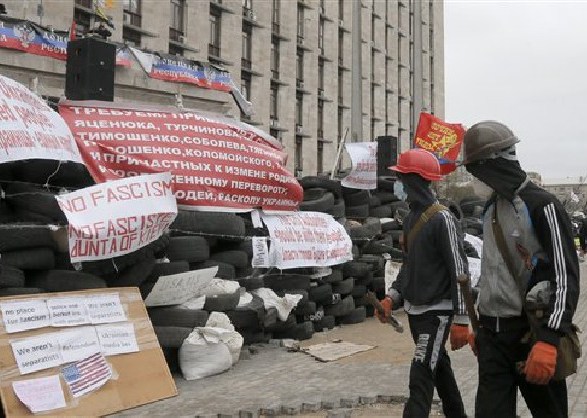
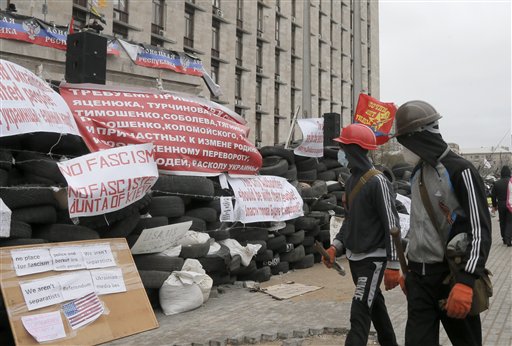
 In this Friday, April 11, 2014, file photo masked pro-Russian activists pass by a barricade as they guard a regional administration building that they had seized earlier in Donetsk, Ukraine.
ZHDANIVKA, Ukraine – Moscow calls the detention center under construction near the Russian border a “fascist concentration camp.” Inside the barbed-wire fences, the reality appears less ominous: It’s an EU-funded project to hold asylum seekers and illegal immigrants, similar to other such detention centers across Europe.
The accusation is one of the more outlandish in a relentless Kremlin-driven propaganda offensive that uses World War II-era terms and imagery to rail against Ukraine’s fledging government. “Nazis,” ”fascists” and “Fritzes” are some of the terms that Russia is hurling at Ukrainian authorities who took power after the ouster of the last elected president, a reversal in political fortunes that has led to pro-Western Ukrainian government in Kiev and a pro-Russian insurgency gaining intensity in the country’s east.
It’s an effective tactic because of the emotional weight that World War II has in Russia. The Soviet victory against Hitler is the nation’s single most powerful rallying cry. In evoking the ugliest words related to Nazi Germany, the Russian media loyal to President Vladimir Putin is galvanizing support for his aggressive stance toward Ukraine, both among his countrymen and among Russian-speakers in Ukraine’s east.
It’s also a dangerous tactic, because the inflammatory propaganda may provoke the anti-Kiev opposition in the east.
The propaganda assault began during the pro-Western Maidan protests that began late last year and ousted Ukraine’s pro-Russian president in February. Russian state news media were quick to dismiss the protests as the work of Ukrainian neo-Nazis, a particularly loaded accusation because Ukrainian nationalists collaborating with the Nazis are blamed for horrific reprisal attacks during World War II. The Maidan movement did contain an ultranationalist element, known as the Right Sector, but its influence appears greatly amplified by the Russian media.