
Tuesday, November 10, 2026Nov 10

Fish farming finds its way to land-locked Midwest

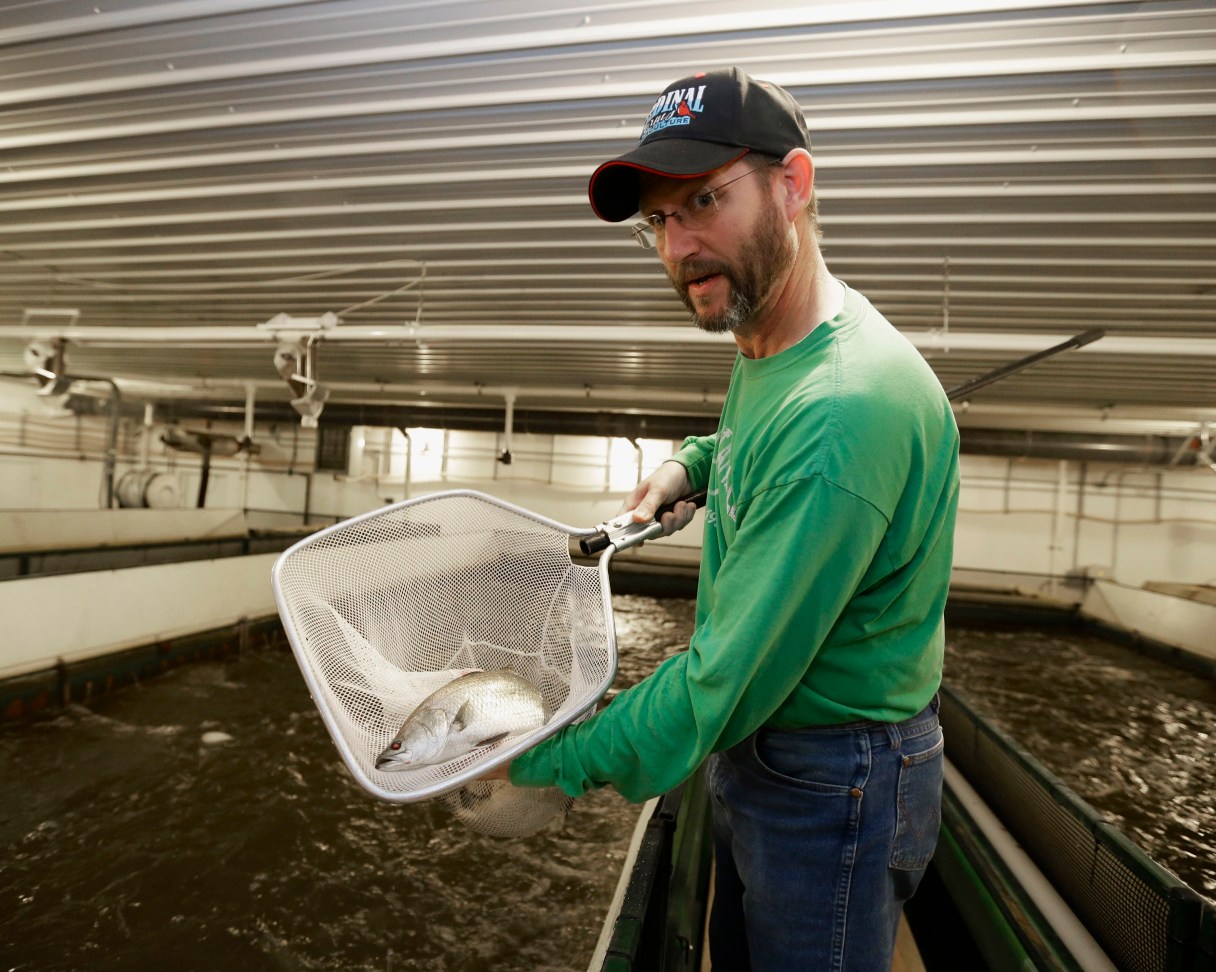
Scott Garwood of Cardinal Farms displays an Asian sea bass called barramundi, which he grows in Dakota City, Neb., Wednesday, Dec. 10, 2014. Farmers in the Midwest are increasingly turning to land-based, indoor fish farms to grow everything from freshwater trout to Atlantic salmon and sea bass, effectively bringing the surf to the turf. The reasons for the advent of indoor fish farming include overfishing of the world's waters and soaring consumption of fish, especially in the U.S., outstripping supply. (AP Photo/Nati Harnik)
Scott Garwood of Cardinal Farms displays an Asian sea bass called barramundi, which he grows in Dakota City, Neb., Wednesday, Dec. 10, 2014. Farmers in the Midwest are increasingly turning to land-based, indoor fish farms to grow everything from freshwater trout to Atlantic salmon and sea bass, effectively bringing the surf to the turf. The reasons for the advent of indoor fish farming include overfishing of the world's waters and soaring consumption of fish, especially in the U.S., outstripping supply. (AP Photo/Nati Harnik) Scott Garwood of Cardinal Farms displays an Asian sea bass called barramundi, which he grows in Dakota City, Neb., Wednesday, Dec. 10, 2014. Farmers in the Midwest are increasingly turning to land-based, indoor fish farms to grow everything from freshwater trout to Atlantic salmon and sea bass, effectively bringing the surf to the turf. The reasons for the advent of indoor fish farming include overfishing of the world's waters and soaring consumption of fish, especially in the U.S., outstripping supply. (AP Photo/Nati Harnik)

OMAHA, Neb. (AP) – The latest of five generations who have worked the same ground in northeastern Nebraska, 52-year-old Scott Garwood, isn’t growing corn or cattle – it’s fish.

Specifically, thousands of an Australian freshwater species called barramundi – often dubbed Asian sea bass because of its similar sweet, white flaky flesh – in large tanks inside a warehouse.

With global consumption of seafood outpacing wild fish populations, many have turned from roving the world’s waters to aquaculture, using coastal net pens or ponds to raise freshwater and saltwater species. But the emerging trend of indoor aquaculture is bringing the surf to America’s turf.

Farmers are increasingly embracing the practice as a way to stay in agriculture and participate in what’s billed as “green” food production, with virtually no chance of their fish spreading disease or genetic mutation into the wild. And such tank systems can be placed almost anywhere – from Minnesota to Florida – because temperature and water quality can be controlled.

Moreover, there’s a market for these land-grown fish. The U.S. imports more than 90 percent of the 4.5 billion pounds of seafood it consumes a year.