
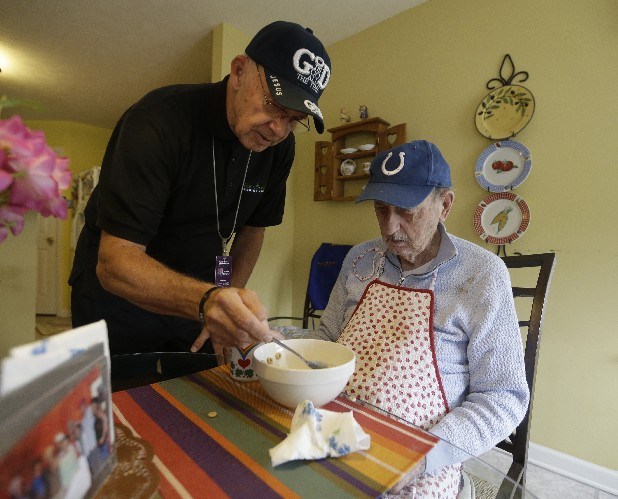
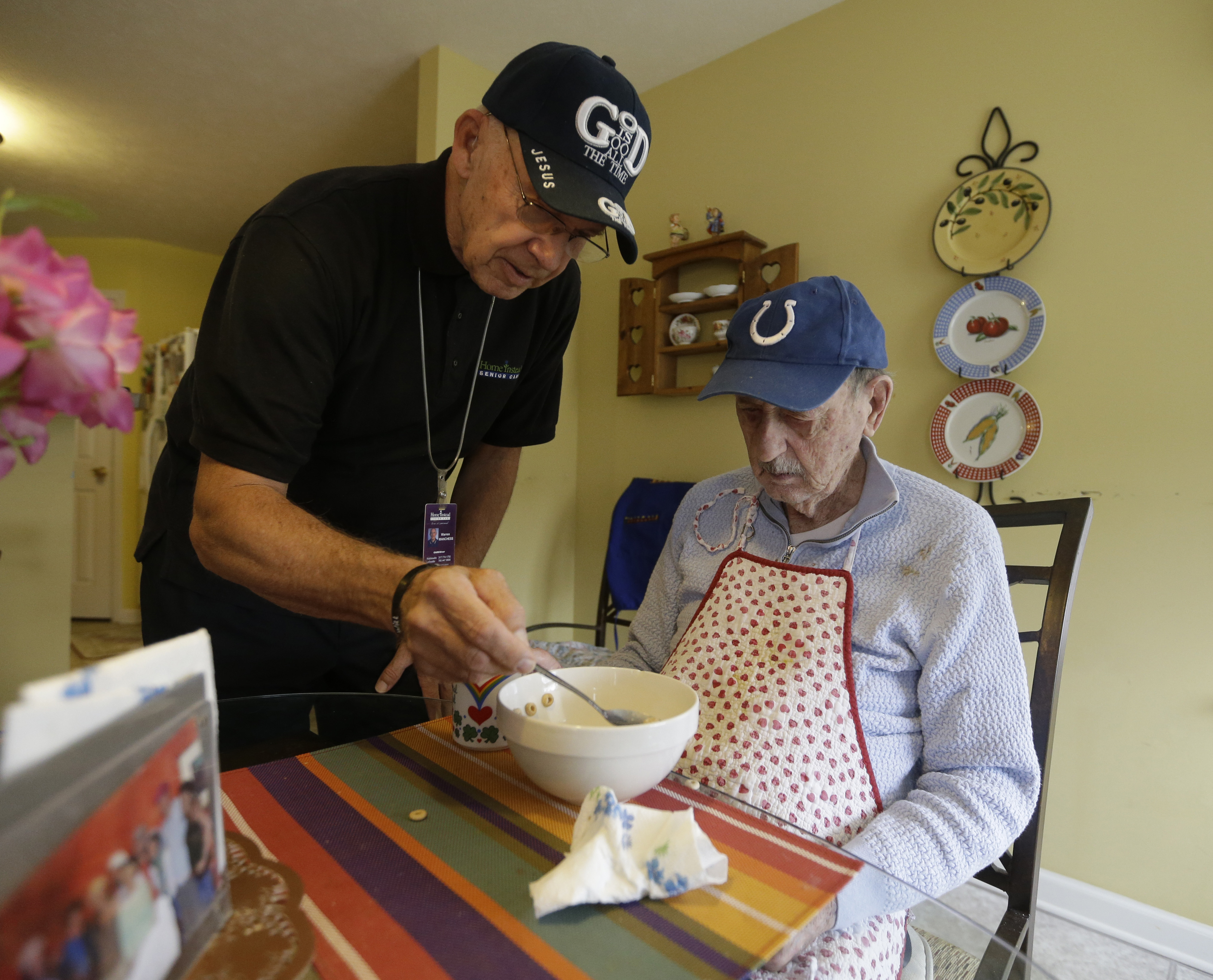
 Caregiver Warren Manchess, 74, left, helps Paul Gregoline, 92, with a meal, in Noblesville Ind. Burgeoning demand for senior services like home health aides is being met by a surprising segment of the workforce: Other seniors. Twenty-nine percent of so-called direct-care workers are projected to be 55 or older by 2018 and in some segments of that population older workers are the single largest age demographic. With high rates of turnover, home care agencies have shown a willingness to hire older people new to the field who have found a tough job market as they try to supplement their retirement income.
NOBLESVILLE, Ind. – Paul Gregoline lies in bed, awaiting the helper who will get him up, bathed and groomed. He is 92 years old, has Alzheimer’s disease and needs a hand with nearly every task the day brings. When the aide arrives, though, he doesn’t look so different from the client himself – bald and bespectacled.
“Just a couple of old geezers,” jokes Warren Manchess, the 74-year-old caregiver.
As demand for senior services provided by nurses’ aides, home health aides and other such workers grows with the aging of baby boomers, so are those professions’ employment of other seniors. The new face of America’s network of caregivers is increasingly wrinkled.
Among the overall population of direct-care workers, 29 percent are projected to be 55 or older by 2018, up from 22 percent a decade earlier, according to an analysis by the Paraprofessional Healthcare Institute, or PHI, a New York-based nonprofit advocating for workers caring for the country’s elderly and disabled. In some segments of the workforce, including personal and home care aides, those 55 and older are the largest single age demographic.
“I think people are surprised that this workforce is as old as it is,” said Abby Marquand, a researcher at PHI. “There’s often people who have chronic disease themselves who have to muster up the energy to perform these really physically taxing caregiving needs.”