
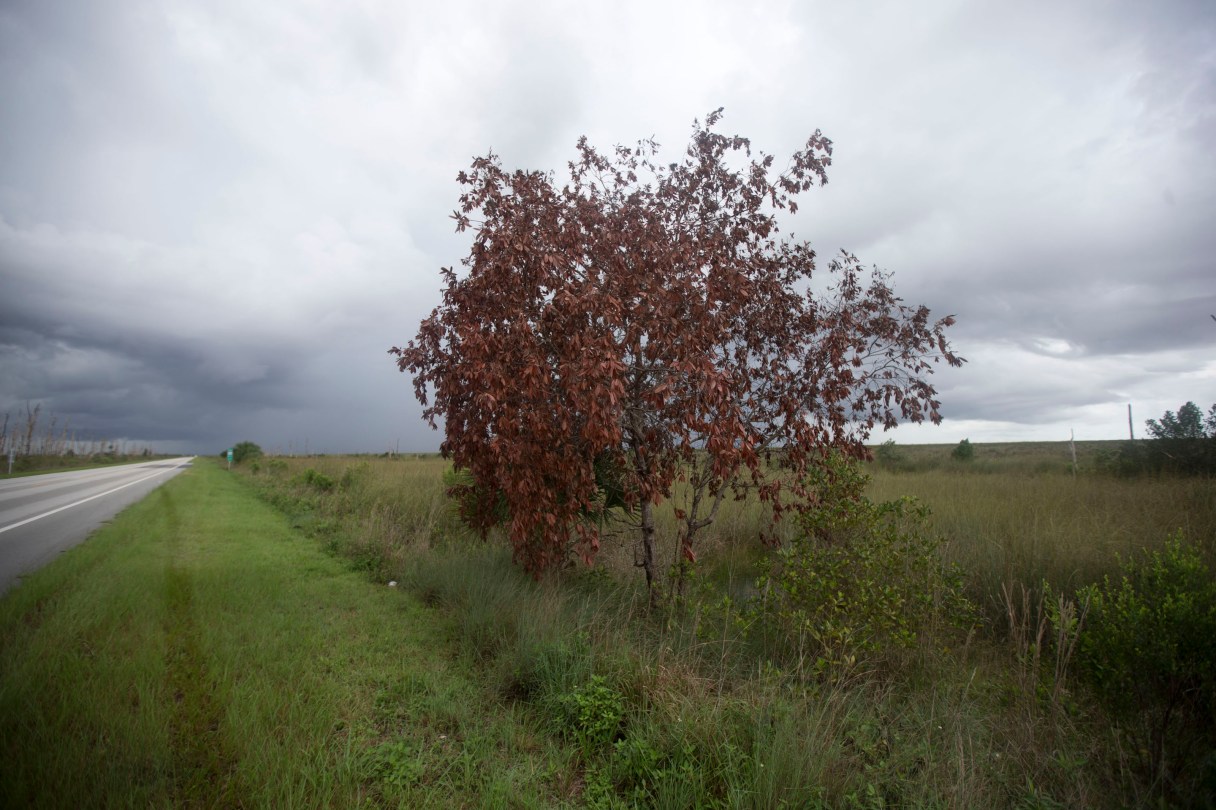
MIAMI (AP) – A fungus carried by an invasive beetle from southeast Asia is felling trees across the Everglades, and experts have not found a way to stop a way to stop the blight from spreading.
Then there’s a bigger problem – the damage may be leaving Florida’s fragile wetlands open to even more of an incursion from exotic plants threatening to choke the unique Everglades and undermine billions of dollars’ worth of restoration projects.
Since first detected on the edge of Miami’s western suburbs in 2011, laurel wilt has killed swamp bay trees scattered across 330,000 acres of the Everglades, a roughly 2 million-acre system that includes Everglades National Park. The fungus is spread by the tiny redbay ambrosia beetle, which likely arrived in this country in a shipment of wood packing material.
The same fungus also plagues commercial avocado trees and redbay trees elsewhere in Florida and the Southeast. While the state has been working with the avocado industry to mitigate the damage, there’s been no way to contain it in swamp bay or redbay trees. Experts say the best defense would be stopping invasive pests from crossing U.S. borders in the first place.
Hundreds of millions of redbay trees have succumbed across six states since 2002, said Jason Smith, an expert in forest pathology at the University of Florida.