
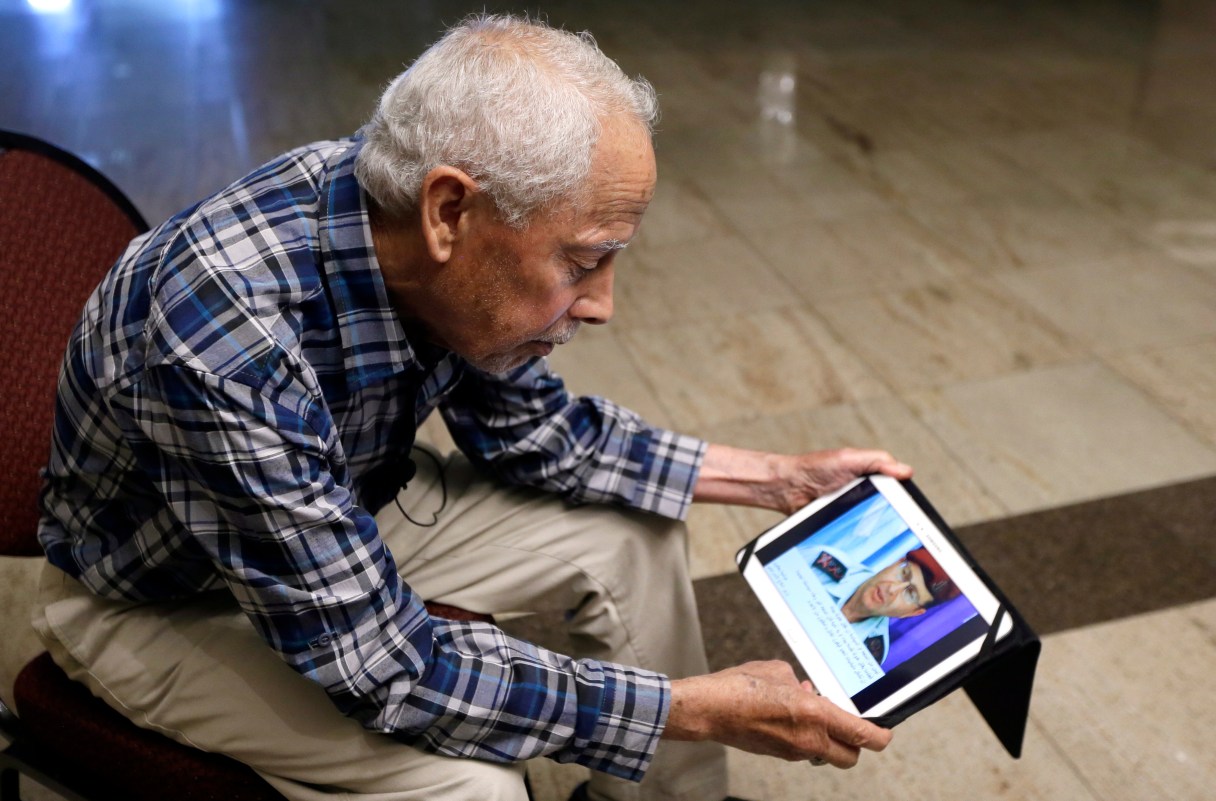
SAN DIEGO (AP) – A sobbing businessman in his 30s rings a hotline set up by his fellow Iraqi immigrants, desperate to talk to someone after fearing his father was the man he saw in an online news video of a beheading in northern Iraq.
Another call came in from a mother who was inconsolable after not hearing from her son and daughter-in-law who had a baby a year ago in the besieged city of Mosul.
The anguish caused by the violence thousands of miles away fills the business office in San Diego where volunteers man the hotline to help Iraqi immigrants cope.
Many Iraqi immigrants in the United States who risked their lives to escape the country’s past wars fear they may never hear from those they left behind. They have been unable to communicate with their families in Iraq where Sunni militants have seized territory. The unrest is hitting their close-knit immigrant communities hard and dashing the little hope they had of ever returning.
“My heart is breaking every day,” said Laith Shamon, 42, an Iraqi Christian who has been manning the hotline for a week. “One man told me he saw a video on the Internet of a beheading, and he thought the victim was his dad. He was crying and telling me he needs to know. He can’t get ahold of him. There have been a lot of calls like that. I tell them we have to be patient and pray.”