
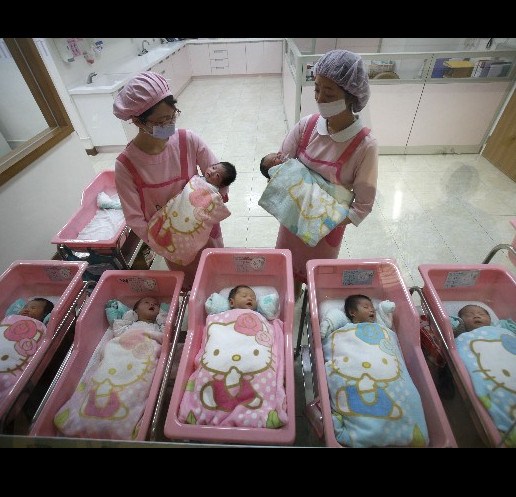
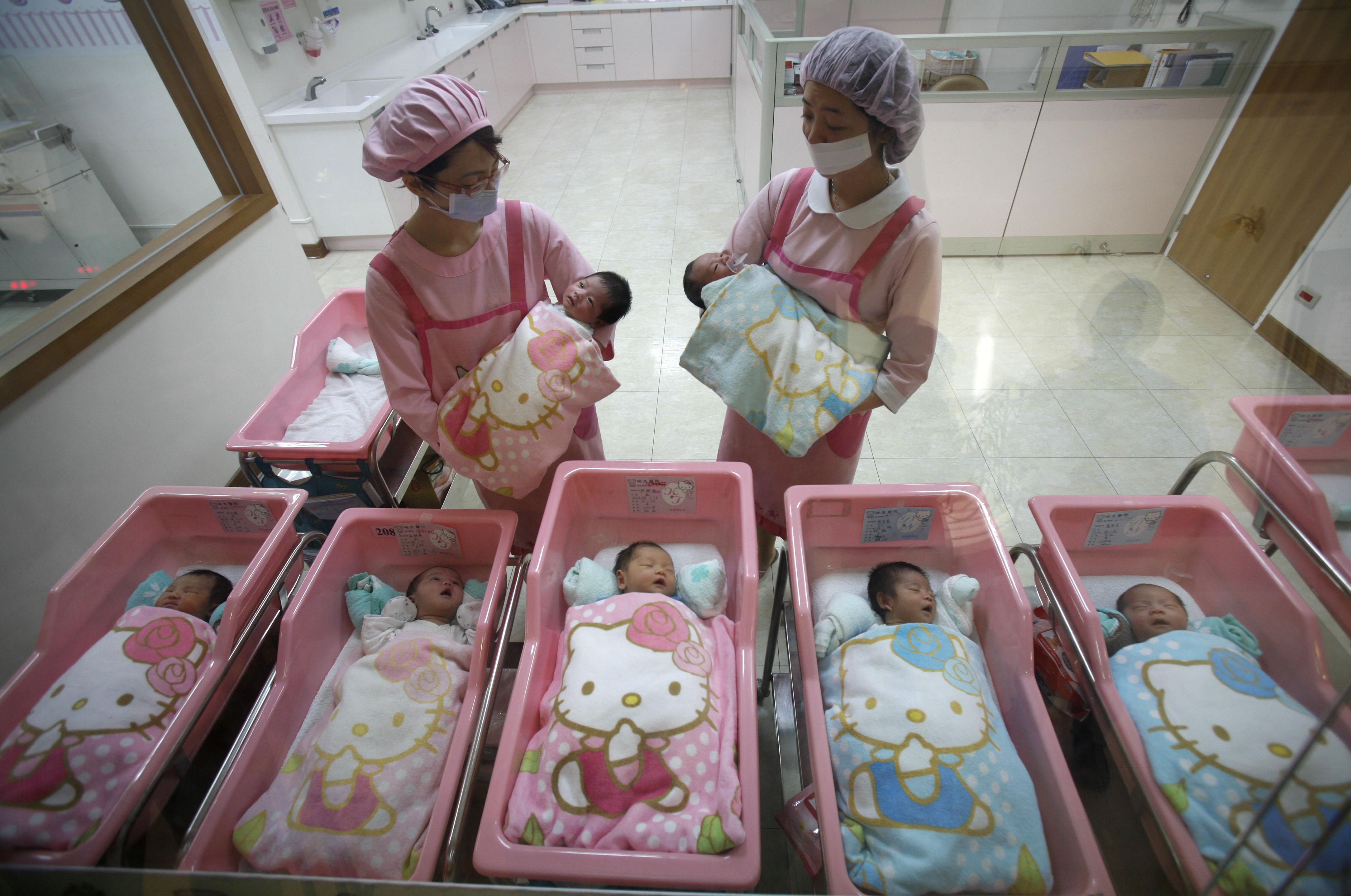
 Nurses check on newborns at the Hello Kitty-designed maternity ward at the Hau Sheng hospital in the southern Taiwan city of Chunghua. Five years after the deepest global recession since the 1930s sent birth rates plunging around the world, many couples are still not having children. That’s good news if you’re worried about an overcrowded planet. But it’s bad for the economy.
NEW YORK – Nancy Strumwasser, a high school teacher from Mountain Lakes, New Jersey, always thought she’d have two children. But the layoffs that swept over the U.S. economy around the time her son was born six years ago helped change her mind. Though she and her husband, a market researcher, managed to keep their jobs, she fears they won’t be so fortunate next time.
“After we had a kid in 2009, I thought, ‘This is not happening again,'” says Strumwasser, 41, adding, “I never really felt comfortable about jobs, how solid they can be.”
The financial crisis that followed the collapse of U.S. investment bank Lehman Brothers in 2008 did more than wipe out billions in wealth and millions of jobs. It also sent birth rates tumbling around the world as couples found themselves too short of money or too fearful about their finances to have children. Six years later, birth rates haven’t bounced back.
For an overcrowded planet, this is good news. For the economy, not so good.
We tend to think economic growth comes from working harder and smarter. But economists attribute up to a third of it to more people joining the workforce each year than leaving it. The result is more producing, earning and spending.