
Wednesday, November 11, 2026Nov 11

EU cuts growth forecasts as big economies falter

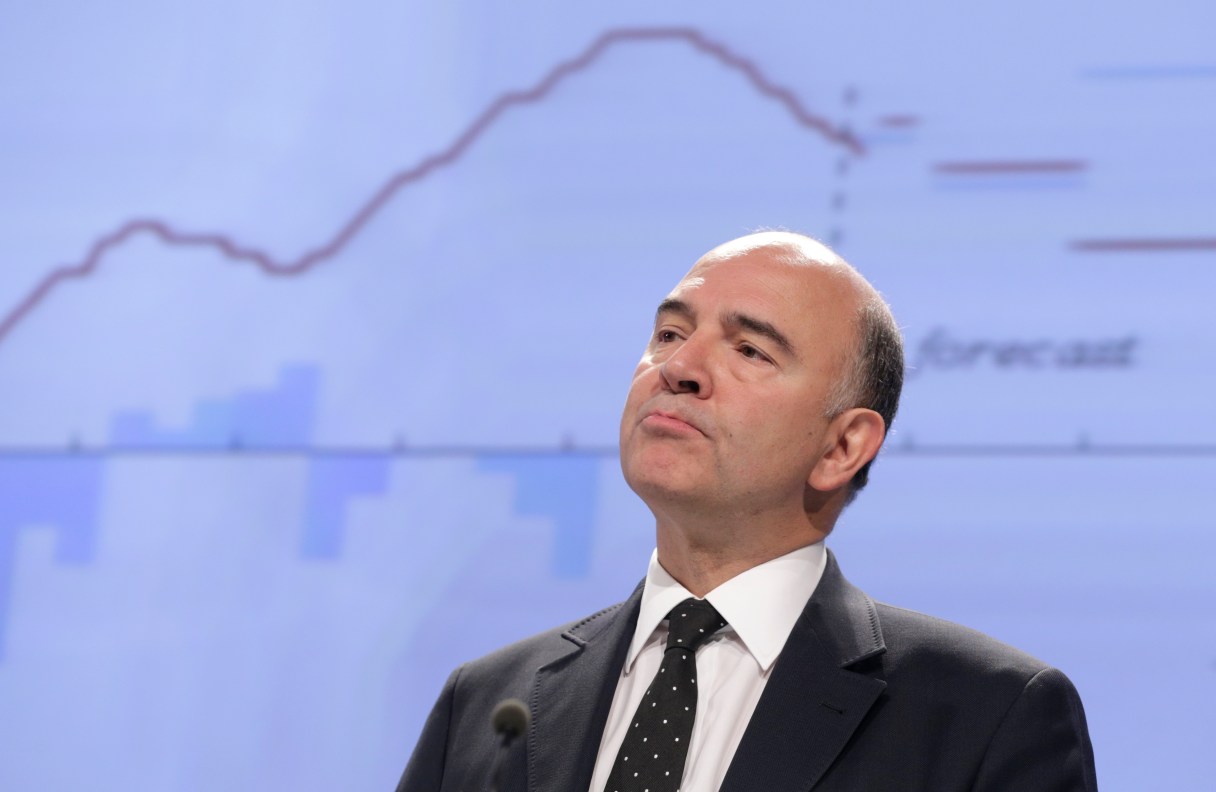
European Commissioner for Economic and Financial Affairs Pierre Moscovici addresses the media at the European Commission headquarters in Brussels, Tuesday, Nov. 4, 2014. European Union slashed its economic growth forecasts for the bloc on Tuesday, indicating the recovery will remain sluggish amid problems for the biggest economies, particularly France. (AP Photo/Yves Logghe)
European Commissioner for Economic and Financial Affairs Pierre Moscovici addresses the media at the European Commission headquarters in Brussels, Tuesday, Nov. 4, 2014. European Union slashed its economic growth forecasts for the bloc on Tuesday, indicating the recovery will remain sluggish amid problems for the biggest economies, particularly France. (AP Photo/Yves Logghe) European Commissioner for Economic and Financial Affairs Pierre Moscovici addresses the media at the European Commission headquarters in Brussels, Tuesday, Nov. 4, 2014. European Union slashed its economic growth forecasts for the bloc on Tuesday, indicating the recovery will remain sluggish amid problems for the biggest economies, particularly France. (AP Photo/Yves Logghe)

BRUSSELS (AP) – The European Union cut its already low economic growth forecasts further on Tuesday, indicating the recovery will remain sluggish amid problems for the biggest economies, particularly France and Germany.

The official forecast for growth this year in the 18-country eurozone was cut to 0.8 percent from a prediction of 1.2 percent made in the spring. Indicating little good was expected next year too, it reduced the 2015 prediction from 1.7 percent to 1.1 percent.

“The situation in the euro area remains extremely fragile,” said German Chancellor Angela Merkel.

Unemployment in the currency union was forecast to decrease at a painfully slow rate – after 11.6 percent this year, it is expected to dip to 11.3 percent next year and 10.8 percent in 2016.

The broader 28-nation EU, which includes non-euro members like Britain and Sweden, was expected to grow 1.3 percent this year from a previous 1.6 percent forecast.