
Wednesday, November 11, 2026Nov 11

Parents lie on survey to identify English learners

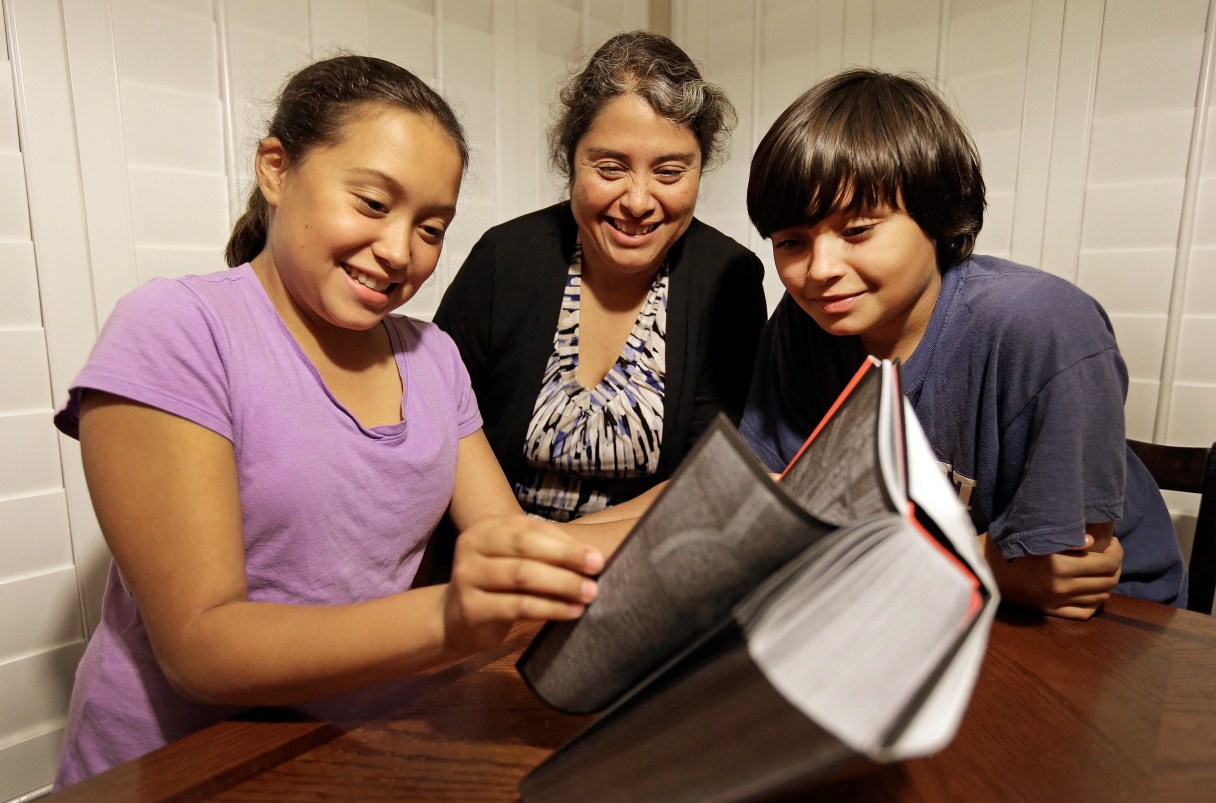
In this Nov. 10, 2014 photo, Rosaisela Rodriguez, center, reads with her children Isabel Gutierrez, left, and Rafael Gutierrez, at their home in Pleasant Hill, Calif. Rodriguez deliberately didn't declare that her twin son and daughter knew Spanish when she enrolled them in school, adding that most 5-year-olds are language learners, regardless of whether they are bilingual. (AP Photo/Ben Margot)
In this Nov. 10, 2014 photo, Rosaisela Rodriguez, center, reads with her children Isabel Gutierrez, left, and Rafael Gutierrez, at their home in Pleasant Hill, Calif. Rodriguez deliberately didn't declare that her twin son and daughter knew Spanish when she enrolled them in school, adding that most 5-year-olds are language learners, regardless of whether they are bilingual. (AP Photo/Ben Margot) In this Nov. 10, 2014 photo, Rosaisela Rodriguez, center, reads with her children Isabel Gutierrez, left, and Rafael Gutierrez, at their home in Pleasant Hill, Calif. Rodriguez deliberately didn't declare that her twin son and daughter knew Spanish when she enrolled them in school, adding that most 5-year-olds are language learners, regardless of whether they are bilingual. (AP Photo/Ben Margot)

LOS ANGELES (AP) – Nieves Garcia came from Mexico at age 6 and spent most of her elementary school years in California classified as an “English learner” even after she had picked up the language. Now a 32-year-old mother, she didn’t want her daughter labeled the same way and subjected to additional testing.

And so she lied.

When Garcia signed up her daughter for kindergarten, she answered a standard four-question survey by saying her family spoke only English at home, even though her husband doesn’t speak the language.

“I just said we spoke English, English, English and English,” Garcia said.

California education officials say it’s tough to know how many parents lie on the home language survey they are required to fill out before their children start public school. Educators say failing to identify students who need language assistance can set the children back and violate federal laws guaranteeing access to education.