
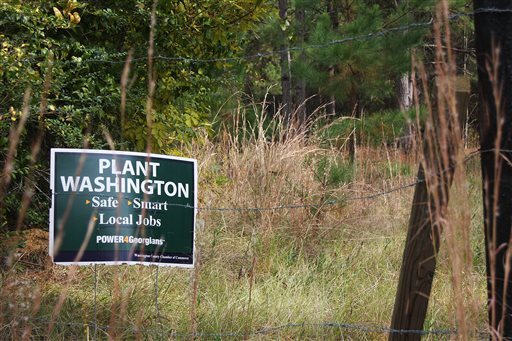
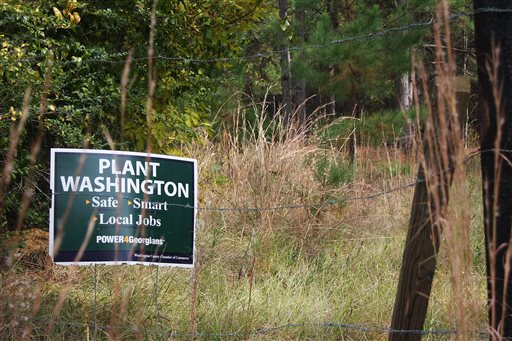
 A sign supporting the proposed Plant Washington, a coal-fire power plant, sits near the site where it would be built in Sandersville, Ga., in this Nov. 12, 2014, photo.
SANDERSVILLE, Ga. – Deep in rural Georgia, a developer is betting he can build one of the last new coal-fired power plants in the United States as the rest of the country moves away from the fuel.
The project, which is being developed by Allied Energy Services, is an outlier. If constructed, Plant Washington would be one of just two planned coal plants in the United States to dodge pending rules from President Barack Obama’s administration severely restricting carbon dioxide emissions. Carbon dioxide is the chief greenhouse gas blamed for global warming.
Still, analysts question whether the estimated $2 billion project, which will be built near Sandersville, Georgia, makes financial sense right now. A booming supply of natural gas has driven gas prices to historic lows, making coal expensive by comparison. Big regional utilities like Southern Co. and the Tennessee Valley Authority are shuttering old coal-fired plants and replacing them with gas-burning units. The only coal plants that could meet the proposed restrictions would have to trap their carbon dioxide emissions, and that technology has proven tremendously expensive.
For starters, it’s not clear who will fund the power plant. The developer behind the Georgia project, C. Dean Alford, said he has support from the Taylor Energy Fund to help cover development costs, though he lacks commitments from utility companies to buy the electricity. The last electric companies in the development consortium left last year. The project owners also failed to pay their 2013 property taxes for the plant site on time, and the county government threatened to sell off the land until it received a roughly $9,600 payment. Alford said the tax notices were sent to the wrong address by mistake, and he denies the project is under financial pressure.
“We think it really is important to be able to demonstrate that coal can be built and it can be affordable,” Alford said. “I think it’s in the state’s best interest, I think it’s in this nation’s best interest to not take anything off the table as it relates to energy.”