
Tuesday, November 10, 2026Nov 10

Sandy’s mental health impact looms large

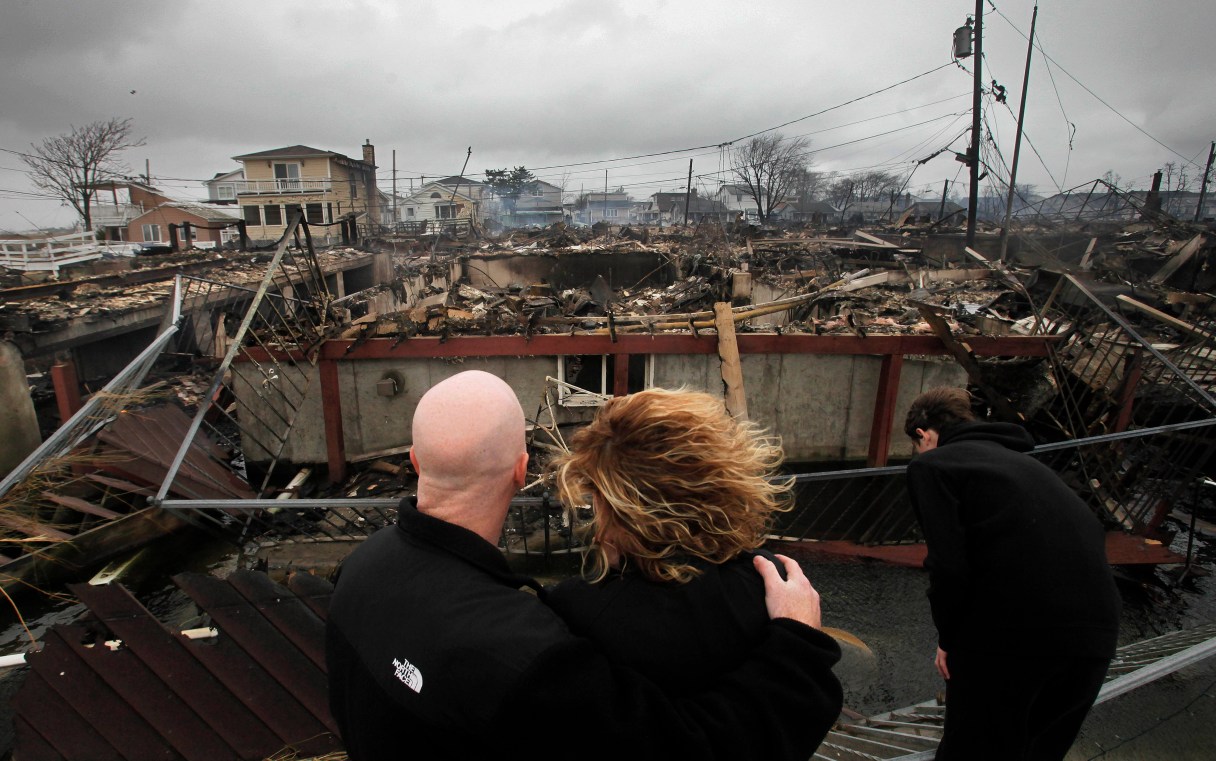
FILE- In this Oct. 30, 2012 file photo, a couple surveys the remains of the home owned by the woman’s parents that burned to the ground during Superstorm Sandy in the Breezy Point section of New York. New York health officials estimate about 700,000 residents are still experiencing mental health problems related to the storm, which hit on Oct. 29, 2012. New Jersey officials did not have a similar estimate but in the 15 months after Sandy, the state supported a disaster mental health program that served 500,000 people. (AP Photo/Mark Lennihan, File)
FILE- In this Oct. 30, 2012 file photo, a couple surveys the remains of the home owned by the woman’s parents that burned to the ground during Superstorm Sandy in the Breezy Point section of New York. New York health officials estimate about 700,000 residents are still experiencing mental health problems related to the storm, which hit on Oct. 29, 2012. New Jersey officials did not have a similar estimate but in the 15 months after Sandy, the state supported a disaster mental health program that served 500,000 people. (AP Photo/Mark Lennihan, File) FILE- In this Oct. 30, 2012 file photo, a couple surveys the remains of the home owned by the woman’s parents that burned to the ground during Superstorm Sandy in the Breezy Point section of New York. New York health officials estimate about 700,000 residents are still experiencing mental health problems related to the storm, which hit on Oct. 29, 2012. New Jersey officials did not have a similar estimate but in the 15 months after Sandy, the state supported a disaster mental health program that served 500,000 people. (AP Photo/Mark Lennihan, File)

LONG BEACH, N.Y. (AP) – Kathy and Mark Michaels huddled in the attic of their Long Beach home as Superstorm Sandy turned streets into canals, ripped apart the iconic boardwalk and snapped electrical lines. As blue police lights flashed in the howling wind, the acrid stench of burning buildings wafted through the air.

“I was very worried the whole roof was going to come down on us,” Kathy Michaels said. “We were holding hands. We thought it would maybe be our last night on earth.”

Michaels has tried antidepressants, psychotherapy and weekly support group meetings to cope with her trauma. She’s back in her home now, but says she is forever changed.

“You don’t like things like this to define your life but I don’t think I’ll ever be the same,” said Michaels, 60. “I’ll never be psychologically the same.”

New York health officials estimate about 700,000 residents are still experiencing mental health problems from the storm, which hit on Oct 29, 2012. New Jersey officials did not have a similar estimate but in the 15 months after Sandy, the state supported a disaster mental health program that served 500,000 people.