
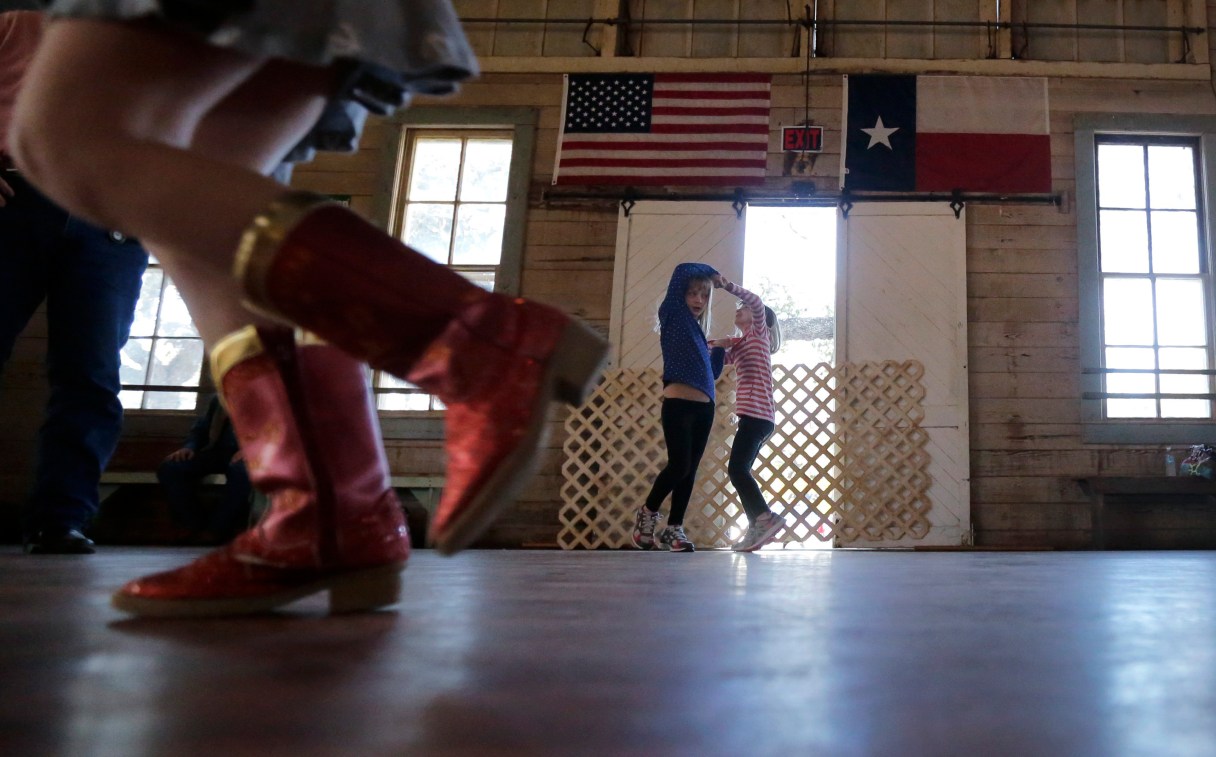
KENDALIA, Texas (AP) – Some 40 miles north of San Antonio, along a lonely two-lane road, stands a bedraggled, tin-sided building that hints at Texas’ past.
Kendalia Halle’s multi-tiered wooden truss was decked out in white lights as Bruce and Louetta Schwab joined about 200 others for a monthly dance. The Schwabs live east of Dallas and during their recent visit to central Texas Hill Country decided to visit the old hall, where patrons paid about $20 to hear Bobby Jordan and the Ridgecreek Band.
“It’s a combination of her love to dance and my interest in German history,” said Bruce Schwab.
Kendalia Halle was built more than 100 years ago by German immigrants, who through the latter half of the 19th century comprised more than 5 percent of the state’s population, according to the Texas State Historical Commission. It’s one of an estimated 1,000 dance halls that sprung up around Texas in the 1800s, knitting together German, Czech, Polish and other immigrant communities.
About 400 such halls still stand – many unused and decaying – but only two traditional Texas dance halls continue to operate on nearly a daily basis: Luckenbach hall in Fredericksburg and Gruene Hall in New Braunfels.