
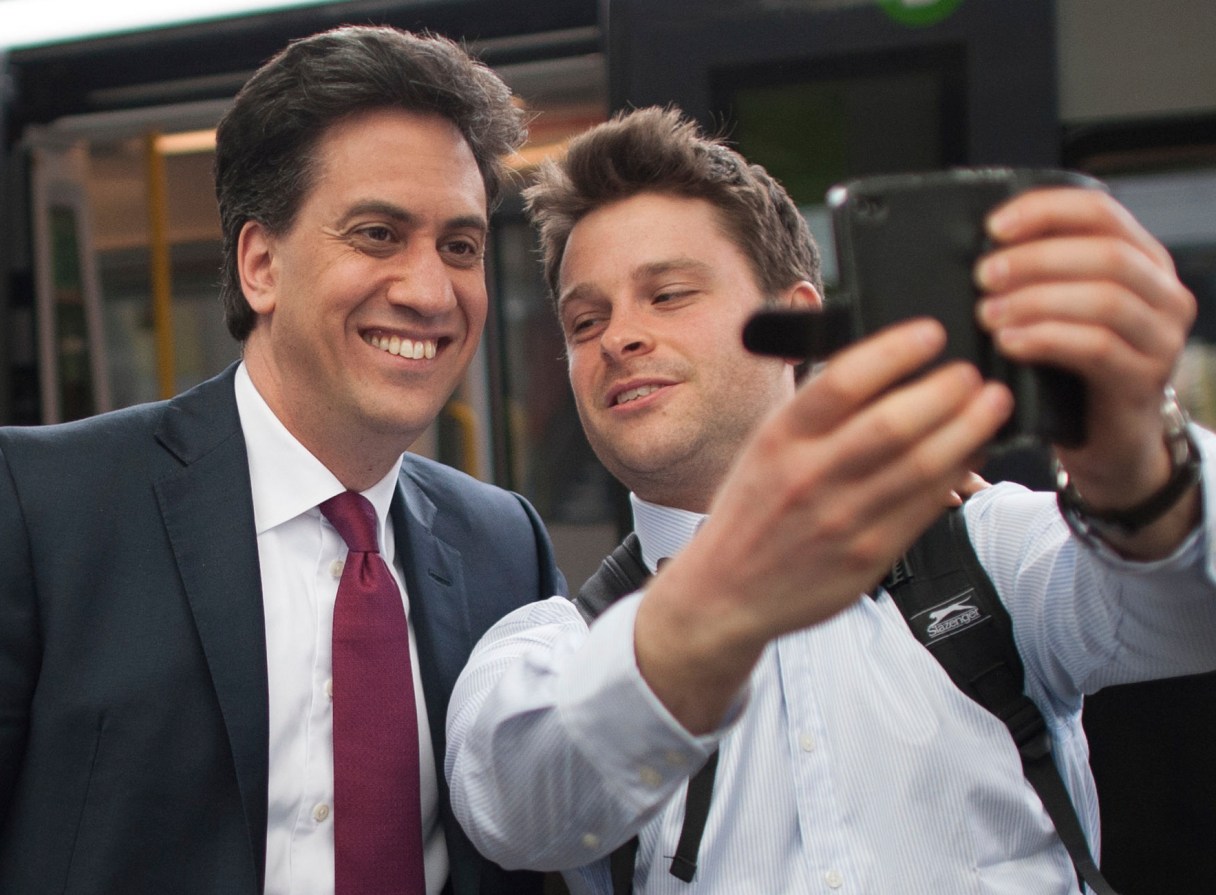
LONDON (AP) – Once, election campaigning meant knocking on doors, organizing meetings and licking stamps. Now it also includes honing hashtags, rallying retweets and clicking “like.”
In Britain’s close-fought races for Parliament, the battle online may be as important as the battle on the ground. It’s certainly more personal.
Most political advertising is banned in Britain, and strict rules govern election broadcasts. But these don’t apply to the Internet, so political parties are pouring money into YouTube, Facebook and Twitter campaigns – including U.S.-style attack ads rarely seen before in Britain.
On Conservative social media, Labour Party leader Ed Miliband is a tax-raising reckless spender in the pocket of Scottish separatists. For Labour, Conservative Prime Minister David Cameron is a cowardly “invisible man” because he refused to take part in several televised election debates.
Carl Miller, research director of the Center for the Analysis of Social Media at think-tank Demos, says the big political parties are pumping resources into “dominating the digital landscape” as never before.