
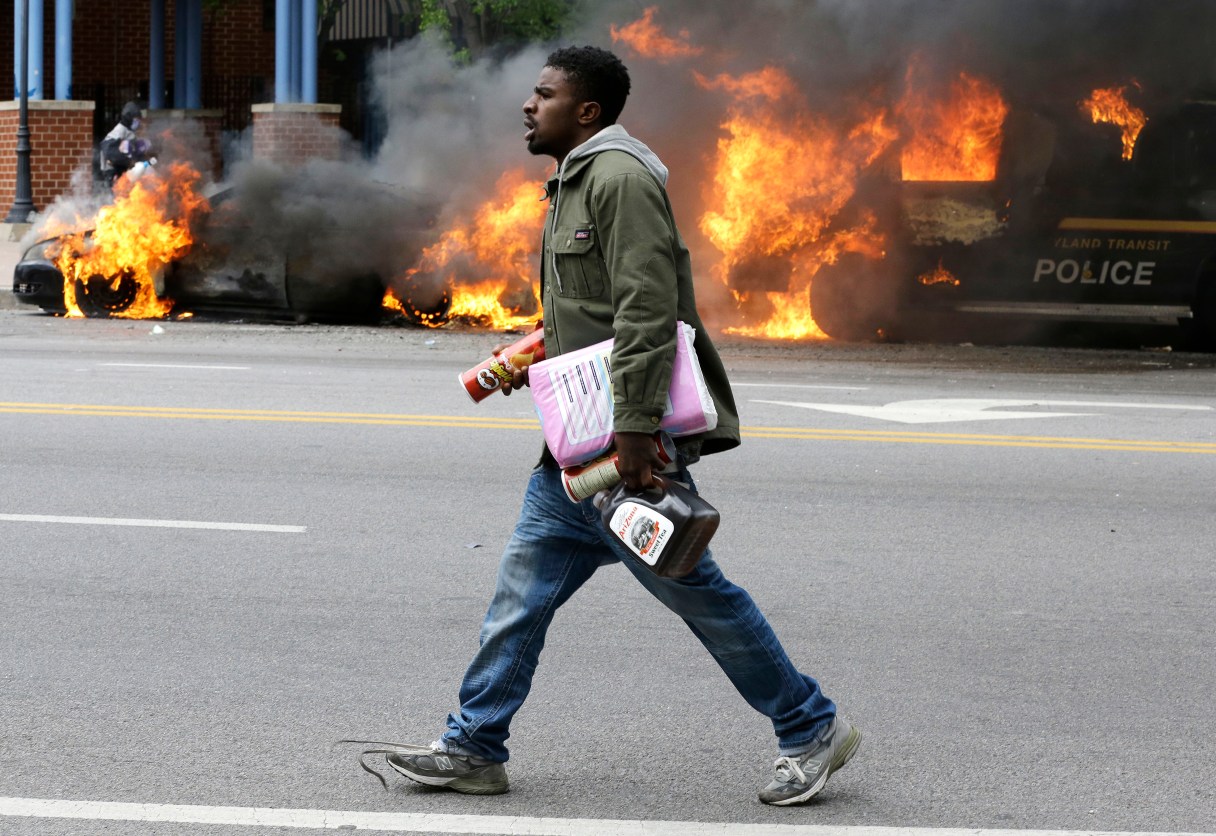
BALTIMORE (AP) – National Guard troops fanned out through the city, shield-bearing police officers blocked the streets and firefighters doused still-simmering blazes early Tuesday as a growing area of Baltimore shuddered from riots following the funeral of a black man who died in police custody.
The violence that started in West Baltimore on Monday afternoon – within a mile of where Freddie Gray was arrested and placed into a police van earlier this month – had by midnight spread to East Baltimore and neighborhoods close to downtown and near the baseball stadium.
It was one of the most volatile outbreaks of violence prompted by a police-involved death since the days of protests that followed the death of Michael Brown, an unarmed black man who was shot and killed during a confrontation with a white police officer in Ferguson, Missouri, last summer.
At least 15 officers were hurt, including six who remained hospitalized late Monday, police said. Two dozen people were arrested.
State and local authorities pledged to restore order and calm to Baltimore, but quickly found themselves responding to questions about whether their initial responses had been adequate.