
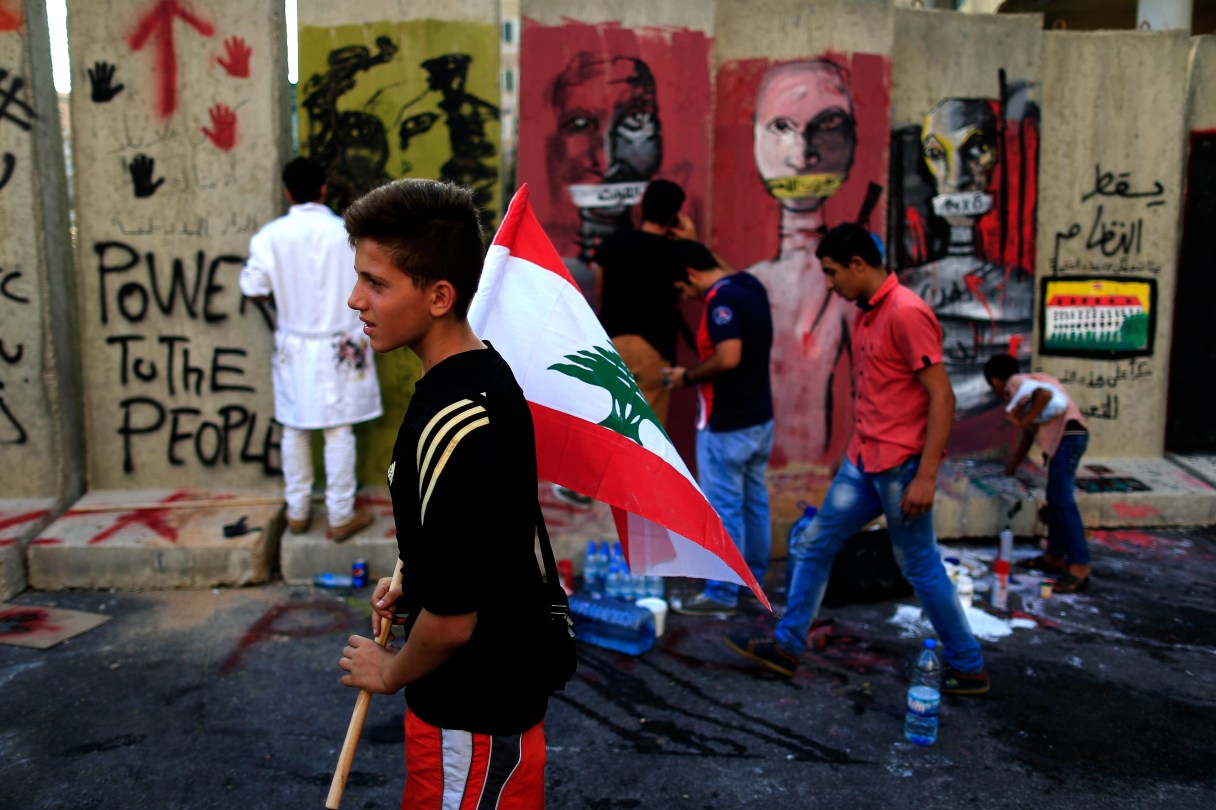
BEIRUT (AP) – It took a garbage crisis for Lebanon to finally snap.
Anger about the heaps of trash accumulating in Beirut’s streets boiled over this week with thousands protesting in the street against a government so dysfunctional it can’t hold elections or pick a president, much less deliver basic services.
While surviving the Arab Spring and neighboring Syria’s civil war relatively unscathed, tiny Lebanon could find itself plunging into renewed chaos if further violence tears across the capital. And its politicians, many of them warlords from the country’s own brutal 15-year civil war, may be sweating through the end of this long, hot Arab summer.
“It shows the Lebanese society to some extent catching up with the rest of the Arab world in terms of popular protests against the central government,” said Rami Khouri, a senior fellow at the Issam Fares Institute at the American University of Beirut.
In many ways, Lebanon never got over its civil war, which raged from 1975 until 1990. Some of the country’s aging warlords passed on their power to their sons and relatives. Consecutive governments neglected to improve the country’s infrastructure, leading to chronic water shortages and electricity cuts even now, 25 years after the war ended.