
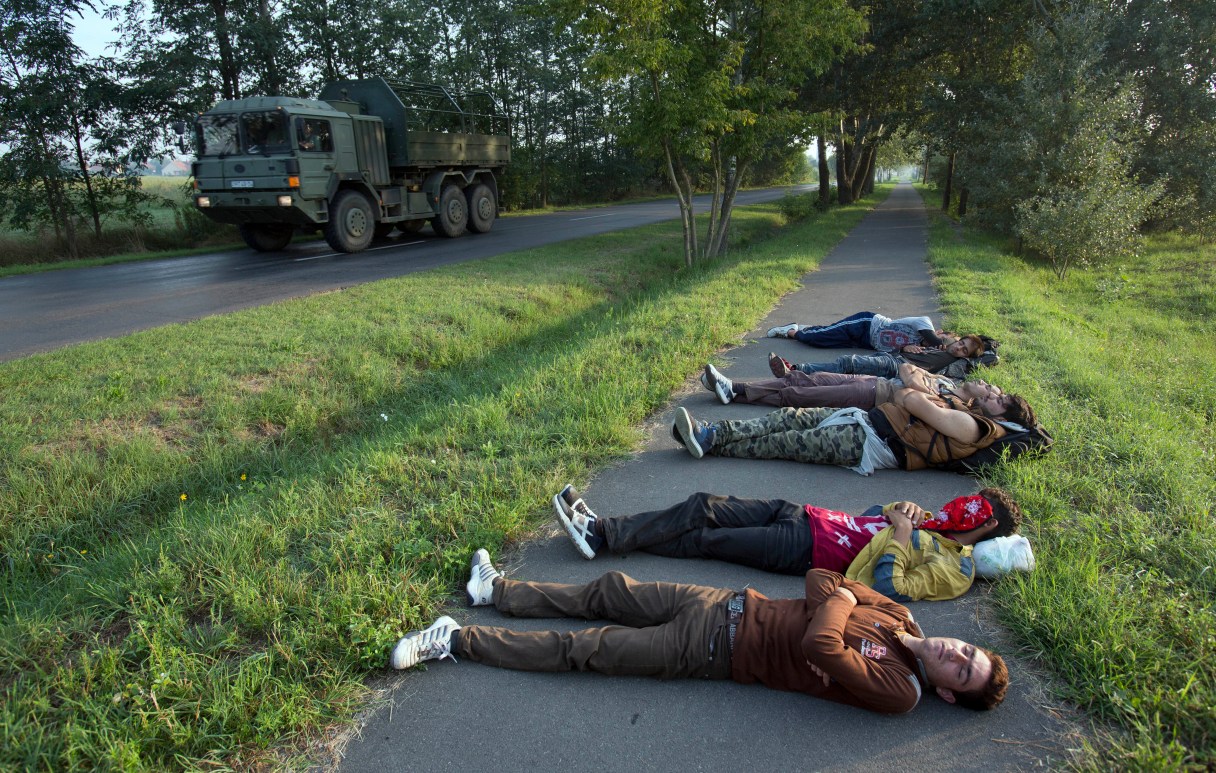
ROSZKE, Hungary (AP) – On the edge of a Hungarian cornfield, the beam from a car’s headlights reflects in their eyes: Europe’s newest residents, catching their breath, fresh from evading border police.
Emotions sway from forlorn to triumphant and back again on this migrant-besieged frontier, as thousands of exhausted trekkers achieve one goal only to face another daunting challenge. Many already have slipped through Syria’s border into Turkey lugging children or elderly parents, crossed the choppy seas to Greece and navigated the Balkan nations of Macedonia and Serbia by foot, bus or train.
No razor-wire fence is going to stop them from entering Hungary, the gateway to the 28-nation European Union, and beginning what could be a yearslong legal battle to prove their right to refugee status.
A journalist walking alongside the migrants is surrounded and bombarded with questions. Most seek reassurance that their weeks of physical toil and financial sacrifice – many have paid smugglers more than 3,000 euros ($3,500) each along the way – have not been in vain.
“Please, tell me, 100 percent, will Germania take me? They do not care if I come to Hungaria? No lie?” asks Mohammed Abdallah, a 35-year-old Iraqi civil engineer from Baghdad.