
Thursday, October 29, 2026Oct 29

This story is free to read.

Study: Tiny, wireless pacemaker could be surgery-free option

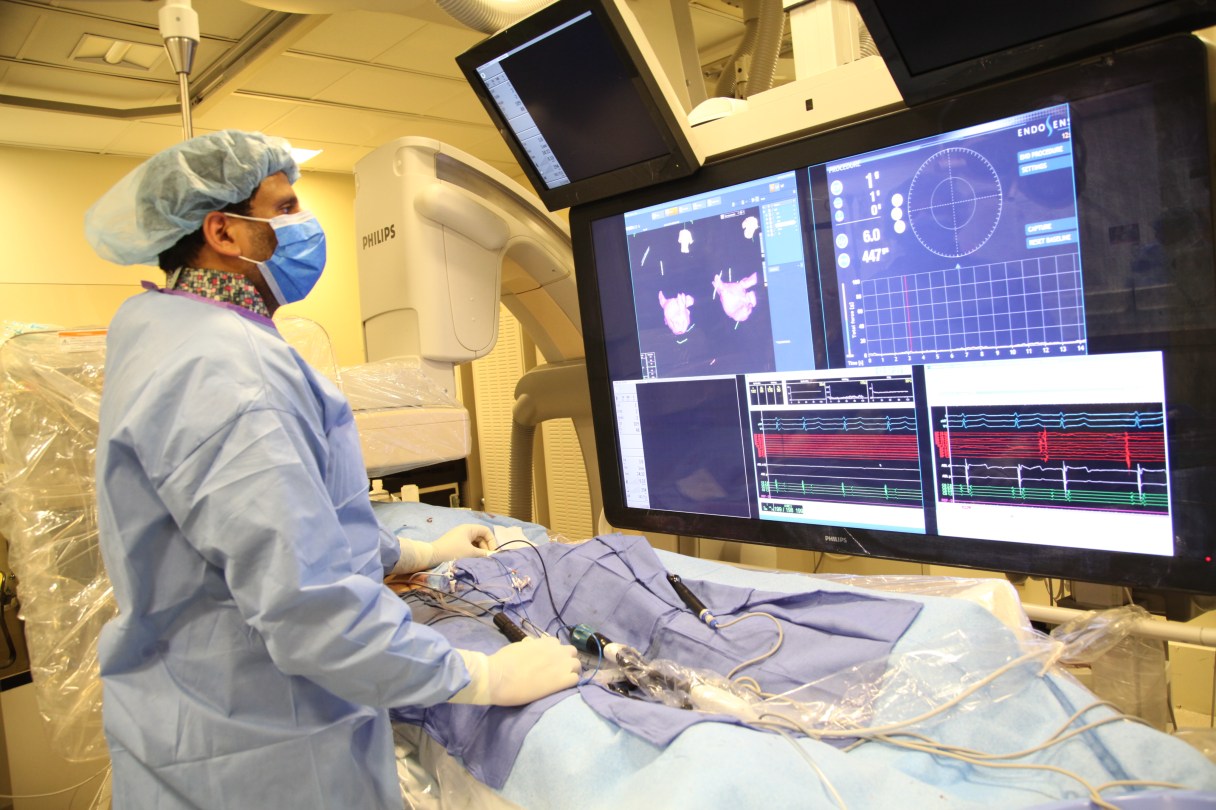
In this undated image provided on Saturday Aug. 29, 2015  by Mount Sinai Hospital in New York shows Dr Vivek Reddy as he checks the screen  while doing a surgery to implant the new tiny  wireless pacemaker at the Mount Sinai hospital in New York . Unlike traditional pacemakers — which need a generator and wires and are implanted via surgery — the new pacemaker is a wireless tiny tube that can be attached to the right side of the heart using a catheter inserted through the leg. (Mount Sinai Hospital via AP) NO ARCHIVE NO SALES
In this undated image provided on Saturday Aug. 29, 2015 by Mount Sinai Hospital in New York shows Dr Vivek Reddy as he checks the screen while doing a surgery to implant the new tiny wireless pacemaker at the Mount Sinai hospital in New York . Unlike traditional pacemakers — which need a generator and wires and are implanted via surgery — the new pacemaker is a wireless tiny tube that can be attached to the right side of the heart using a catheter inserted through the leg. (Mount Sinai Hospital via AP) NO ARCHIVE NO SALES In this undated image provided on Saturday Aug. 29, 2015 by Mount Sinai Hospital in New York shows Dr Vivek Reddy as he checks the screen while doing a surgery to implant the new tiny wireless pacemaker at the Mount Sinai hospital in New York . Unlike traditional pacemakers — which need a generator and wires and are implanted via surgery — the new pacemaker is a wireless tiny tube that can be attached to the right side of the heart using a catheter inserted through the leg. (Mount Sinai Hospital via AP) NO ARCHIVE NO SALES

LONDON (AP) – A tiny, wireless pacemaker could offer some heart patients a surgery-free alternative to the traditional devices, a new study says. Some doctors, however, say there are lingering safety questions and warned patients not to rush to get the new technology.

Unlike traditional pacemakers – which need a generator and wires and are implanted via surgery – the new pacemaker is a wireless tiny tube that can be attached to the right side of the heart using a catheter inserted through the leg.

“This is another landmark in the development of pacemakers,” said Dr. Christopher Granger of the American Heart Association, who was not part of the new study. Still, he said doctors need time to learn how to use any new technology to avoid potential problems.

“I would tell patients to be careful of being one of the first to get this unless there’s a compelling reason,” he said.

In the new research, doctors in Australia, Canada and the U.S. implanted the mini-pacemaker into more than 500 people. After six months, nearly 7 percent of patients reported side effects including the device poking holes in their heart. In comparison, about 10 percent of patients who get regular pacemakers suffer complications.