
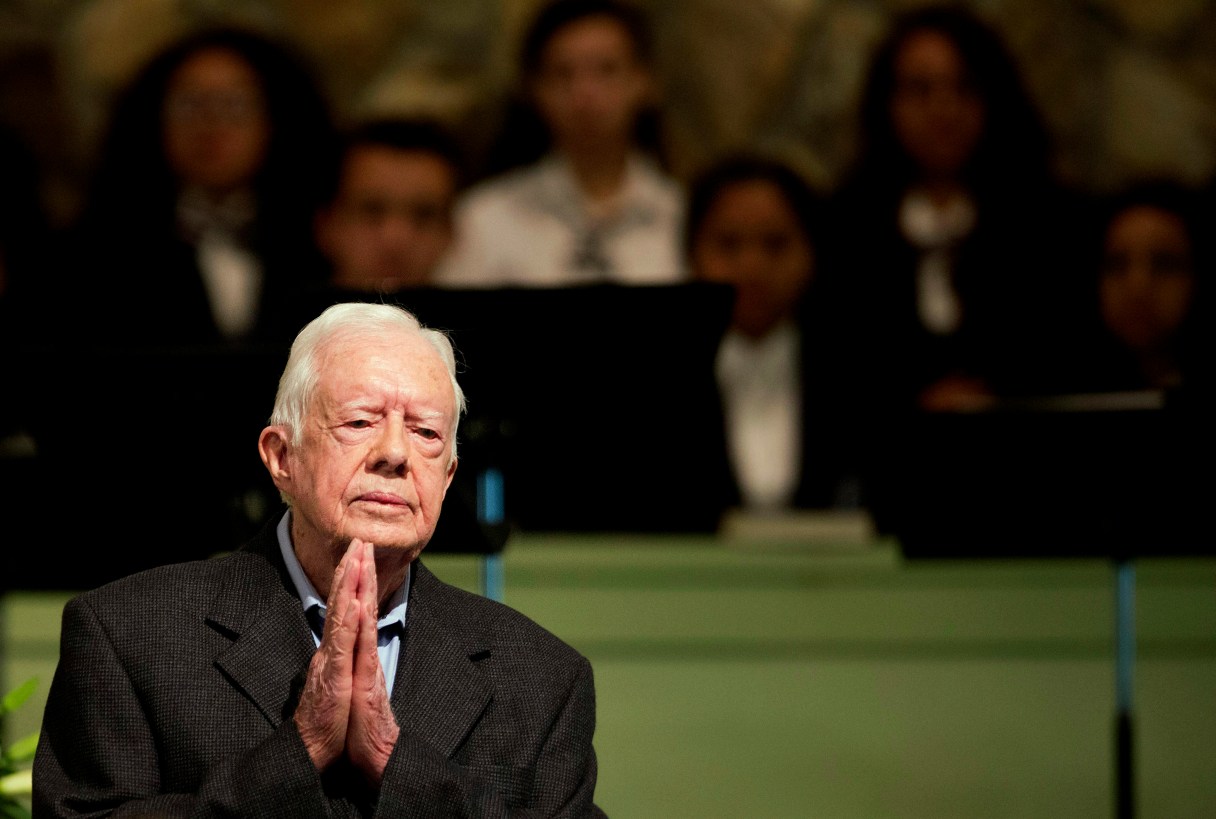
Jimmy Carter inspired pronouncements of answered prayers Sunday, revealing that his latest brain scan showed no signs of cancer four months after the former president announced that melanoma had spread to his brain and put himself “in the hands of God.”
Carter first announced the news at the small church where he frequently teaches Sunday school in his hometown of Plains, Georgia, and then in a two-sentence written statement as word spread from Maranatha Baptist Church.
Carter always starts his lessons with a brief update on his recent activities. This week, that included a visit to his doctor to learn the results of an MRI brain scan. Previous tests found four lesions on his brain were still there but had responded to an August radiation treatment and regular doses of a recently approved drug called Keytruda to help his body seek out any new cancer cells.
“And when I went this week, they didn’t find any cancer at all,” Carter said, prompting gasps and applause from the congregation as he smiled slightly. “So I have good news.”
Such a clean scan for a melanoma patient would have been rare as recently as five years ago, experts on the disease said. Keytruda and other drugs classified as “immunotherapy” sometimes combined with radiation have dramatically changed success at treating melanoma, said Dr. Keith Flaherty, a melanoma specialist at Massachusetts General Hospital’s Termeer Center for Targeted Therapies who is not involved in Carter’s treatment.