
We have a saying around here: "If you've seen one case of Alzheimer's, you've seen one case of Alzheimer's."
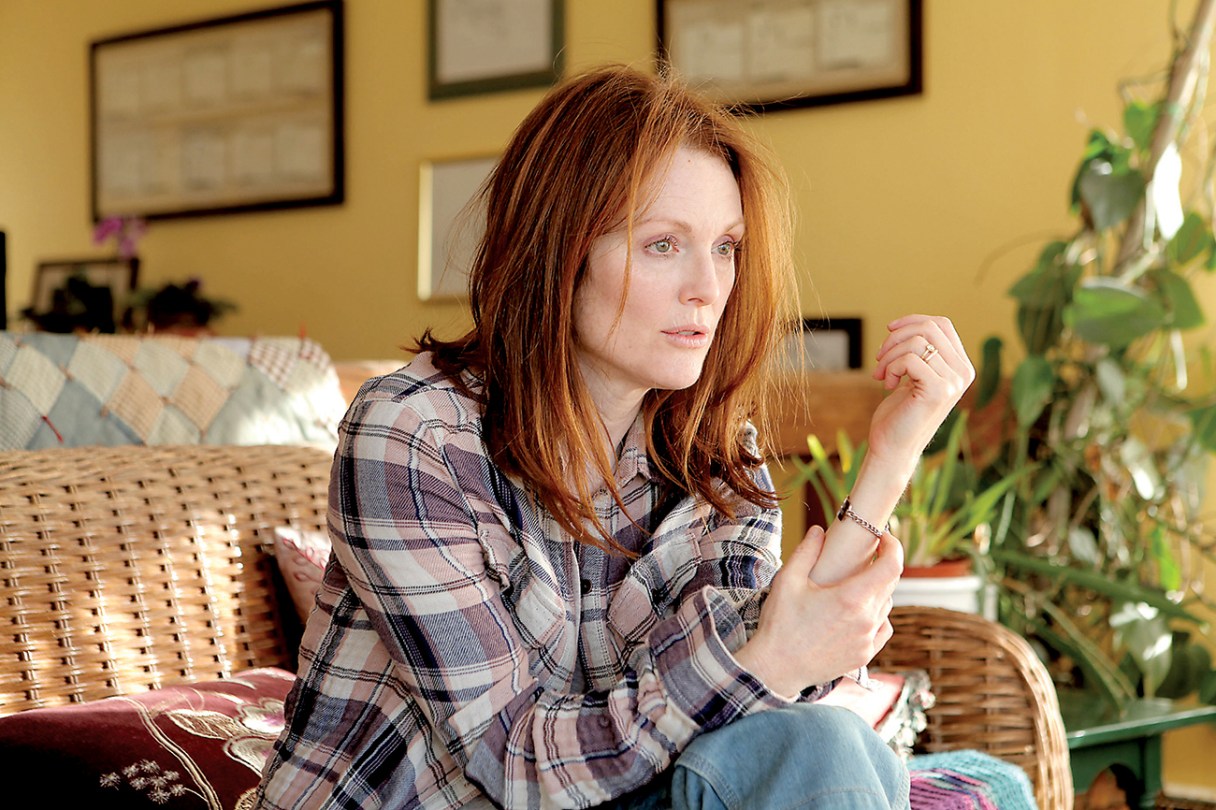
In the movie “Still Alice,” actress Julianne Moore won the Oscar for Best Actress for her portrayal of an academic diagnosed with early-onset Alzheimer’s just prior to her 50th birthday.
It’s a scenario becoming all to familiar to more people and their families, according to Madison Vincent, communications manager for the Alzheimer’s Association Mid South Chapter, located in Chattanooga.
If you go
“Still Alice” is currently playing at the Majestic 12 on Broad Street.
10 Warning Signs
* Memory loss that disrupts daily life. Typical age-related change? Sometimes forgetting names or appointments, but remembering them later. * Challenges in planning or solving problems. Typical age-related change? Making occasional errors when balancing a checkbook. * Difficulty completing familiar tasks at home, at work or at leisure. Typical age-related change? Occasionally needing help to use the settings on a microwave or to record a television show. * Confusion with time or place. Typical age-related change? Getting confused about the day of the week but figuring it out later. * Trouble understanding visual images and spatial relationships. Typical age-related change? Vision changes related to cataracts. * New problems with words in speaking or writing. Typical age-related change? Sometimes having trouble finding the right word. * Misplacing things and losing the ability to retrace steps. Typical age-related change? Misplacing things from time to time and retracing steps to find them. * Decreased or poor judgment. Typical age-related change? Making a bad decision once in a while. * Withdrawal from work or social activities. Typical age-related change? Sometimes feeling weary of work, family and social obligations. * Changes in mood and personality. Typical age-related change? Developing very specific ways of doing things and becoming irritable when a routine is disrupted. Source: Alzheimer’s Association