
Tuesday, November 10, 2026Nov 10

A US green-energy blueprint, meant to help Liberia, fails

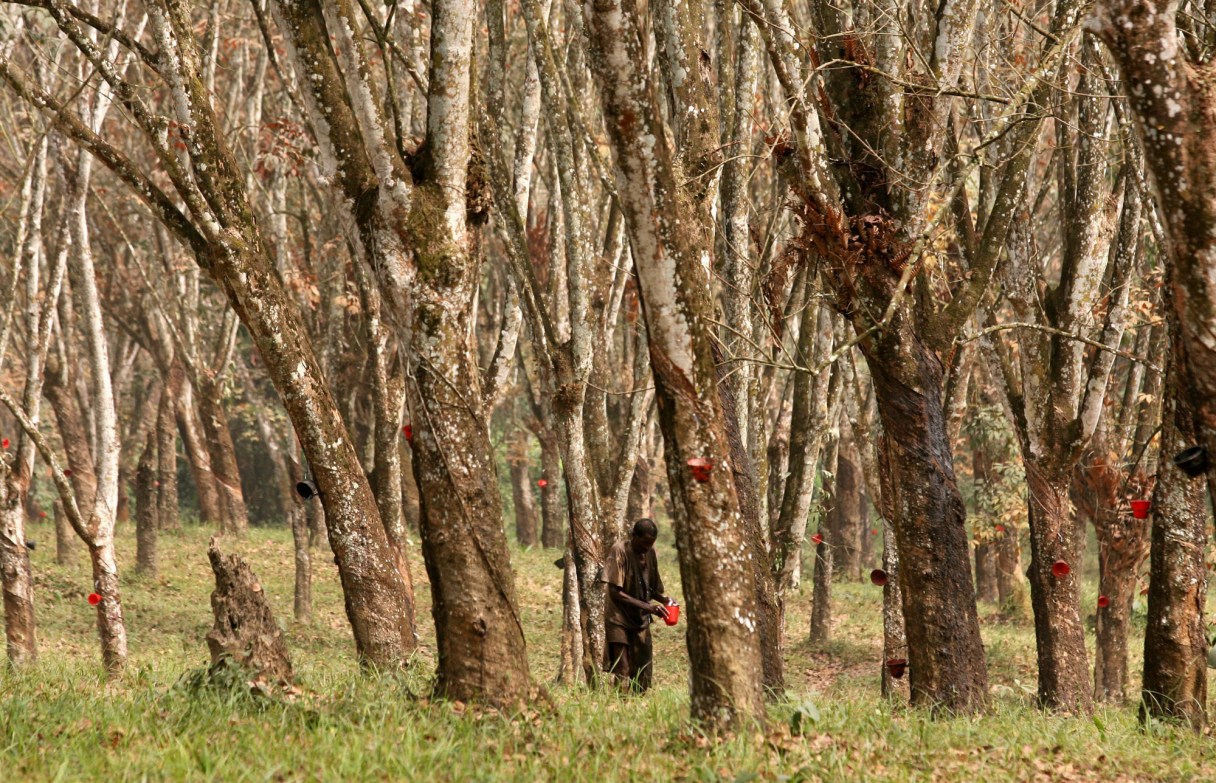
FILE - In this Jan. 22, 2007 file photo, an unidentified worker inspects collected latex at the Firestone rubber plantation in Monrovia, Liberia. A failed U.S. government-backed plan to produce environmentally friendly energy in one of Africa’s poorest countries was marred by insider connections and questionable planning, an Associated Press investigation found. The federal agency at the center of the deal is one of the government’s biggest secrets and routinely escapes public scrutiny. That agency, the Overseas Private Investment Corporation, approved three loans totaling $217 million to help a company, Buchanan Renewables, convert nonproducing rubber trees into biomass chips that would help power Liberia. (AP Photo/George Osodi, File)
FILE - In this Jan. 22, 2007 file photo, an unidentified worker inspects collected latex at the Firestone rubber plantation in Monrovia, Liberia. A failed U.S. government-backed plan to produce environmentally friendly energy in one of Africa’s poorest countries was marred by insider connections and questionable planning, an Associated Press investigation found. The federal agency at the center of the deal is one of the government’s biggest secrets and routinely escapes public scrutiny. That agency, the Overseas Private Investment Corporation, approved three loans totaling $217 million to help a company, Buchanan Renewables, convert nonproducing rubber trees into biomass chips that would help power Liberia. (AP Photo/George Osodi, File) FILE - In this Jan. 22, 2007 file photo, an unidentified worker inspects collected latex at the Firestone rubber plantation in Monrovia, Liberia. A failed U.S. government-backed plan to produce environmentally friendly energy in one of Africa’s poorest countries was marred by insider connections and questionable planning, an Associated Press investigation found. The federal agency at the center of the deal is one of the government’s biggest secrets and routinely escapes public scrutiny. That agency, the Overseas Private Investment Corporation, approved three loans totaling $217 million to help a company, Buchanan Renewables, convert nonproducing rubber trees into biomass chips that would help power Liberia. (AP Photo/George Osodi, File)

BUCHANAN, Liberia (AP) – On paper, the pitch was simple: A green energy company backed by $217 million in U.S. government loans would convert one of Africa’s poorest countries into the world’s first biomass-driven economy. But the plan to help Liberia collapsed amid questionable business decisions and oversight.

The company, Buchanan Renewables, dismissed 600 workers and left the country amid complaints of workplace injuries, environmental harm and, at times, sexual abuse.

Backing the company at every stage was the Overseas Private Investment Corporation, a federal agency with a global mandate but low profile. The agency approves more than $3 billion a year in financing, targeting developments in hard-pressed communities. But its internal watchdog has issued reports on just five deals since 2005, a period when OPIC approved more than 530 projects.

From the start, an investigation by The Associated Press found, OPIC’s support for the power project in the western African country of Liberia was marked by questionable scrutiny and deep political links. Even for ostensibly philanthropic projects meant to aid the world’s poorest, corporate opportunities and profits can intersect with family and business ties among Washington’s political elite.

On the ground in Liberia, Buchanan Renewables’ CEO was James Steele, a larger-than-life former U.S. military figure and onetime Texas business partner of OPIC’s then-president and CEO, Robert Mosbacher Jr. Mosbacher’s father was Commerce secretary under President George H.W. Bush.