
Tuesday, November 10, 2026Nov 10

Rights group blasts IS for atrocities, Iraq, Syria policies

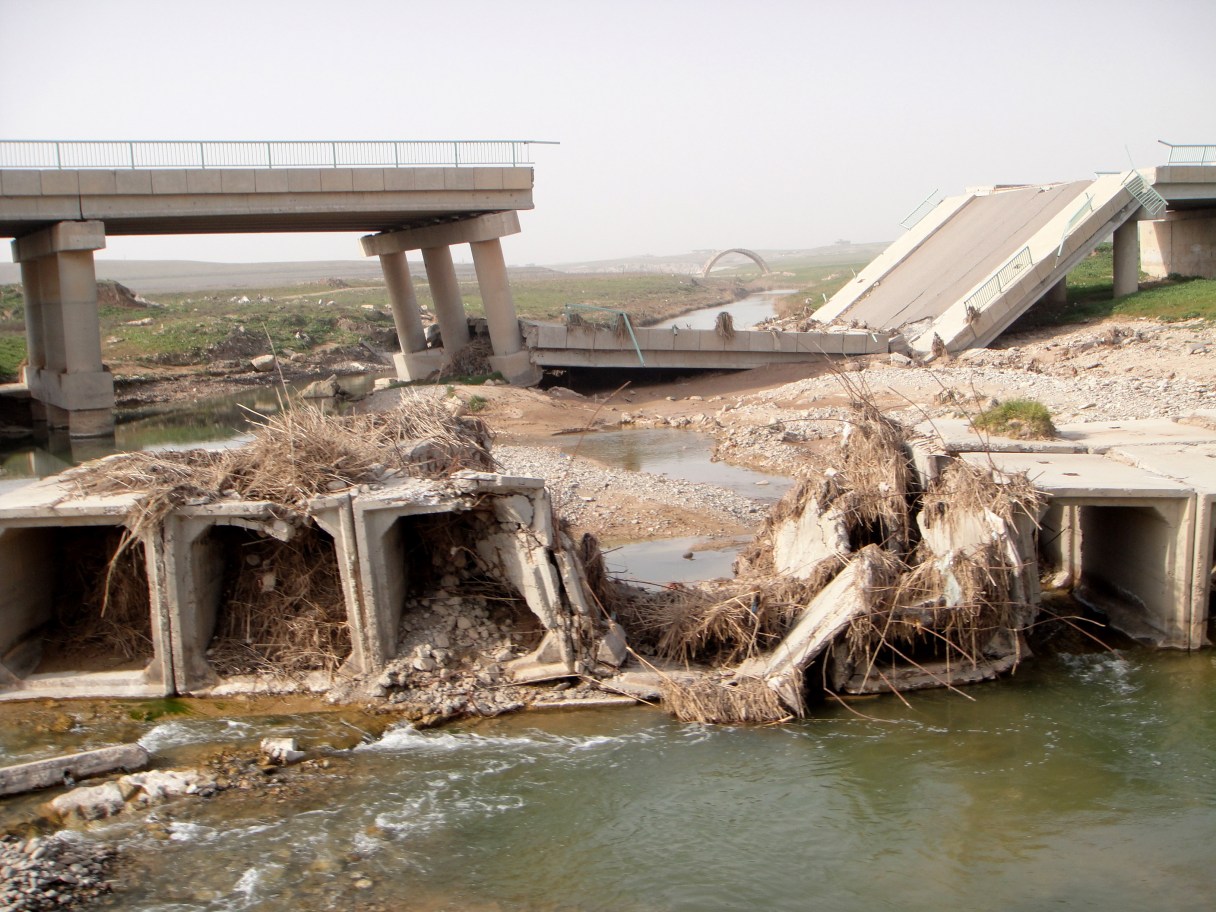
This Tuesday, Jan. 27, 2015 photo, shows a bridge destroyed by Islamic State militants near the Shadoukhah frontline to slow advance of Kurdish Forces in Ninevah province, northern Iraq. The Iraqi Kurdish fighters retaking territory from Islamic State militants have found surprising ambivalence in areas they free from the jihadis’ oppressive rule. Locals have swiftly shaken off the imposed Islamic lifestyle _ but as Sunnis, from the same ethnic group as the militants, many are bracing for treatment as collaborators nonetheless. An AP team traveling with the Kurds found the road to Mosul, a coveted prize in the battle for Iraq, strewn with suspicion and fear. (AP Photo/Vivian Salama)
This Tuesday, Jan. 27, 2015 photo, shows a bridge destroyed by Islamic State militants near the Shadoukhah frontline to slow advance of Kurdish Forces in Ninevah province, northern Iraq. The Iraqi Kurdish fighters retaking territory from Islamic State militants have found surprising ambivalence in areas they free from the jihadis’ oppressive rule. Locals have swiftly shaken off the imposed Islamic lifestyle _ but as Sunnis, from the same ethnic group as the militants, many are bracing for treatment as collaborators nonetheless. An AP team traveling with the Kurds found the road to Mosul, a coveted prize in the battle for Iraq, strewn with suspicion and fear. (AP Photo/Vivian Salama) This Tuesday, Jan. 27, 2015 photo, shows a bridge destroyed by Islamic State militants near the Shadoukhah frontline to slow advance of Kurdish Forces in Ninevah province, northern Iraq. The Iraqi Kurdish fighters retaking territory from Islamic State militants have found surprising ambivalence in areas they free from the jihadis’ oppressive rule. Locals have swiftly shaken off the imposed Islamic lifestyle _ but as Sunnis, from the same ethnic group as the militants, many are bracing for treatment as collaborators nonetheless. An AP team traveling with the Kurds found the road to Mosul, a coveted prize in the battle for Iraq, strewn with suspicion and fear. (AP Photo/Vivian Salama)

BEIRUT (AP) – Human Rights Watch on Thursday blasted Islamic State militants over their atrocities, but also criticized the Syrian and Iraqi governments over what the New York-based group described as “sectarian and abusive” policies that fuel extremism.

The criticism came in a 656-page annual report released in Beirut that reviews human rights practices in more than 90 countries.

In it, HRW said the Islamic State group spreading terror in the Middle East is in part a product of the U.S.-led war and military occupation of Iraq, and the abuses of detainees in Iraq’s Abu Ghraib prison and other U.S.-run detention centers.

Funding of extremist groups by Gulf states and their citizens also played a role in fuelling militancy across the volatile region, HRW said.

“Rarely has an armed force engendered such widespread revulsion and opposition,” the group’s World Report 2015 said of the Islamic State group. “Yet ISIS did not emerge in a vacuum,” it added, using an older acronym for the IS.