
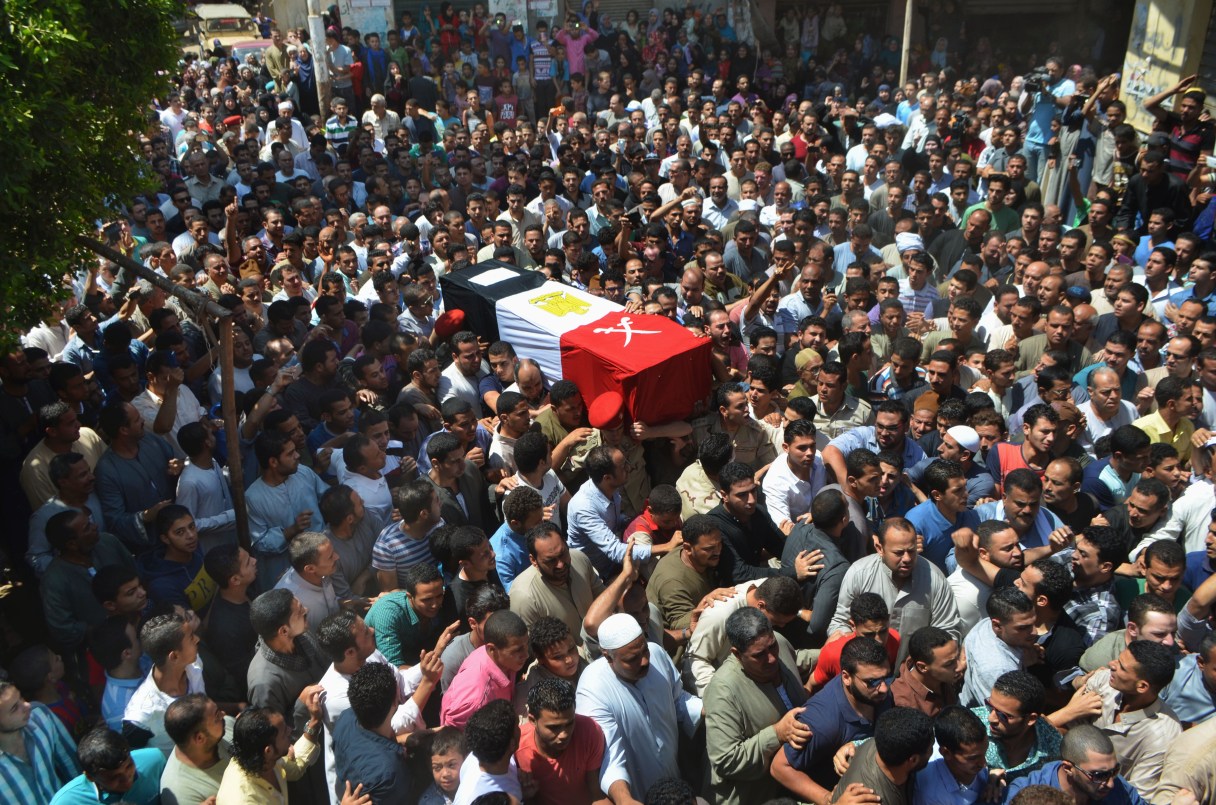
CAIRO (AP) – Two years to the day after the army overthrew Egypt’s Islamist president, the sounds coming from the mosque at Cairo’s Tahrir Square were sadly telling. At the focal point of Egypt’s upheavals, where authorities had hoped to stage celebrations, there was instead a prayer for the week’s dead, including soldiers cut down by militants in Sinai and the country’s chief prosecutor, assassinated by car bomb in the capital.
A sense of foreboding fills the air, with officials and media speaking of a state of war and urging national unity. President Abdel-Fattah el-Sissi has promised swift justice, which critics fear will mean a further step away from democracy. The Muslim Brotherhood, banned but unbowed, has upped the ante by calling for revolt against his rule. There is fear of even worse attacks of the kind that have become sadly familiar around the region.
It all presents a major challenge for el-Sissi, who as army chief led the takeover against Morsi two years ago, when millions filled the streets outraged over Muslim Brotherhood misrule. He was later elected president, and the deal he has offered Egyptians – a curtailing of freedoms in exchange for stability and security – was one many seemed eagerly willing to embrace after several years of upheaval, in which the wider region has gone up in flames.
The first part of that equation has been carried out: the once-ruling Muslim Brotherhood has been largely crushed, thousands of its top people in jail and hundreds – including Morsi – handed the death penalty; public protests are restricted, as is political activity; the media has been cowed amid an atmosphere that seems to equate criticism with disloyalty; and even many liberal activists are in jail. The result has been quieter streets, without protests that often turned to riots the past three years, and violence against Christians and Shiites has lessened, though not stopped.
But stability, which for a time seemed attainable, seems to be in danger of unraveling. Militants affiliated with the regional Islamic State group have turned the northern part of the Sinai peninsula into a war zone, this week staging a brazen multi-pronged attack on army positions; last month a key tourist site at Luxor was attacked; on Tuesday chief prosecutor Hisham Barakat was assassinated while leaving his Cairo home for work.