
Wednesday, November 11, 2026Nov 11

Greece still cash-starved after decisive ‘no’ bailout vote

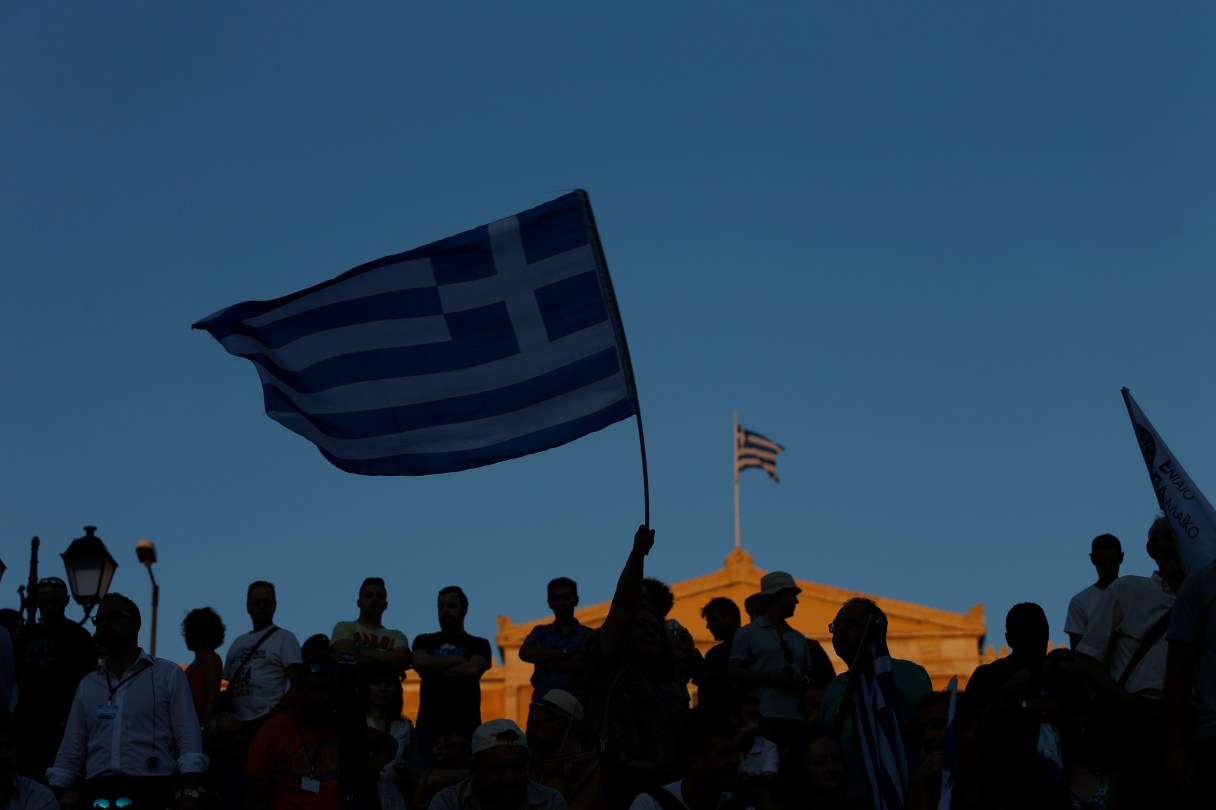
Supporters of the No vote wave Greek flags after the referendum's exit polls at Syntagma square in Athens, Sunday, July 5, 2015. Greece faced an uncharted future as officials counted the results of a referendum Sunday on whether to accept creditors' demands for more austerity in exchange for rescue loans, with three opinion polls showing a tight race with a narrow victory likely for the "no" side. (AP Photo/Emilio Morenatti)
Supporters of the No vote wave Greek flags after the referendum's exit polls at Syntagma square in Athens, Sunday, July 5, 2015. Greece faced an uncharted future as officials counted the results of a referendum Sunday on whether to accept creditors' demands for more austerity in exchange for rescue loans, with three opinion polls showing a tight race with a narrow victory likely for the "no" side. (AP Photo/Emilio Morenatti) Supporters of the No vote wave Greek flags after the referendum's exit polls at Syntagma square in Athens, Sunday, July 5, 2015. Greece faced an uncharted future as officials counted the results of a referendum Sunday on whether to accept creditors' demands for more austerity in exchange for rescue loans, with three opinion polls showing a tight race with a narrow victory likely for the "no" side. (AP Photo/Emilio Morenatti)

ATHENS, Greece (AP) – Greeks awoke Monday to the stark reality of the country’s accelerating crisis – shuttered banks and ATMs with little cash – hours after they voted resoundingly to reject more austerity measures in exchange for another bailout.

The results – 61 percent voted “no,” compared with 39 percent for “yes” – left the bankrupt country’s future in the European Union and its euro currency uncertain.

The margin of victory for “no” was far wider than expected. But as celebrations died down early Monday, Greece entered a second week of severe restrictions on financial transactions and faced the prospect of even limited amounts of cash drying out, with no prospect of an immediate infusion. Greece imposed the restrictions to stem a bank run after the vote was called and its bailout program expired.

Besieged by a prolonged recession, high unemployment and banks dangerously low on capital, Greece defaulted on an International Monetary Fund loan repayment last week, becoming the first developed nation to do so. Now some analysts wonder if Greece is so starved of cash that it could be forced to start issuing its own currency and become the first country to leave the 19-member eurozone, established in 1999.

Asian markets mostly fell Monday, as economists said the markets were not expecting such a decisive “no” vote and that could send stocks downward.