
Wednesday, November 11, 2026Nov 11

Watchdog: Suspected ex-Nazis got $20.2M in Social Security

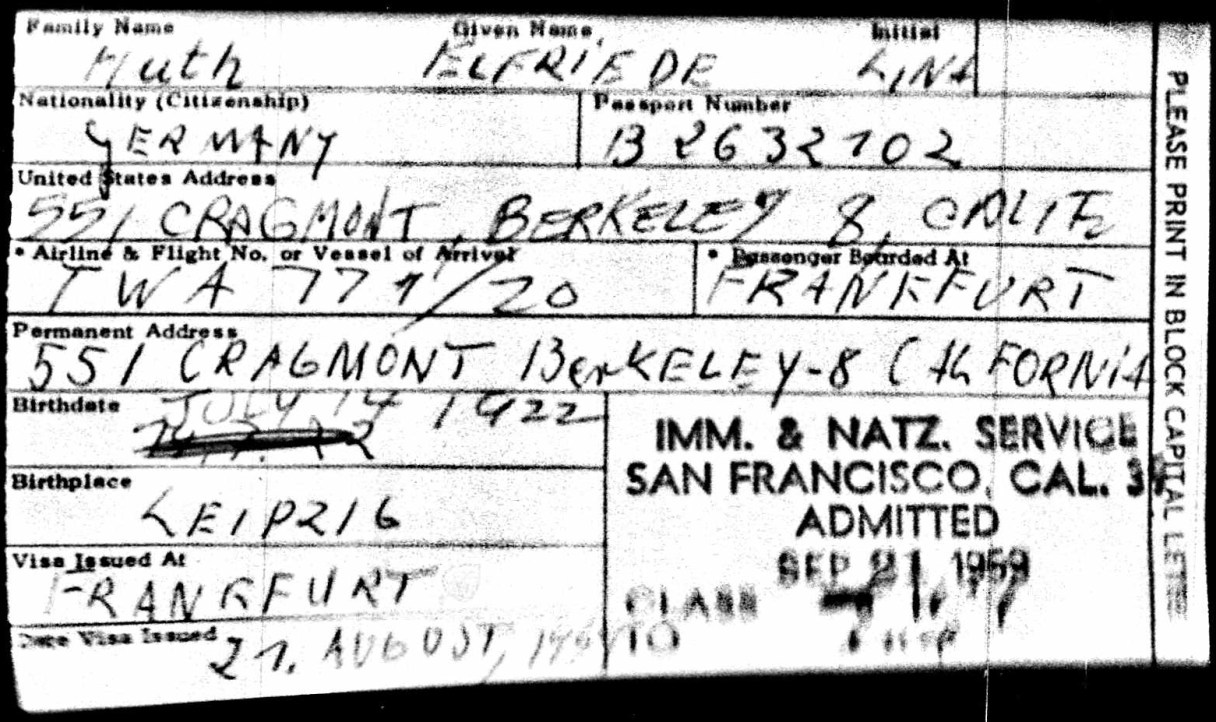
This digital image from the Immigration and Naturalization Service and the National Archives shows an immigration document for Elfriede Huth, later Elfriede Rinkel, when she was admitted to the U.S. in 1959. Rinkel admitted to being a Nazi concentration camp guard during World War II, but her past didn’t keep her from collecting nearly $120,000 in American Social Security benefits after she had been deported in 2006. (Immigration and Naturalization Service and the National Archives/Ancestry.com via AP)
This digital image from the Immigration and Naturalization Service and the National Archives shows an immigration document for Elfriede Huth, later Elfriede Rinkel, when she was admitted to the U.S. in 1959. Rinkel admitted to being a Nazi concentration camp guard during World War II, but her past didn’t keep her from collecting nearly $120,000 in American Social Security benefits after she had been deported in 2006. (Immigration and Naturalization Service and the National Archives/Ancestry.com via AP) This digital image from the Immigration and Naturalization Service and the National Archives shows an immigration document for Elfriede Huth, later Elfriede Rinkel, when she was admitted to the U.S. in 1959. Rinkel admitted to being a Nazi concentration camp guard during World War II, but her past didn’t keep her from collecting nearly $120,000 in American Social Security benefits after she had been deported in 2006. (Immigration and Naturalization Service and the National Archives/Ancestry.com via AP)

WASHINGTON (AP) – Elfriede Rinkel’s past as a Nazi concentration camp guard didn’t keep her from collecting nearly $120,000 in American Social Security benefits.

Rinkel admitted to being stationed at the Ravensbrueck camp during World War II, where she worked with an attack dog trained by the SS, according to U.S. Justice Department records. She immigrated to California and married a German-born Jew whose parents had been killed in the Holocaust.

She agreed to leave the U.S. in 2006 and remains the only woman the Justice Department’s Nazi-hunting unit ever initiated deportation proceedings against. Yet after Rinkel departed, the U.S. Social Security Administration kept paying her widow benefits, which began after her husband died, because there was no legal basis for stopping them until late last year.

Rinkel is among 133 suspected Nazi war criminals, SS guards, and others that may have participated in the Third Reich’s atrocities who received $20.2 million in Social Security benefits, according to a report to be released later this week by the inspector general of the Social Security Administration. The Associated Press obtained a copy of the report.

The payments are far greater than previously estimated and occurred between February 1962 and January 2015, when a new law called the No Social Security for Nazis Act kicked in and ended retirement payments for four beneficiaries. The report does not include the names of any Nazi suspects who received benefits. But the descriptions of several of the beneficiaries match legal records detailing Rinkel’s case and others.