
Wednesday, November 11, 2026Nov 11

UK Treasury chief announces plans to sell RBS bank shares

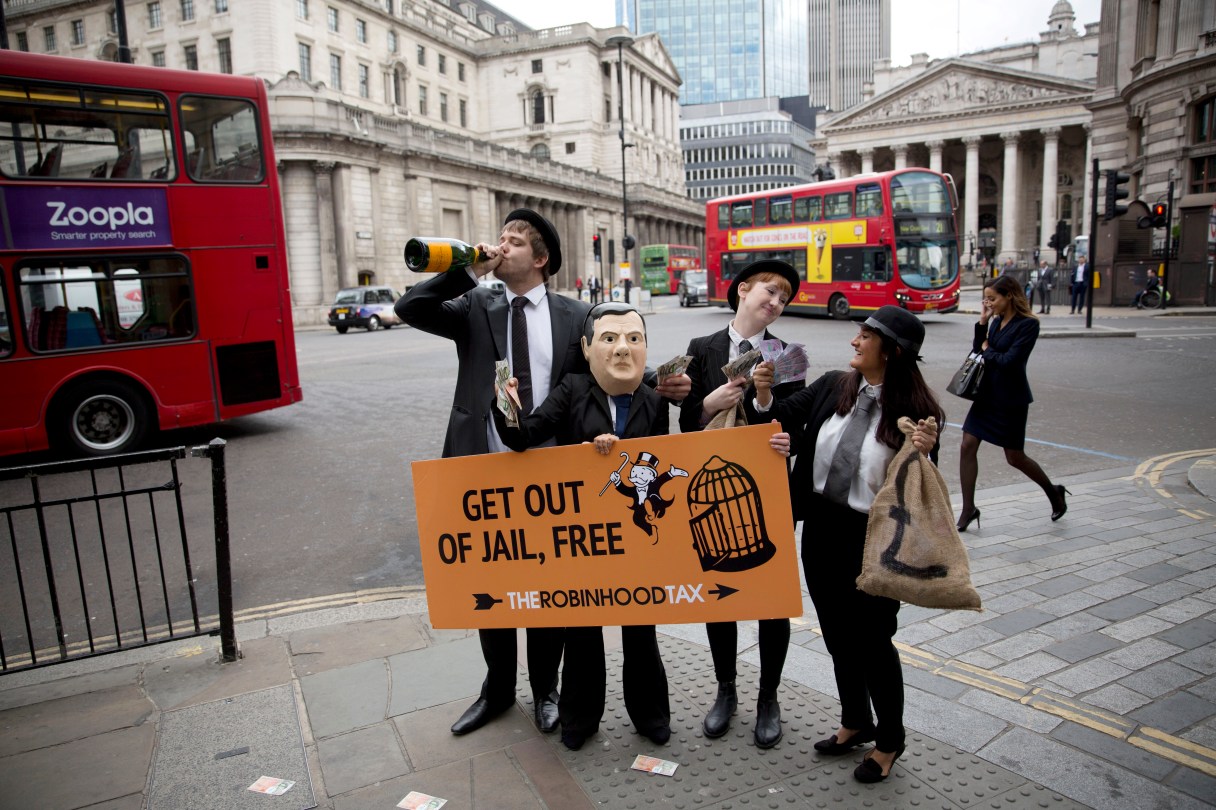
Campaigners from the Robin Hood Tax organization dressed as bankers, including one wearing a mask representing British Chancellor of the Exchequer George Osborne, hold placards as they pose for the media outside Mansion House, backdropped by the Bank of England at left, in London, Wednesday, June 10, 2015. The group say their idea for a Robin Hood Tax is a tiny tax on the financial sector that could generate billions of pounds annually to fight poverty and climate change. The stunt was held by the group to coincide with Osborne's annual economic speech due to be held at Mansion House on Wednesday evening.  (AP Photo/Matt Dunham)
Campaigners from the Robin Hood Tax organization dressed as bankers, including one wearing a mask representing British Chancellor of the Exchequer George Osborne, hold placards as they pose for the media outside Mansion House, backdropped by the Bank of England at left, in London, Wednesday, June 10, 2015. The group say their idea for a Robin Hood Tax is a tiny tax on the financial sector that could generate billions of pounds annually to fight poverty and climate change. The stunt was held by the group to coincide with Osborne's annual economic speech due to be held at Mansion House on Wednesday evening. (AP Photo/Matt Dunham) Campaigners from the Robin Hood Tax organization dressed as bankers, including one wearing a mask representing British Chancellor of the Exchequer George Osborne, hold placards as they pose for the media outside Mansion House, backdropped by the Bank of England at left, in London, Wednesday, June 10, 2015. The group say their idea for a Robin Hood Tax is a tiny tax on the financial sector that could generate billions of pounds annually to fight poverty and climate change. The stunt was held by the group to coincide with Osborne's annual economic speech due to be held at Mansion House on Wednesday evening. (AP Photo/Matt Dunham)

LONDON (AP) – The U.K.’s Treasury chief announced Wednesday that the government will start selling its stake in the Royal Bank of Scotland in coming months, the first step in the country’s attempt to recover money from its costliest bank rescue operation ever.

Osborne outlined the plan during his Mansion House speech, an annual event attended by some of Britain’s most prominent business leaders. He said the Treasury would sell part of its 80 percent stake in the coming months, even though RBS’s shares are trading for less than the government paid for them during the global financial crisis. Selling a small stake now will make it easier and more profitable for the government to sell the rest of its holding in the future, he said.

“It’s the right thing to do for British businesses and British taxpayers,” Osborne said in prepared remarks. “Yes, we may get a lower price than Labour paid for it. But the longer we wait, the higher the price the whole economy will pay. And when you take the banks in total, we’re making sure taxpayers get back billions more than they were forced to put in.”

The Treasury injected 45.5 billion pounds ($70.6 billion) into RBS in 2008 and 2009 to keep the bank solvent as the value of risky investments plunged and bad loans soared during the global financial crisis. RBS has paid the government about 4.3 billion pounds in dividends and fees since that investment. The government’s stake is currently valued at 32.7 billion pounds.

N M Rothschild & Sons Ltd., which provides financial advice to governments worldwide, says that a partial sale now would boost the stock price, and might ultimately result in a profit. Even if it doesn’t, gains on the sale of the government stakes in other banks mean that taxpayers will make a profit on the government’s total investment in all the banks.