
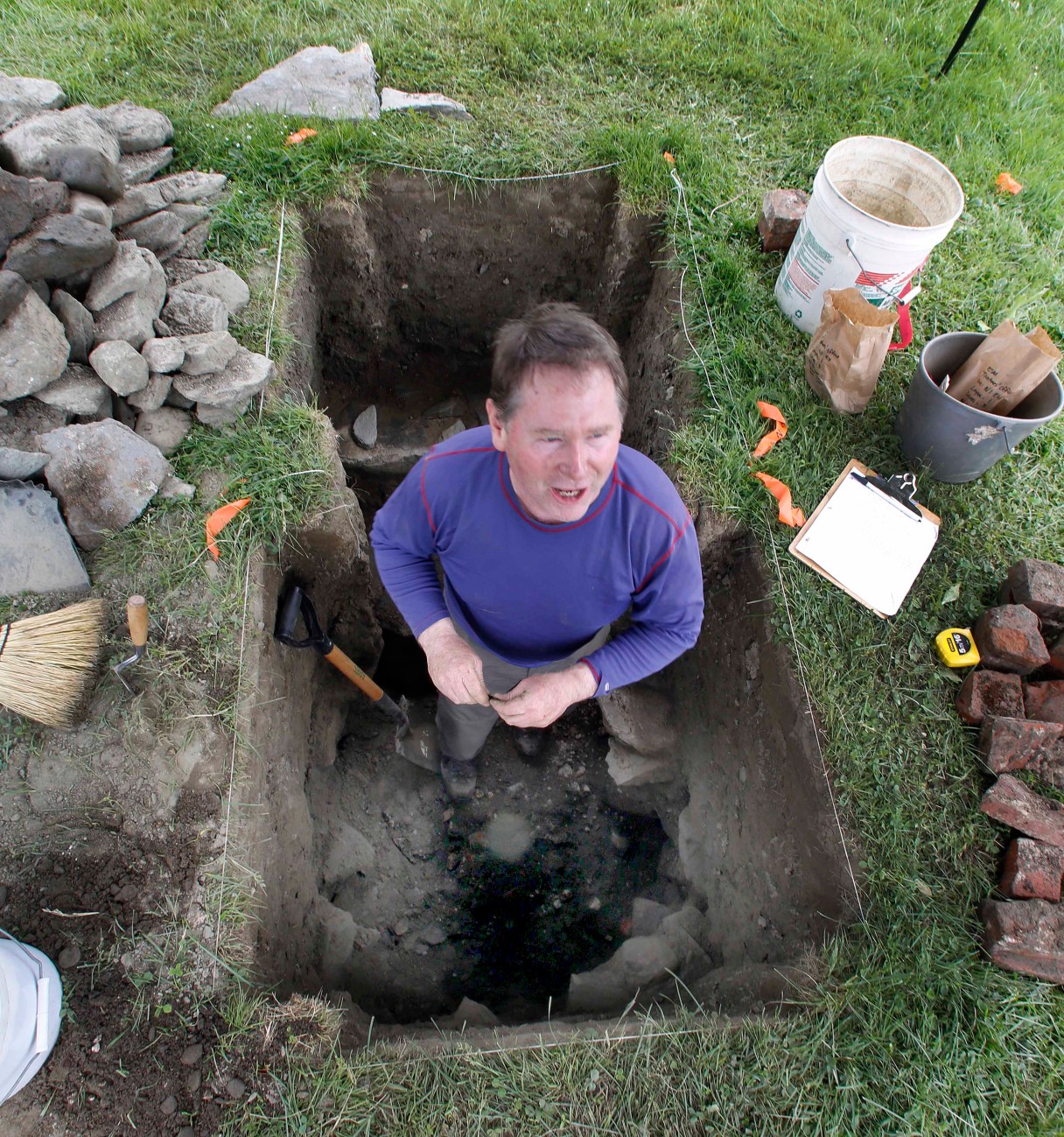
ENFIELD, N.H. (AP) – For more than a century, the long-gone trustees building at a Shaker village on the shore of New Hampshire’s Mascoma Lake was where the members of a nearly extinct religious society met the outside world.
An archaeological dig that started this summer on the pastoral grounds where the building once stood has the potential to reveal and renew the space to where it can once again serve as a bridge between Shaker and secular cultures.
“It’s a big order,” said Michael O’Connor, curator of the Enfield Shaker Museum and an eager volunteer archaeologist working on the project. “We’d like to have a better sense of the use of this building. We’ll define our sense of the space as the Shakers used fences to define their sense of the space.”
The Shakers – or the “United Society of Believers in Christ’s Second Appearance” – settled by the lake in 1793, the ninth of 18 communities established in the New World after the society fled persecution in England. The communities, including another New Hampshire site in Canterbury, practiced equality of the sexes, pacificism, communal ownership of property and celibacy.
It was the last that ultimately spelled the demise of the Shakers just about everywhere: There are believed to be just four known remaining Shakers, all at the Sabbathday Lake community in Maine. That injects a sense of urgency into research efforts.