
Thursday, November 12, 2026Nov 12

State of fear: Survivors tell of life under IS rule

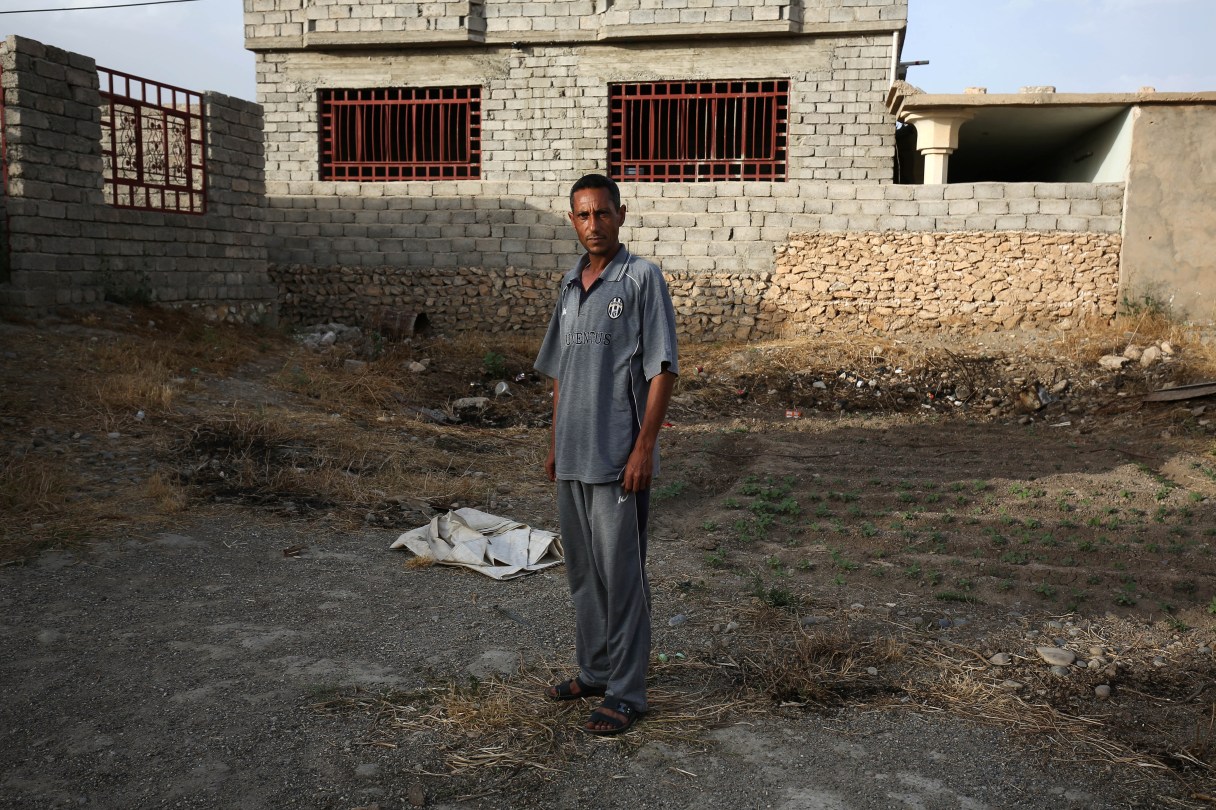
In this May 26, 2015 photo, Bilal Abdullah poses for a portrait in the village of Eski Mosul in northern Iraq, nearly a year after Islamic State militants took over the village. In the Islamic State's realm, a document testifying that one has "repented" from a heretical past must be carried at all times and it can mean the difference between life and death. Abdullah learned that not long after the extremists took over his home village. (AP Photo/Bram Janssen)
In this May 26, 2015 photo, Bilal Abdullah poses for a portrait in the village of Eski Mosul in northern Iraq, nearly a year after Islamic State militants took over the village. In the Islamic State's realm, a document testifying that one has "repented" from a heretical past must be carried at all times and it can mean the difference between life and death. Abdullah learned that not long after the extremists took over his home village. (AP Photo/Bram Janssen) In this May 26, 2015 photo, Bilal Abdullah poses for a portrait in the village of Eski Mosul in northern Iraq, nearly a year after Islamic State militants took over the village. In the Islamic State's realm, a document testifying that one has "repented" from a heretical past must be carried at all times and it can mean the difference between life and death. Abdullah learned that not long after the extremists took over his home village. (AP Photo/Bram Janssen)

ESKI MOSUL, Iraq (AP) – Inside the Islamic State’s realm, the paper testifying that you have “repented” from your heretical past must be carried at all times. Many people laminate it just to be safe. It can mean the difference between life and death.

Bilal Abdullah learned that not long after the extremists took over his Iraqi village, Eski Mosul, a year ago. As he walked down the street, an Islamic State fighter in a pickup truck asked directions to a local mosque. When Abdullah didn’t recognize the mosque’s name, the fighter became suspicious.

“He told me my faith is weak and asked, ‘Do you pray?'” Abdullah recalled. Then the fighter asked to see his “repentance card.” Abdullah had been a policeman until the IS takeover, and policemen and soldiers are required to have one. So are many other former government loyalists or employees – even former English teachers, since they once taught a “forbidden” language and tailors of women’s clothes because they once designed styles deemed un-Islamic.

Abdullah had left his card at home. Terrified, he sent his son running to get it.

“They are brutal people,” he told The Associated Press. “They can consider you an infidel for the simplest thing.”