
EFATE, Vanuatu (AP) – The roof from what was once the home of principal Melizabeth Uhi and her staff is now folded over branches high in the trees that border her school. She’s now living with two other staff members in the only classroom that’s still habitable. And she’s running low on the rice she had before Cyclone Pam tore through Vanuatu a week ago, upending her life.
But Uhi is moving forward. She’s helped organize a community cleanup of the Manua Centre School grounds on the main island of Efate on Monday, and is determined that her 314 students will return to school as soon as possible.
A week after the cyclone tore through the South Pacific archipelago with winds of 270 kilometers (168 miles) per hour, people are focused on the task of rebuilding.
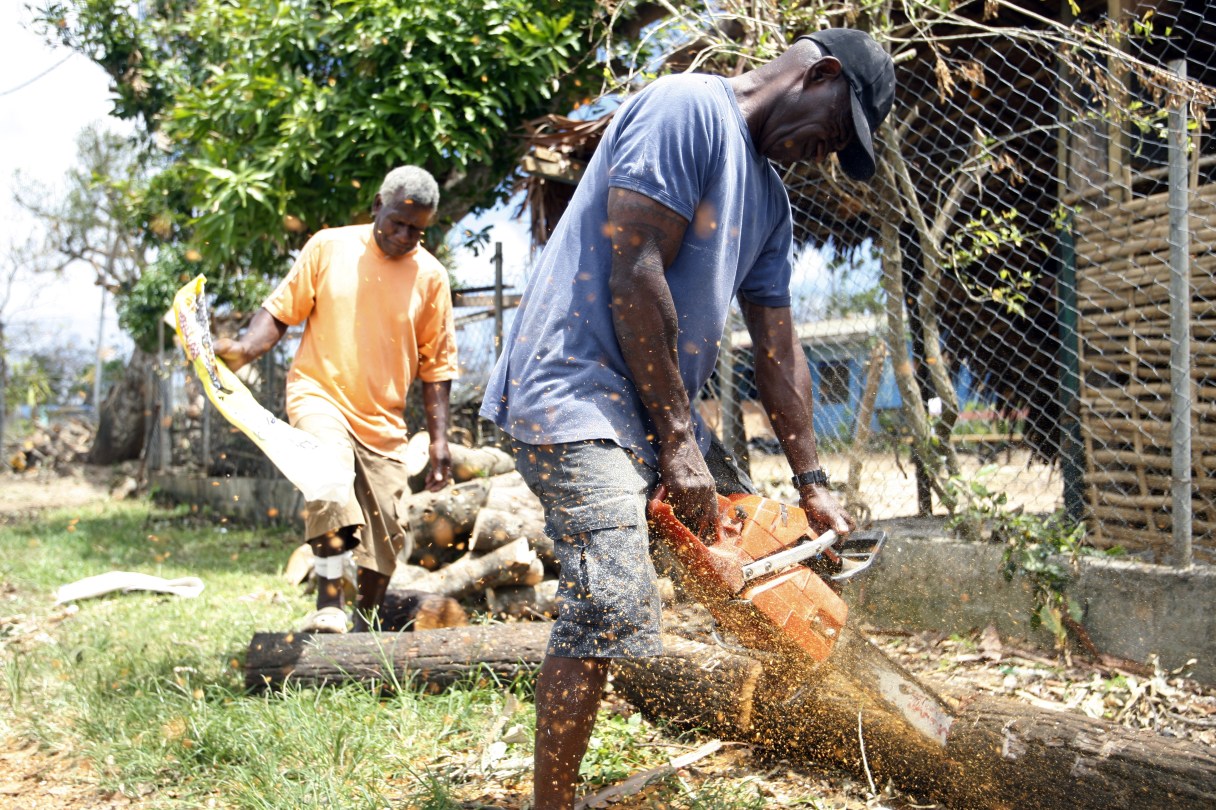
The signs of progress are everywhere. The road that rings the main island is now accessible to all vehicles following temporary repairs to bridges, and the cell network that’s vital to keeping people connected is gradually being restored on Efate and some other islands. On the sides of roads, crews have been repairing electricity lines and residents cutting tree trunks into fire-sized slices.
The task remains enormous. Many of the outlying islands still don’t have any way to communicate with the outside world, while tourism, vital to the economy, has taken a huge hit, with many operators fielding call after call to cancel bookings. Throughout Vanuatu, many people remain worried about the most basic necessities: water, shelter and food.