
Wednesday, November 11, 2026Nov 11

APNewsBreak: Turkey, Saudi in pact to help anti-Assad rebels

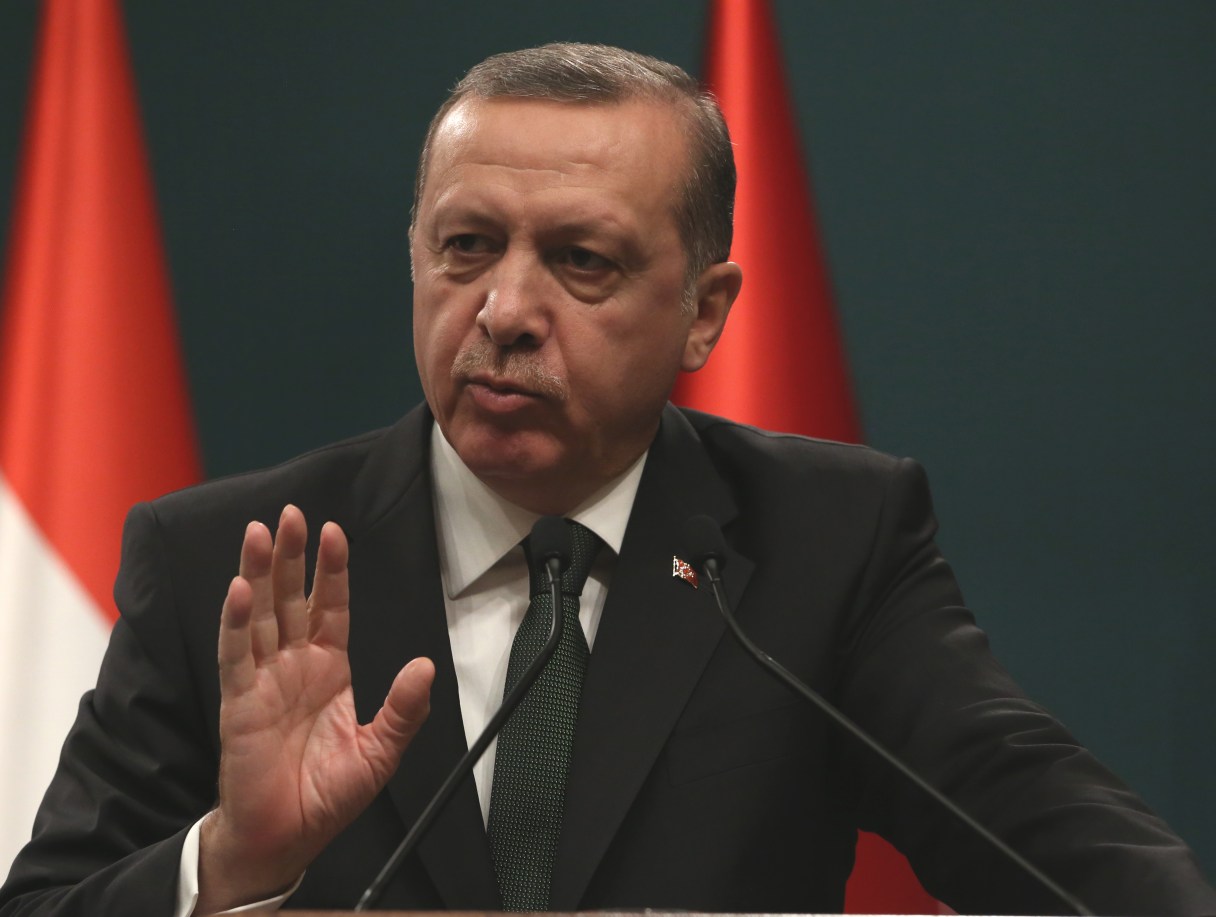
FILE - In this Thursday, March 12, 2015 file photo, Turkish President Recep Tayyip Erdogan speaks to the media during a press conference in Ankara, Turkey. Casting aside U.S. concerns about aiding extremist groups, Turkey and Saudi Arabia have converged on an aggressive new strategy to bring down Syrian President Bashar Assad. The two countries — one a democracy, the other a conservative kingdom — have for years been at odds over how to deal with Assad, their common enemy. But mutual frustration with what they consider American indecision has brought the two together in a strategic alliance that is driving recent rebel gains in northern Syria, and has helped strengthen a new coalition of anti-Assad insurgents, Turkish officials say. (AP Photo/Burhan Ozbilici, file)
FILE - In this Thursday, March 12, 2015 file photo, Turkish President Recep Tayyip Erdogan speaks to the media during a press conference in Ankara, Turkey. Casting aside U.S. concerns about aiding extremist groups, Turkey and Saudi Arabia have converged on an aggressive new strategy to bring down Syrian President Bashar Assad. The two countries — one a democracy, the other a conservative kingdom — have for years been at odds over how to deal with Assad, their common enemy. But mutual frustration with what they consider American indecision has brought the two together in a strategic alliance that is driving recent rebel gains in northern Syria, and has helped strengthen a new coalition of anti-Assad insurgents, Turkish officials say. (AP Photo/Burhan Ozbilici, file) FILE - In this Thursday, March 12, 2015 file photo, Turkish President Recep Tayyip Erdogan speaks to the media during a press conference in Ankara, Turkey. Casting aside U.S. concerns about aiding extremist groups, Turkey and Saudi Arabia have converged on an aggressive new strategy to bring down Syrian President Bashar Assad. The two countries — one a democracy, the other a conservative kingdom — have for years been at odds over how to deal with Assad, their common enemy. But mutual frustration with what they consider American indecision has brought the two together in a strategic alliance that is driving recent rebel gains in northern Syria, and has helped strengthen a new coalition of anti-Assad insurgents, Turkish officials say. (AP Photo/Burhan Ozbilici, file)

ISTANBUL (AP) – Casting aside U.S. concerns about aiding extremist groups, Turkey and Saudi Arabia have converged on an aggressive new strategy to bring down Syrian President Bashar Assad.

The two countries – one a democracy, the other a conservative kingdom – have for years been at odds over how to deal with Assad, their common enemy. But mutual frustration with what they consider American indecision has brought the two together in a strategic alliance that is driving recent rebel gains in northern Syria, and has helped strengthen a new coalition of anti-Assad insurgents, Turkish officials say.

That is provoking concern in the United States, which does not want rebel groups, including the al-Qaida linked Nusra Front, uniting to topple Assad. The Obama administration worries that the revived rebel alliance could potentially put a more dangerous radical Islamist regime in Assad’s place, just as the U.S. is focused on bringing down the Islamic State group. A U.S. official, speaking on condition of anonymity because of the sensitivity of the issues, said the administration is concerned that the new alliance is helping Nusra gain territory in Syria.

The coordination between Turkey and Saudi Arabia reflects renewed urgency and impatience with the Obama administration’s policy in the region. Saudi Arabia previously kept its distance and funding from some anti-Assad Islamist groups at Washington’s urging, according to Turkish officials. Saudi Arabia and Turkey also differed about the role of the international Islamist group, the Muslim Brotherhood, in the Syrian opposition. Turkey supports the group, while the Saudi monarchy considers it a threat to its rule at home; that has translated into differences on the ground – until recently.

“The key is that the Saudis are no longer working against the opposition,” a Turkish official said. He and other officials spoke on condition of anonymity because they were not authorized to brief the media.