
Wednesday, November 11, 2026Nov 11

Dueling elections: a look at Israeli, UK electoral systems

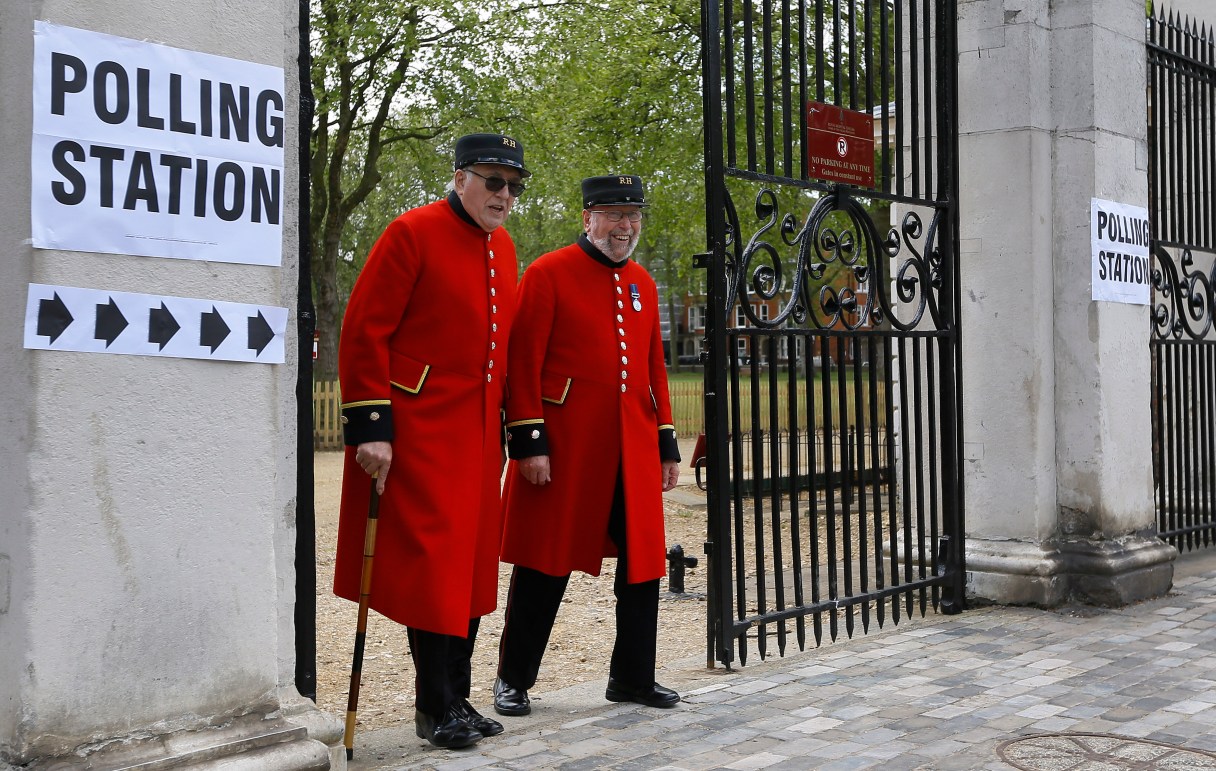
Chelsea Pensioners smile as they see the media after voting at a polling station in London, Thursday, May 7, 2015. Voting opened in Britain's national General Election Thursday, with opinion polls widely predicting an inconclusive outcome.  Britain's election appears headed to a "hung parliament" with no party holding an absolute majority, meaning a new leader may not be sorted out by last call at the pubs. In navigating such a messy outcome, Britain can look to Israel _ a former colony where fractured politics and post-election horse-trading are the norm.  (AP Photo/Kirsty Wigglesworth)
Chelsea Pensioners smile as they see the media after voting at a polling station in London, Thursday, May 7, 2015. Voting opened in Britain's national General Election Thursday, with opinion polls widely predicting an inconclusive outcome. Britain's election appears headed to a "hung parliament" with no party holding an absolute majority, meaning a new leader may not be sorted out by last call at the pubs. In navigating such a messy outcome, Britain can look to Israel _ a former colony where fractured politics and post-election horse-trading are the norm. (AP Photo/Kirsty Wigglesworth) Chelsea Pensioners smile as they see the media after voting at a polling station in London, Thursday, May 7, 2015. Voting opened in Britain's national General Election Thursday, with opinion polls widely predicting an inconclusive outcome. Britain's election appears headed to a "hung parliament" with no party holding an absolute majority, meaning a new leader may not be sorted out by last call at the pubs. In navigating such a messy outcome, Britain can look to Israel _ a former colony where fractured politics and post-election horse-trading are the norm. (AP Photo/Kirsty Wigglesworth)

JERUSALEM (AP) – If the polls are to be believed, Thursday’s British election may produce a “hung parliament,” where no political party holds an absolute majority. That’s a cause for angst in a place where tradition, fair play and a system that inflates majorities have generally sorted out who is the next prime minister by last call at the pub.

To help navigate the awkwardness, Britons need look no further than to Israel, a former colony where fractured politics, post-election horse-trading and permanent campaigning have become the norm, and where a similar conundrum was just resolved. Prime Minister Benjamin Netanyahu exhausted the full six weeks allotted by law in forming a majority coalition that was announced around midnight, as Britons were themselves preparing to go to the polls.

In Britain, no obvious coalition may assert itself. The Conservatives don’t want to partner with the nationalist United Kingdom Independence Party; Labour would prefer to avoid dependence on the Scottish National Party; and no one seems to know where the Liberal Democrats belong.

That could leave the outcome uncertain in a pivotal vote that could decide whether Scotland stays in the United Kingdom and whether the United Kingdom stays in the European Union. It’s an unusually dramatic situation for modern Britain, which has lately been mostly stable and at peace. But high stakes are the norm in Israel, which still lacks permanent borders and agonizes over religion and even the definition of a Jew.

Perhaps, like Israel, the British will find that it is oddly easier to never quite decide.