
Wednesday, November 11, 2026Nov 11

$42 million ‘nose-to-tail’ upgrade for 2 hurricane hunters

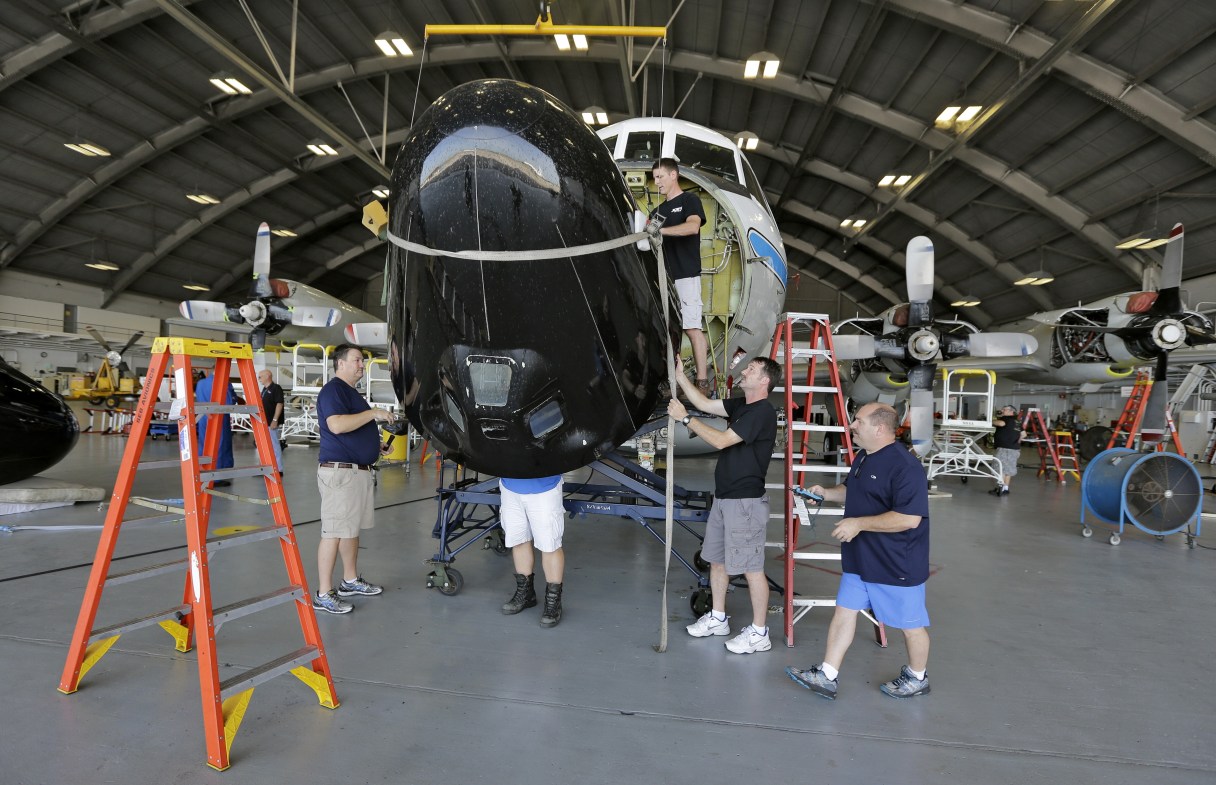
Technicians remove the forward radar cover of the National Oceanic and Atmospheric Administration's P-3 turboprop aircraft "Miss Piggy" Friday, May 15, 2015, at MacDill Air Force Base in Tampa, Fla. While best known as “hurricane hunters,” NOAA’s four-engine WP-3D turboprops support a wide variety of national and international meteorological, oceanographic, and environmental research and monitoring programs in addition to hurricane research and reconnaissance. Projects range from air chemistry, climate, and ocean heat content studies to satellite data validation. (AP Photo/Chris O'Meara)
Technicians remove the forward radar cover of the National Oceanic and Atmospheric Administration's P-3 turboprop aircraft "Miss Piggy" Friday, May 15, 2015, at MacDill Air Force Base in Tampa, Fla. While best known as “hurricane hunters,” NOAA’s four-engine WP-3D turboprops support a wide variety of national and international meteorological, oceanographic, and environmental research and monitoring programs in addition to hurricane research and reconnaissance. Projects range from air chemistry, climate, and ocean heat content studies to satellite data validation. (AP Photo/Chris O'Meara) Technicians remove the forward radar cover of the National Oceanic and Atmospheric Administration's P-3 turboprop aircraft "Miss Piggy" Friday, May 15, 2015, at MacDill Air Force Base in Tampa, Fla. While best known as “hurricane hunters,” NOAA’s four-engine WP-3D turboprops support a wide variety of national and international meteorological, oceanographic, and environmental research and monitoring programs in addition to hurricane research and reconnaissance. Projects range from air chemistry, climate, and ocean heat content studies to satellite data validation. (AP Photo/Chris O'Meara)

TAMPA, Fla. (AP) – The hurricane planes known affectionately as “Miss Piggy” and “Kermit” are getting new Rolls-Royce engines, new wings and better radar.

Every hurricane season for nearly four decades, the two technologically packed planes have flown into storms at speeds of up to 300 mph, collecting research and forecasting data to transmit back to the mainland.

The 38-year-old planes are getting $42 million “nose-to-tail” upgrades of key components. The money comes from the post-Superstorm Sandy Disaster Relief Appropriations Act of 2013. While the planes are routinely maintained, this is the first big overhaul in more than a decade.

The National Oceanic and Atmospheric Administration estimates that the refurbishments could keep them flying for decades. The improvements also will mean better fuel efficiency and additional safety for the crew and scientists who fly in the mobile weather stations.

“We’ll be able to see things better and react better,” said Devon Brakob, a NOAA navigator aboard the hurricane missions.