
Wednesday, November 11, 2026Nov 11

Moonshine continues to permeate East Tennessee culture

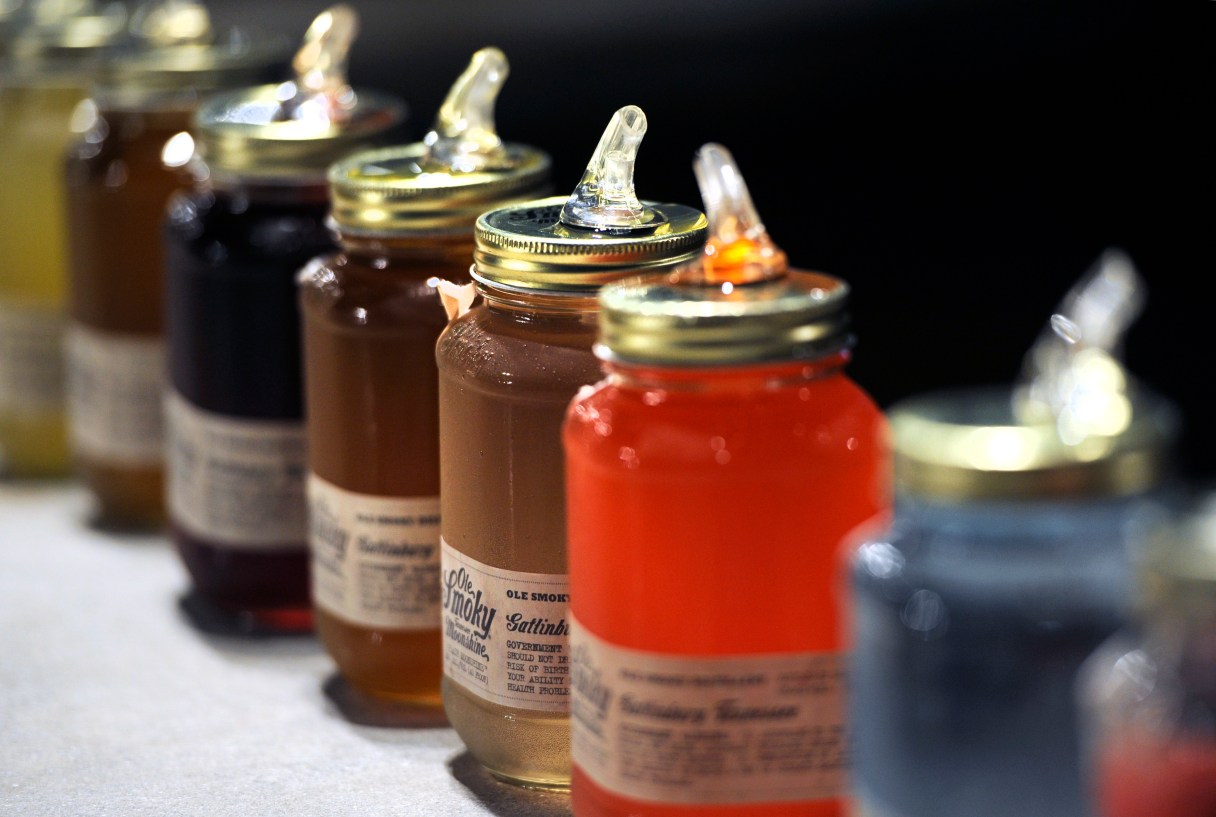
This April 16, 2015 photo shows jars of moonshine for sampling at Ole Smoky Distillery in Gatlinburg, Tenn. After the passage of legislation in 2009 that made distilleries legal in 41 Tennessee counties, the first legal moonshine distillery in Gatlinburg opened in July 2010. Three more companies have jumped onto the liquor wagon since then, resulting in a boost in tourism business. (Adam Lau/Knoxville News Sentinel, via AP)
This April 16, 2015 photo shows jars of moonshine for sampling at Ole Smoky Distillery in Gatlinburg, Tenn. After the passage of legislation in 2009 that made distilleries legal in 41 Tennessee counties, the first legal moonshine distillery in Gatlinburg opened in July 2010. Three more companies have jumped onto the liquor wagon since then, resulting in a boost in tourism business. (Adam Lau/Knoxville News Sentinel, via AP) This April 16, 2015 photo shows jars of moonshine for sampling at Ole Smoky Distillery in Gatlinburg, Tenn. After the passage of legislation in 2009 that made distilleries legal in 41 Tennessee counties, the first legal moonshine distillery in Gatlinburg opened in July 2010. Three more companies have jumped onto the liquor wagon since then, resulting in a boost in tourism business. (Adam Lau/Knoxville News Sentinel, via AP)

GATLINBURG, Tenn. (AP) – The city’s first jar of legal moonshine was sold July 3, 2010.

Some saw the moment as a salute to independence, a shedding of antiquated laws that kept the region from telling an important part of its history.

For others, that first sale marked a potential shadow that could hang over the image of the tourism-dependent city.

In the five years since Ole Smoky Moonshine Distillery opened in downtown Gatlinburg, three more companies have jumped onto the liquor wagon: Davy Crockett’s Tennessee Whiskey (owned by Gatlinburg Barrelhouse) in 2011 and Sugarlands Distillery and Doc Collier Moonshine in 2014.

Moonshine has long been a part of the Appalachian culture and continues to play a role that appears to be growing.