
Thursday, November 12, 2026Nov 12

Flood slams South Carolina’s already shoddy infrastructure

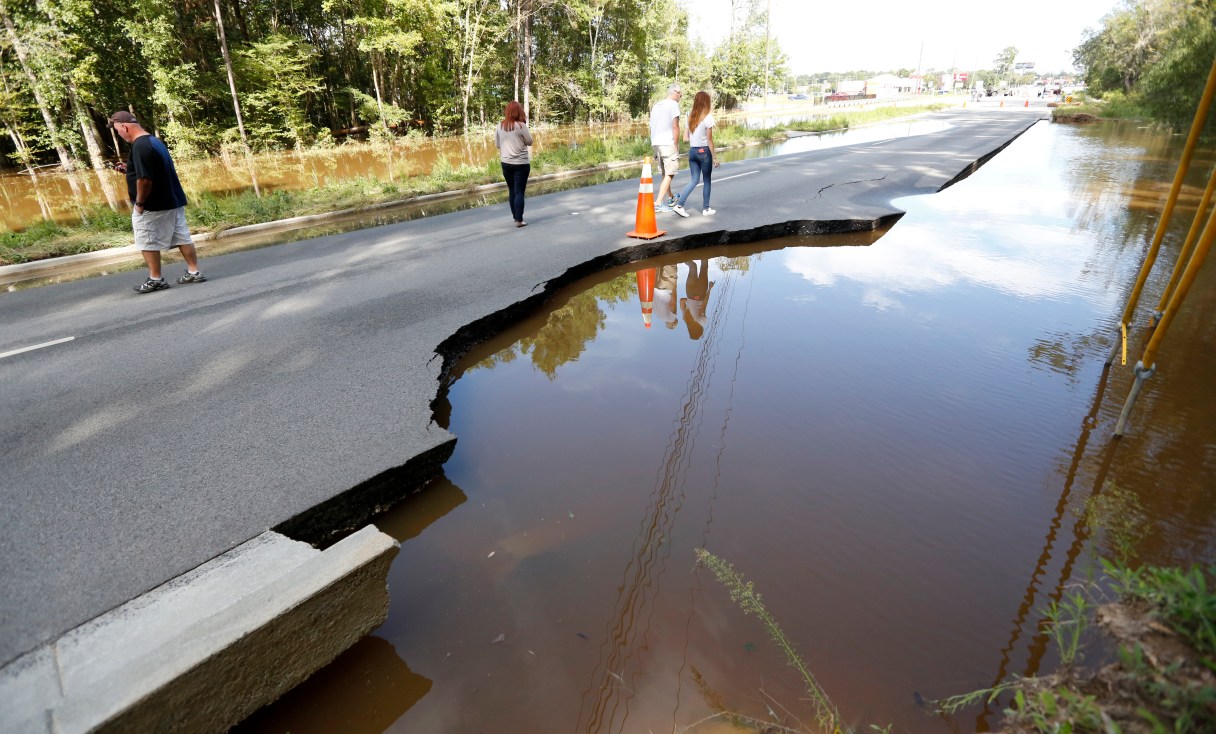
FILE - In this Tuesday, Oct. 6, 2015 file photo, pedestrians walk down Dorchester Road at Sawmill Branch Canal as it begins to wash away due to floodwaters near Summerville, S.C. Residents are concerned that the Ashley river will continue to rise as floodwaters come down from Columbia. South Carolina had problems with crumbling roads and bridges and old drinking water systems and dams long before the historic floods of the past week. (AP Photo/Mic Smith, File)
FILE - In this Tuesday, Oct. 6, 2015 file photo, pedestrians walk down Dorchester Road at Sawmill Branch Canal as it begins to wash away due to floodwaters near Summerville, S.C. Residents are concerned that the Ashley river will continue to rise as floodwaters come down from Columbia. South Carolina had problems with crumbling roads and bridges and old drinking water systems and dams long before the historic floods of the past week. (AP Photo/Mic Smith, File) FILE - In this Tuesday, Oct. 6, 2015 file photo, pedestrians walk down Dorchester Road at Sawmill Branch Canal as it begins to wash away due to floodwaters near Summerville, S.C. Residents are concerned that the Ashley river will continue to rise as floodwaters come down from Columbia. South Carolina had problems with crumbling roads and bridges and old drinking water systems and dams long before the historic floods of the past week. (AP Photo/Mic Smith, File)

COLUMBIA, S.C. (AP) – Long before the historic floods of the past week, crumbling roads, bridges and dams and aging drinking water systems plagued South Carolina – a poor state that didn’t spend much on them in the first place and has been loath to raise taxes for upkeep.

Now the state faces hundreds of millions if not billions of dollars’ worth of additional bills to fix or replace key pieces of its devastated infrastructure.

As the aftermath of Hurricane Sandy and other disasters shows, the federal government will cover much of the costs, but isn’t going to pay for all of it.

“You’re not going to have people down there tomorrow giving out money,” said Gerry Galloway, a civil engineering professor at the University of Maryland.

It will take weeks or months to document the full extent of the damage, and to find out how much federal aid is coming South Carolina’s way. That aid likely will come with requirements that bridges and dams be built to stronger, more expensive standards.