
Tuesday, November 10, 2026Nov 10

Gulf stiffens determination in wake of troop deaths in Yemen

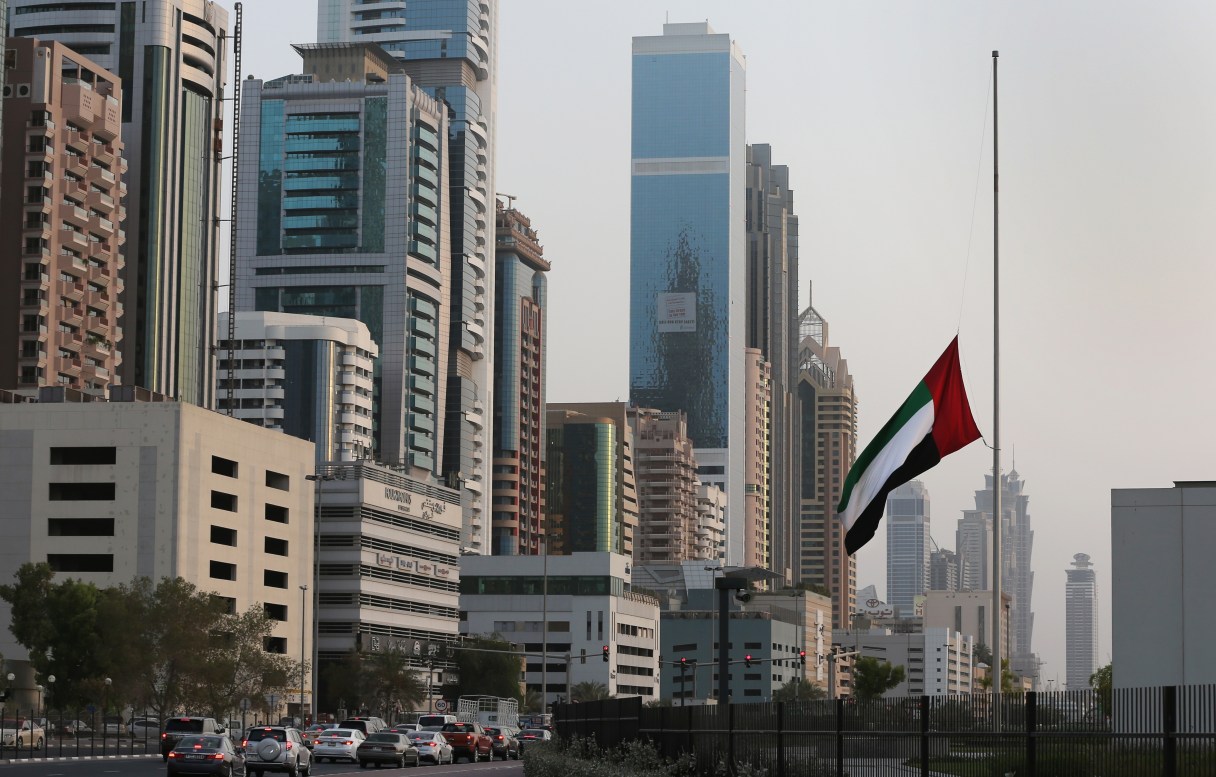
In this photo taken Sunday, Sept. 6, 2015, the flag of the United Arab Emirates is flown at half-staff in honor of Emirati soldiers killed in Friday's attack by Shiite rebels in Yemen, as vehicles pass it by in Dubai. Radio stations across the UAE have replaced their usual upbeat fare with Quranic recitations and classical music to mark three days of mourning commemorating the war dead, an honor typically reserved for the country's top leaders. (AP Photo/Kamran Jebreili)
In this photo taken Sunday, Sept. 6, 2015, the flag of the United Arab Emirates is flown at half-staff in honor of Emirati soldiers killed in Friday's attack by Shiite rebels in Yemen, as vehicles pass it by in Dubai. Radio stations across the UAE have replaced their usual upbeat fare with Quranic recitations and classical music to mark three days of mourning commemorating the war dead, an honor typically reserved for the country's top leaders. (AP Photo/Kamran Jebreili) In this photo taken Sunday, Sept. 6, 2015, the flag of the United Arab Emirates is flown at half-staff in honor of Emirati soldiers killed in Friday's attack by Shiite rebels in Yemen, as vehicles pass it by in Dubai. Radio stations across the UAE have replaced their usual upbeat fare with Quranic recitations and classical music to mark three days of mourning commemorating the war dead, an honor typically reserved for the country's top leaders. (AP Photo/Kamran Jebreili)

DUBAI, United Arab Emirates (AP) – A deadly attack late last week on soldiers from oil-rich Gulf states deployed in Yemen as part of a Saudi-led coalition fighting the country’s Shiite rebels may well have been designed to break the coalition’s will. If that was the aim, it backfired.

Instead, the killing of dozens of troops – most of them from the United Arab Emirates – has upended much of the ambiguity about the U.S.-backed coalition’s boots-on-the-ground role in Yemen and is prompting the alliance to intensify what has effectively become a proxy war against Iran.

In the eyes of many across the Sunni-ruled Gulf states, Yemen – with its Iranian-backed Houthis – has become a key battleground in a Middle Eastern twist on the Cold War domino theory: if Iran cannot be checked in Yemen, the thinking goes, it could ramp up the pressure in Shiite-majority Bahrain and elsewhere in the region.

The missile assault on Friday struck an ammunition depot in the Yemeni province of Marib, about 120 kilometers (75 miles) east of the capital, Sanaa.

Hardest hit in the attack was the UAE, a federation of seven states that includes Dubai and the oil-rich capital, Abu Dhabi, which lost 45 soldiers. Ten Saudis were killed in the blast too. Bahrain also lost five soldiers, though it was not clear if they were killed in the same incident.