
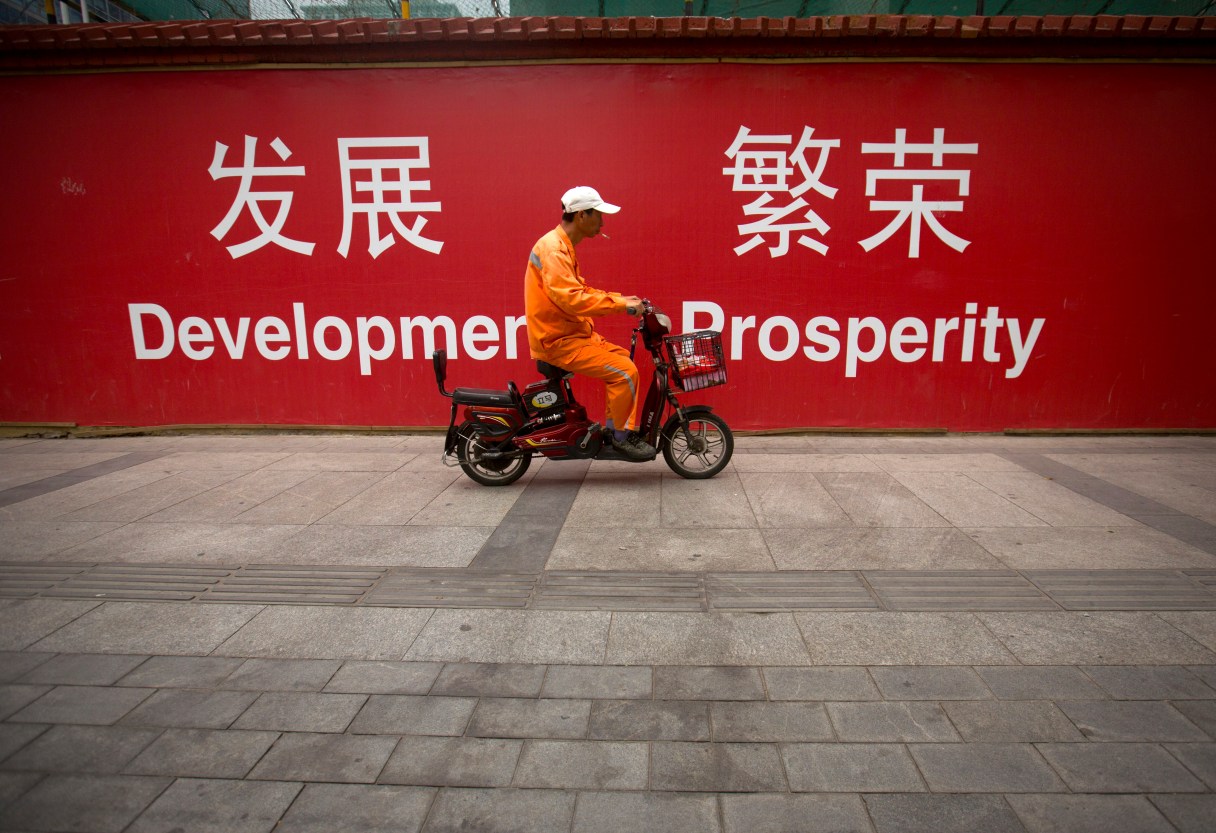
China is losing its appetite for dump trucks, iron ore and construction cranes. But the Chinese still want to travel and give their kids a better education.
Growth in the world’s second-largest economy is decelerating and rattling financial markets around the world. Behind that slowdown is an evolutionary shift in China’s economy- from a dependence on exports and investment in factories and housing – to a reliance on spending by its emerging middle class.
That transition, a gradual and perhaps painful one, will affect which U.S. companies stand to benefit and which will be squeezed as China’s growth slides from the double-digit annual rates of the mid-2000s to 7 percent, 6 percent, maybe even less.
The shift is likely to pinch American manufacturers that prospered during China’s investment boom – makers of heavy construction equipment and industrial machinery, for instance.
But the service sector – a broad category that includes things like restaurant meals, haircuts and hotel stays – remains “reasonably robust” and has been a dominant driver of China’s growth since the first half of 2012, said economist Nicholas Lardy, a senior fellow at the Peterson Institute for International Economics.