
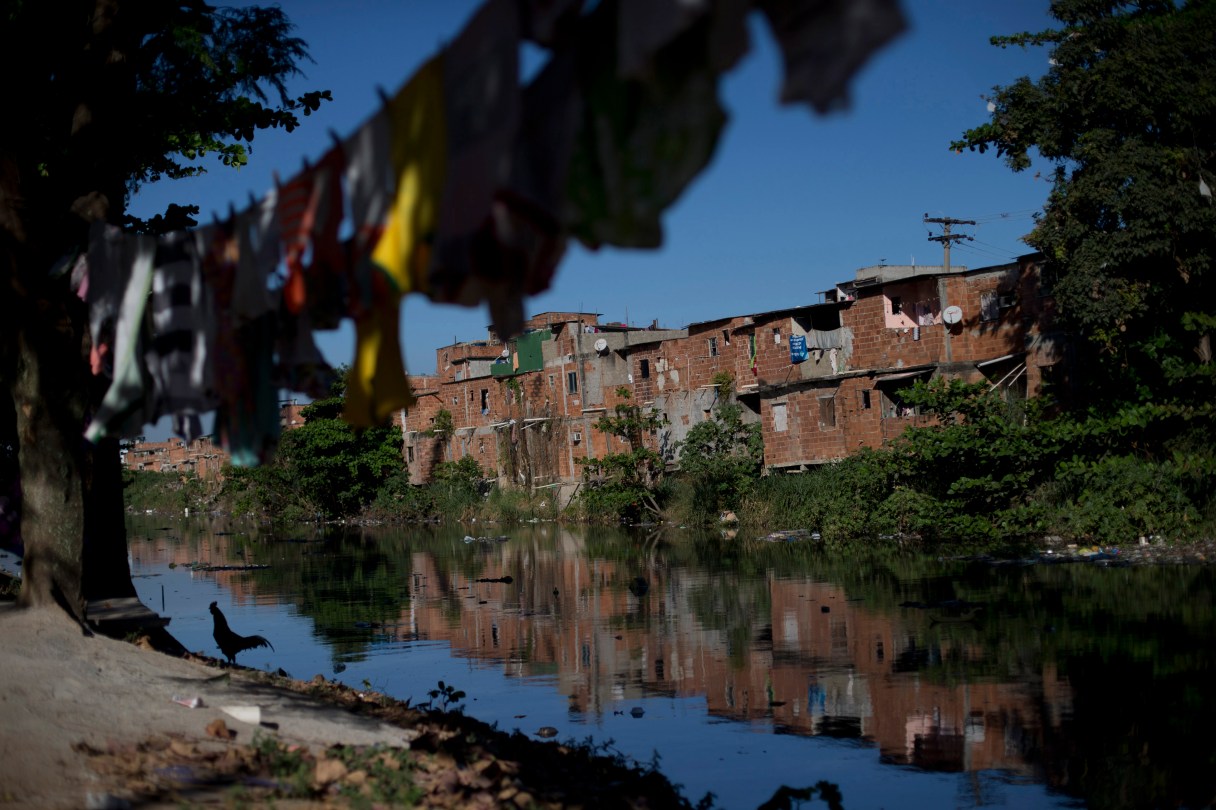
RIO DE JANEIRO (AP) – Rivulets of waste crisscross the labyrinth of alleyways that serve as 5-year-old Kaike de Oliveira Benjamin’s playground, forming dark, fetid puddles and gurgling streams of refuse and trash. It’s little better inside the tiny, one-room apartment he shares with his mother, two little brothers and infestations of roaches and rats. When it rains, the basement apartment floods ankle-deep with a mixture of rainwater and sewage, and drinking water often comes out of the tap looking and smelling contaminated.
Rio de Janeiro’s lack of basic sanitation is in the headlines because Olympic athletes will compete in polluted waters during next year’s games, but it’s hardly news in areas like the Rocinha slum, where contact with untreated waste is an everyday reality for the Benjamins and tens of thousands of other families.
The consequences are not fleeting – they reverberate for decades, dooming many children exposed to this filth to lives stunted by illness.
One public health expert calls the sewage system in Rio largely “medieval,” comparable with London or Paris in the 14th or 15th century.
And it’s not just Rio. Fewer than half of households nationwide are hooked up to sewage mains, meaning that much of the waste generated by about 100 million people runs through open-air ditches that bisect neighborhoods like Kaike’s across this continent-sized nation, befouling streams and rivers that in turn contaminate lakes and lagoons, beaches and bays.