
Tuesday, November 10, 2026Nov 10

Stark contrasts in Europe’s welcome to migrants

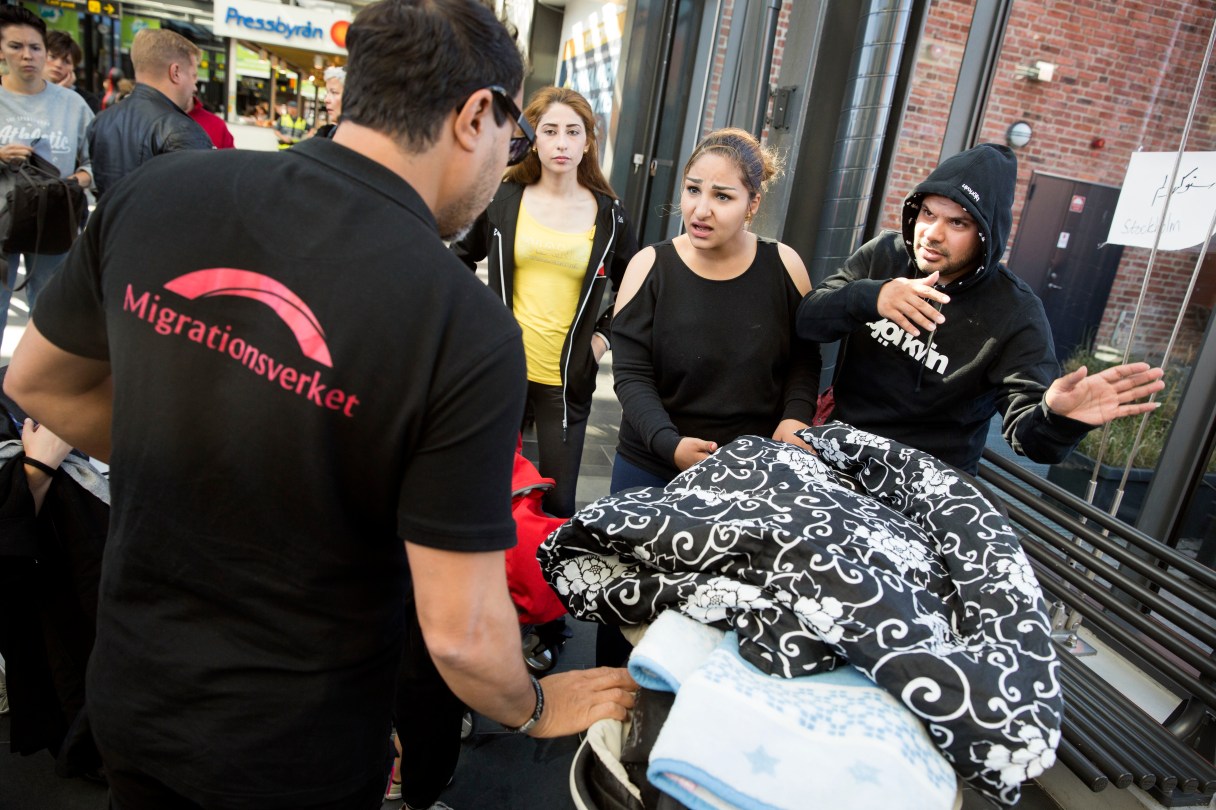
In this image taken Tuesday Sept. 8, 2015 a newly arrived migrant family, right, speak with an officer of the Swedish Migration Agency at the Central Station in Malmo Sweden .  The bleary-eyed migrants arriving in Malmo's glass-and-steel train station agreed on one thing: Sweden was a better place to go than Denmark, which has cut welfare benefits for refugees. (Ola Torkelsson/TT  via AP) SWEDEN OUT
In this image taken Tuesday Sept. 8, 2015 a newly arrived migrant family, right, speak with an officer of the Swedish Migration Agency at the Central Station in Malmo Sweden . The bleary-eyed migrants arriving in Malmo's glass-and-steel train station agreed on one thing: Sweden was a better place to go than Denmark, which has cut welfare benefits for refugees. (Ola Torkelsson/TT via AP) SWEDEN OUT In this image taken Tuesday Sept. 8, 2015 a newly arrived migrant family, right, speak with an officer of the Swedish Migration Agency at the Central Station in Malmo Sweden . The bleary-eyed migrants arriving in Malmo's glass-and-steel train station agreed on one thing: Sweden was a better place to go than Denmark, which has cut welfare benefits for refugees. (Ola Torkelsson/TT via AP) SWEDEN OUT

MALMO, Sweden (AP) – The bleary-eyed travelers arriving in Malmo’s glass-and-steel train station agreed on one thing: Sweden was a better place to go than Denmark, which has cut welfare benefits for refugees.

But many said Finland was even better.

“Why Finland? I tell you, because they give us the documents faster,” said Ghanem, a 23-year-old Iraqi, who like many making the journey declined to give his full name. They are worried about being identified by authorities and prevented from going to their preferred destinations. “Sweden, Germany, they will take one year, two years.”

Though the 28-nation European Union has common rules for how to receive asylum-seekers, the benefits provided once they arrive vary widely from one country to the next.

Greece, the European entry point for more than 200,000 migrants this year, has been so overwhelmed that it can’t even provide basic services like housing and food. Italy’s reception conditions are also straining under a constant stream of sea arrivals from North Africa, while Hungary’s hostility toward migrants jolts them to get out of the country as soon as they can.