
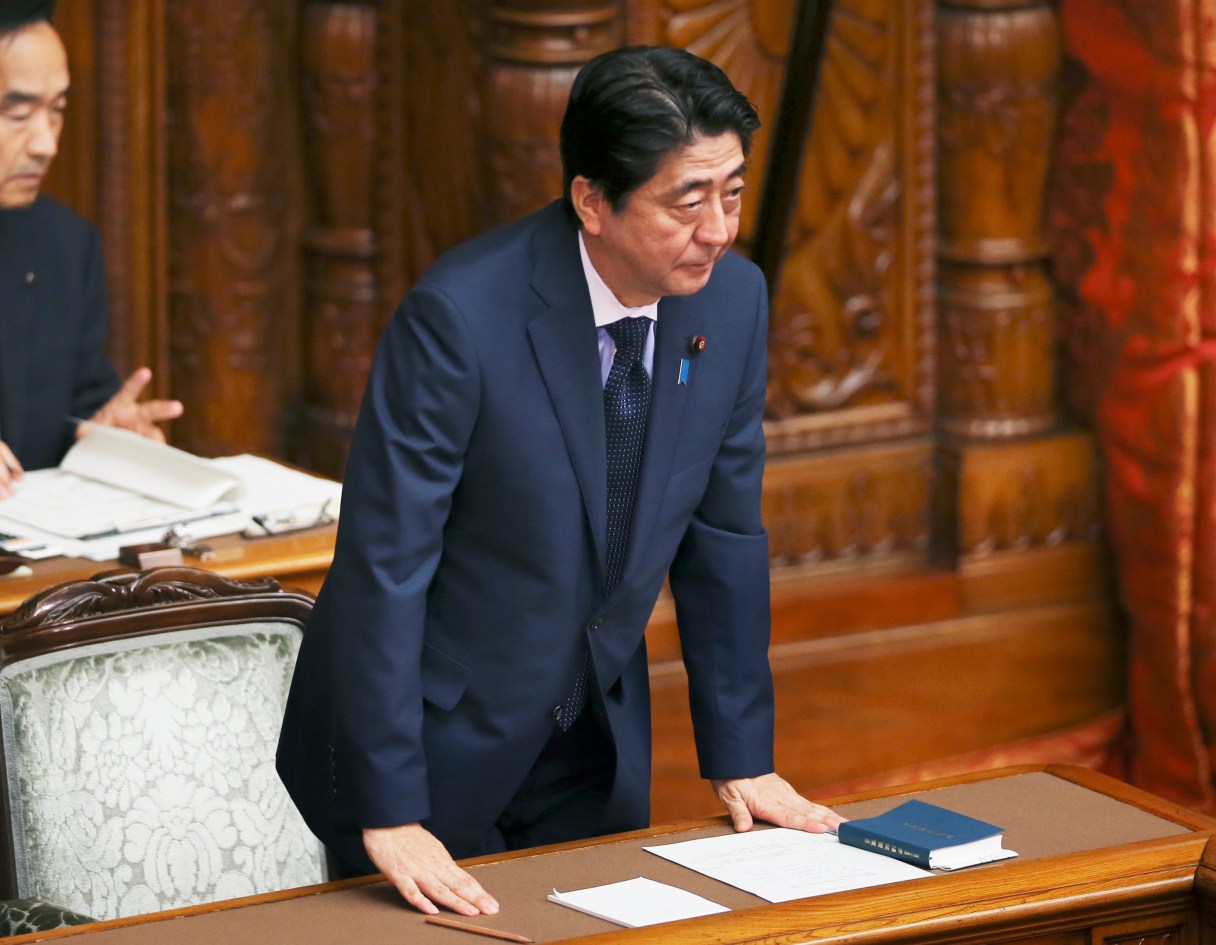
TOKYO (AP) – Japan’s parliament is moving toward final approval of legislation that would loosen post-World War II constraints placed on its military, an issue that has sparked sizeable street protests and raised fundamental questions about whether the nation needs to shift away from its pacifist ways to face growing security challenges.
Opposition parties, in a last-ditch show of resistance, were delaying a vote on the bills by introducing a series of no-confidence measures against government ministers and parliamentary leaders on Friday. They were destined to fail, but ate up hours of time to debate and vote on each one.
Prime Minister Shinzo Abe has made expanding what the military can do one of his legislative priorities in the face of North Korean missile tests, Chinese challenges to Japanese sovereignty over remote islands, and Middle East terrorism. One major goal of the legislation is to allow the military to work more closely with its most important ally, the United States.
The public, while recognizing the threats, remains uncomfortable at best with the changes. Those opposed outnumber supporters by a wide margin in media polls, and rallies against the bills and Abe himself have swelled into the tens of thousands in recent months, unusually large for Japan.
A look at what’s at stake: