
Wednesday, November 11, 2026Nov 11

AP Investigation: Bungling by UN agency hurt Ebola response

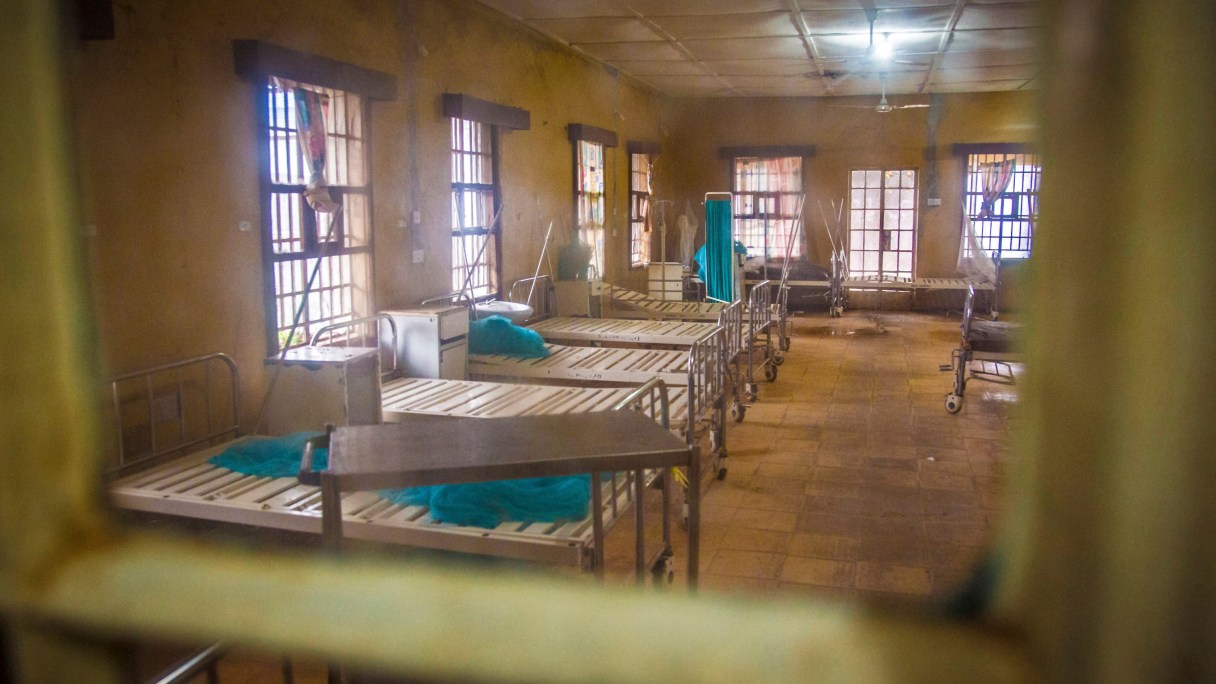
FILE - In this Sunday, Aug. 10, 2014, file photo, a ward at the government hospital in Kenema, eastern Sierra Leone lies empty after patients left and others were scared to be admitted, fearing they would contract the Ebola virus. More than 40 health workers at the facility have died from the virus. An Associated Press investigation has found a toxic mix of avoidable problems faced by Ebola responders, including weak leadership, shoddy supplies and infighting, exacerbated a chaotic situation at a critical front in the battle against the virus. (AP Photo/Michael Duff, File)
FILE - In this Sunday, Aug. 10, 2014, file photo, a ward at the government hospital in Kenema, eastern Sierra Leone lies empty after patients left and others were scared to be admitted, fearing they would contract the Ebola virus. More than 40 health workers at the facility have died from the virus. An Associated Press investigation has found a toxic mix of avoidable problems faced by Ebola responders, including weak leadership, shoddy supplies and infighting, exacerbated a chaotic situation at a critical front in the battle against the virus. (AP Photo/Michael Duff, File) FILE - In this Sunday, Aug. 10, 2014, file photo, a ward at the government hospital in Kenema, eastern Sierra Leone lies empty after patients left and others were scared to be admitted, fearing they would contract the Ebola virus. More than 40 health workers at the facility have died from the virus. An Associated Press investigation has found a toxic mix of avoidable problems faced by Ebola responders, including weak leadership, shoddy supplies and infighting, exacerbated a chaotic situation at a critical front in the battle against the virus. (AP Photo/Michael Duff, File)

KENEMA, Sierra Leone (AP) – Something didn’t smell right.

As a worker at Kenema Government Hospital mixed a batch of chlorine on a broiling August day, he noticed it didn’t have its typically strong, bleach-like odor. Concerned, he turned to a consultant with the World Health Organization, who tested the disinfectant and found barely any active ingredient.

“I was deeply shocked,” the consultant, Jerome Souquet, wrote in an email to his boss in Freetown, Sierra Leone’s capital. Souquet said the consequences of using the ineffective chlorine “could be catastrophic, and cause immediate infection of all the staff.”

Questionable chlorine was just one of a toxic mix of avoidable problems faced by Ebola responders in Kenema last summer as the outbreak was spiking. Weak leadership, shoddy supplies and infighting exacerbated a chaotic situation at a critical front in the battle against the virus, an Associated Press investigation has found. More than 40 health workers died in Kenema – a devastating loss in the fight to control an epidemic that has claimed more than 11,000 lives.

In March, AP reported that senior officials at WHO’s Geneva headquarters resisted calls to declare Ebola an international health emergency – the equivalent of an SOS signal – on political and economic grounds. But newly obtained documents, recordings of conference calls and interviews with key players on the ground show that even after the alarm was raised, WHO and others struggled to put together a decisive response.